huffpost Press
Iran Rejects De-Escalation As Israel Kills Iranian Security Chief
Images
1 / 6
2 / 6
3 / 6
4 / 6
5 / 6

6 / 6
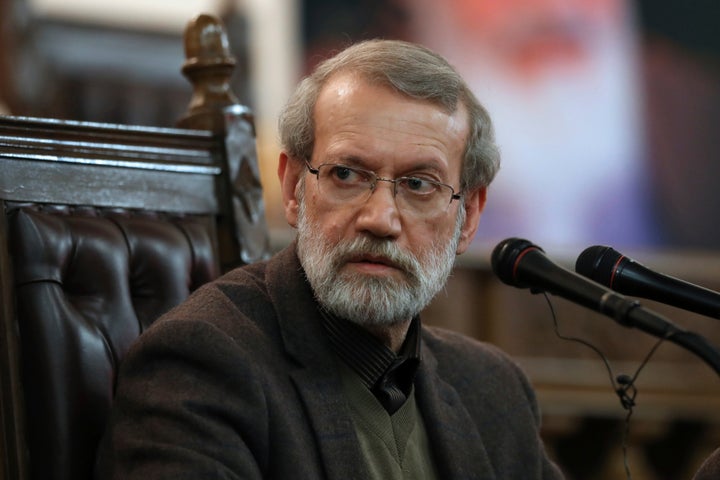
DUBAI/JERUSALEM, March 17 (Reuters) - Iran’s security chief Ali Larijani was killed by Israel, the government confirmed on Tuesday, the most senior figure targeted since the U.S.-Israeli war’s first day, while a senior Iranian official said Iran’s new supreme leader rejected de-escalation offers conveyed by intermediary countries.

Larijani was widely viewed as one of Iran’s most powerful figures and a confidant of slain Supreme Leader Ayatollah Ali Khamenei and his son and successor, Mojtaba. The security chief had a reputation for pragmatic relations with other factions in the ruling system and foreign diplomats.

His death was confirmed by Iran’s Supreme National Security Council, which Larijani led as secretary. Larijani’s son and his deputy, Alireza Bayat, were also killed in Israel’s attack on Monday night, the council said.

The targeted killings came more than three weeks into the U.S.-Israeli war on Iran, which has quickly become a regional conflict that shows no signs of de-escalation.

U.S. President Donald Trump has repeatedly castigated allied countries in recent days for their cool response to his requests for military help to restore the passage of oil tankers through the Strait of Hormuz.

Mojtaba Khamenei, Iran’s new supreme leader, rejected proposals conveyed to Iran’s Foreign Ministry for “reducing tensions or ceasefire with the United States,” according to a senior Iranian official who asked not to be identified.

Khamenei, attending his first foreign-policy meeting since his appointment, said it was not “the right time for peace until the United States and Israel are brought to their knees, accept defeat, and pay compensation,” according to the official.

The official did not clarify whether the younger Khamenei, who has not yet appeared in photos or on TV since being named last week to replace his slain father, had attended the meeting in person or remotely.

The Strait of Hormuz, a transit point for a fifth of the global oil trade, remains largely closed as Iran threatens to attack tankers linked to the U.S. and Israel. Oil prices have soared.

The U.S. has given shifting rationales for joining Israel to attack Iran and struggled to explain the legal basis for starting a new war, underscored by the Tuesday resignation of the head of the U.S. National Counterterrorism Center, Joseph Kent. Kent wrote in his resignation letter to Trump that Iran “posed no imminent threat to our nation.”

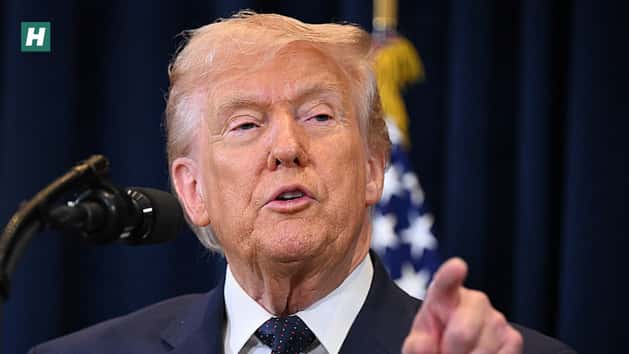
Most U.S. allies in the North Atlantic Treaty Organization have told Trump they don’t want to get involved in the conflict, he said on Tuesday, describing their position as “a very foolish mistake.”

“Because of the fact that we have had such Military Success, we no longer ‘need,’ or desire, the NATO Countries’ assistance — WE NEVER DID!” Trump wrote on social media, also singling out Japan, Australia and South Korea.

European Union foreign policy chief Kaja Kallas said in an interview that nobody was ready to risk the lives of their people in protecting the strait.

“We have to find diplomatic ways to keep this open so that we don’t have a food crisis, fertilizers crisis, energy crisis as well,” Kallas said.

Oil prices rose about 3% on Tuesday as Iran renewed its strikes on oil facilities in the United Arab Emirates, and are up around 45% since the start of the war on February 28, raising concerns of a renewed spike in global inflation. The World Food Programme said tens of millions of people will face acute hunger if the war continues through June.

Larijani is the most senior figure killed by Israel and the U.S. since the war’s first day when they killed the supreme leader, other members of his family and other senior officials.

Israel also killed another top official, Gholamreza Soleimani, who led the volunteer Basij militia, which plays a major role in domestic security.

In a video posted on social media, Israeli Prime Minister Benjamin Netanyahu pulled a small card out of his suit jacket pocket and said: “Today I erased two names on the punch card, and you see how many more to go on this batch.”

In Israel, air raid sirens sounded overnight Tuesday in the country’s commercial hub, Tel Aviv, and surrounding cities.

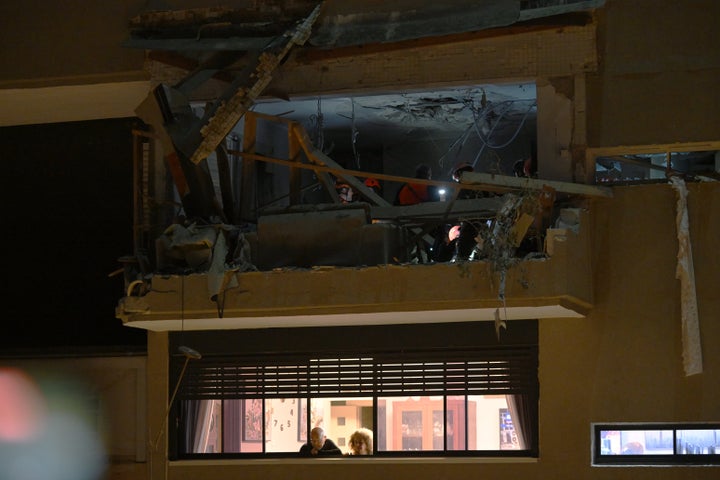
A man and a woman were killed in Ramat Gan, near Tel Aviv, after sustaining severe shrapnel injuries in an Iranian missile attack, the national ambulance service said, bringing the death toll in Israel from the war to at least 14. It was not immediately clear whether there had been a direct strike or if debris had fallen from a missile interception.

Iran has repeatedly targeted densely populated Tel Aviv, which hosts key military and security installations. It was not immediately clear what Iran had targeted in the latest strike.

After the attack, Iranian state television reported that Tehran had targeted Tel Aviv with missiles carrying cluster munitions in what it said was retaliation for the assassination of Larijani. Cluster munitions disperse into multiple smaller explosives mid-air, spreading over a wide area and making them more difficult to intercept.

Iran has repeatedly used cluster munitions against Israel in the war.

The latest attack underscored Iran’s capacity to carry out long-range strikes despite more than two weeks of sustained U.S. and Israeli bombardment.

Foreign Minister Gideon Saar earlier said Israel “had, in effect already won the war”, but gave no indication of when the conflict might end, saying only that the campaign would continue until its objectives were achieved.

More than 900 people have died since Israel began attacks on Lebanon on March 2, the Lebanese Health Ministry said on Tuesday. U.S.-based Iran human rights group HRANA said on Monday that more than 3,000 people have been killed in the country. Iran has responded with wide-ranging attacks on its Gulf neighbours, which host U.S. military bases.

Gulf Arab states, including the UAE, have faced more than 2,000 missile and drone attacks on U.S. diplomatic missions and military bases as well as oil infrastructure, ports, airports, ships and residential and commercial buildings.

(Reporting by Reuters bureaux, Writing by Sharon Singleton, Charlie Devereux and Andy Sullivan; Editing by Timothy Heritage, Peter Graff, Alexander Smith, Cynthia Osterman and Michael Perry)

By entering your email and clicking Sign Up, you're agreeing to let us send you customized marketing messages about us and our advertising partners. You are also agreeing to our Terms of Service and Privacy Policy.
Comments
You must be logged in to comment.