yahoo Press
Bigger tax refunds arrive just as gas prices surge nationwide
Images

1 / 5
2 / 5

3 / 5

4 / 5

5 / 5
Tax refunds will pop up in many bank accounts just days after wallets got whacked by another financial shock, a spike in gas prices at the pump.

Every corner on a major road offers yet another reminder that it's costing you more to get around. And like it or not, high gas prices end up being a mental stop sign for how much cash people want to blow on something else.

Day by day, prices at the pump do a little more to shock you. I even spotted one station at $4.09 a gallon in Ferndale on Wednesday, March 18. Gas at $4 a gallon? Fortunately, you can drive somewhere else and pay less. But you do wonder is that where the average is likely heading?

The U.S. and Israeli attacks against Iran began Feb. 28, roughly a month after the Internal Revenue Service began processing returns this tax season on Jan. 26. The tax filing deadline is April 15 so plenty of returns have yet to be filed in the next month or so.

It's a big tax season, given the special tax deductions packed into the One Big Beautiful Bill, which was signed into law halfway into 2025 on July 4. Adjectives like "gigantic" are being used by Trump administration officials to describe the round of tax refunds ahead in the current 2026 tax season.

Refunds could juice up spending under the right conditions, but right now the fear is that much of that extra cash could be absorbed by rising prices at the pump and elsewhere.

"Families rely on these tax refunds, especially those who are not at the highest income levels. These are the same people who will be most directly impacted by increasing oil and grocery prices," said Michael Greiner, associate professor of management at the Oakland University School of Business Administration.

Greiner sees more signs of a "stressed economy, one that could be thrown into recession with the new challenges presented by the Iran war."

In case you missed it: This is how the no tax on overtime deduction really works for 2025

The U.S. economy grew at a snail's pace in the last three months of 2025.

The gross domestic product, a measure of all goods and services produced in the United States, increased at an annual rate of 0.7% in the fourth quarter last year, according to the second estimate released by the U.S. Bureau of Economic Analysis on Friday, March 13.

In the third quarter, real GDP increased 4.4%. Overall for 2025, GDP posted a 2.1% increase.

Meanwhile, inflation remains a troubling concern. Over the last 12 months, the consumer price index increased 2.4% in February before seasonal adjustment, according to data released by the U.S. Bureau of Labor Statistics on March 11. The February CPI figure marks a time before the air strikes in Iran sent oil prices skyrocketing, fueling inflation expectations.

The average federal income tax refund is $3,676 as of March 6, based on the latest statistics released Friday, March 13, by the Internal Revenue Service.

That’s up 10.6% from the same time a year ago. Or up $352 on average.

Thus far, the IRS has issued $160.83 billion in tax refunds, up 10.9% from a similar time frame a year ago.

The White House has indicated that average refunds would be up by $1,000 or more. It seems unlikely for the overall average gain to end up that high even as we move closer to the April 15 deadline. But we'll see what happens.

It is more likely that many tax filers who qualify for one of four big tax breaks in the One Big Beautiful Bill Act will be thrilled to see more than a few hundred dollars extra for their tax refunds this tax season.

IRS CEO Frank Bisignano testified before the U.S. House Ways and Means Committee on March 4 that average refunds are up by $775 for early filers who claimed tax deductions on tips, overtime, new car loan interest or the enhanced deduction for seniors.

Bisignano, who also serves as commissioner of the Social Security Administration, told the committee that the analytics group at the IRS has a scale that shows that by the end of the tax filing season the average refund will be up by $1,000 from a year ago for those claiming the four key deductions.

The average tax refund was $3,167 in 2025, up 0.9%, based on IRS statistics through Dec. 26, 2025.

So far, a bit more than four in 10 tax returns filed early in the season claimed at least one of the four tax deductions, according to Bisignano.

Adults 65 and older are receiving the largest dollar benefit so far this filing season, he told the House Ways & Means Committee, while taxpayers earning less than $100,000 are seeing the largest percentage increase in their refunds.

The U.S. Department of Treasury rolled out some interesting stats, as well.

Nearly 63.5 million tax returns have been processed as of March 8, according to the Treasury news release issued Tuesday, March 10. That is 45% of the anticipated total number of tax returns expected to be filed by April 15.

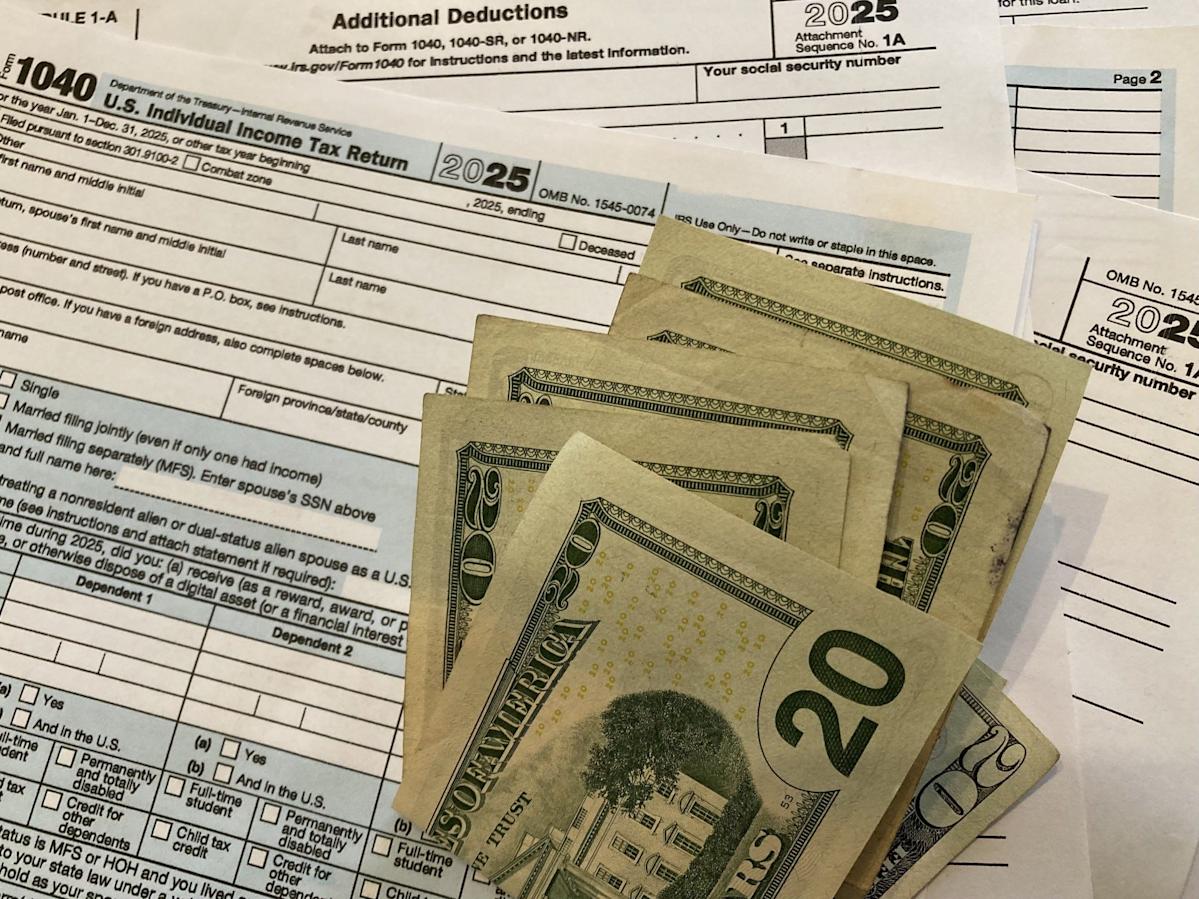
And the Treasury had some interesting insights into how many returns have claimed key tax deductions on the new Schedule 1-A when filing 2025 tax returns this year:

More than 15.5 million returns have claimed the tax deduction on overtime, according to the Treasury Department.

More than 9.2 million returns have claimed the enhanced deduction for seniors.

More than 3.5 million returns have claimed the tax deduction on tips.

And more than 690,000 returns have claimed the deduction on car loan interest for new cars and trucks with final assembly in the United States.

Long before the air strikes in Iran, many U.S. consumers already aimed to use their refund cash rather than to pay off some of their old bills. Many had turned to high-cost credit card debt to cover their expenses, as prices on many goods went up.

" 'Refund season' has effectively become 'relief season' as Americans count on their refund to make ends meet," according to conclusions reached by a new study conducted by Qualtrics on behalf of Intuit TurboTax.

According to the survey, 51% of respondents who expect a refund say they must rely on their income tax refund to cover essentials because of the rising cost of living, including higher costs related to housing and groceries.

The survey was conducted online within the United States by Qualtrics on behalf of Intuit TurboTax from Feb. 5 to Feb. 9. It involved 1,010 adults 18 and older.

And then, oil prices shot up through the roof.

The average price of a regular gallon of gas nationwide was $3.63 as of Friday, March 13, according to AAA. That's up from $2.94 a month ago and up from an average of $3.079 a year ago.

As of Monday, March 16, the national average was $3.718 a gallon nationwide.

And gas prices at the pump kept going higher.

As of Wednesday, March 18, according to AAA, the national average price for regular was $3.842 a gallon.

"If oil prices stay near their $100 per barrel, then the cost of a gallon of regular unleaded will top $4 per gallon," said Mark Zandi, chief economist for Moody's Analytics, on March 12.

If those prices remain at those levels for a year, he said, the typical U.S. household would be paying roughly $1,000 more for gas.

"Of course, other prices would rise, and the total cost to that household would increase by closer to $1,500 over a year," Zandi said.

He said it seems unlikely now that oil prices would remain near $100 per barrel for that long. Even so, the example gives some context to the potential impact on households.

"With each passing day, the higher oil prices will do more damage to an already fragile economy that is struggling with no job growth and rising unemployment," Zandi said.

For many families, a big income tax refund check cannot come soon enough. Unfortunately, the question now seems to be: Will it be enough?

Contact personal finance columnist Susan Tompor: stompor@freepress.com. Follow her on X @tompor.

This article originally appeared on Detroit Free Press: Tax refunds jump but soaring gas costs strain family budgets
Comments
You must be logged in to comment.