bbc Press
How could Holyrood's assisted dying law work in Scotland?
Images
1 / 10

2 / 10
3 / 10
4 / 10
5 / 10
6 / 10
7 / 10
8 / 10
9 / 10
10 / 10
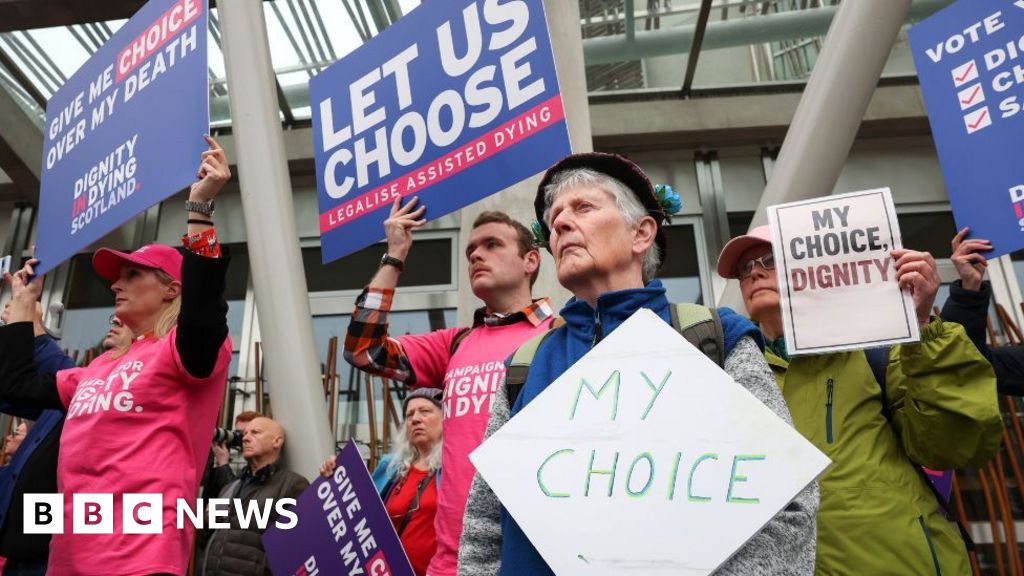
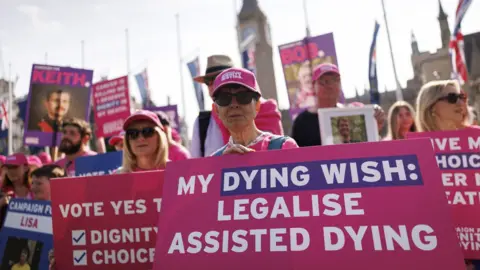
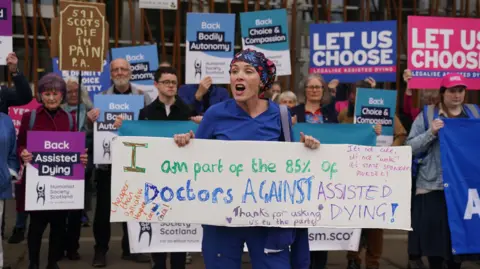
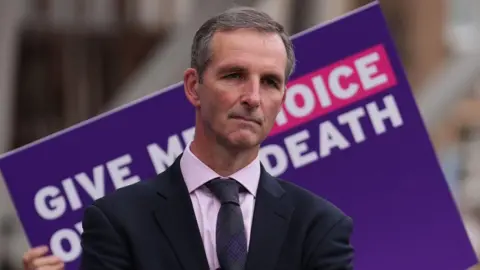
Assisted dying could soon be legalised in Scotland as MSPs prepare for a historic vote on Tuesday night.

Parliamentarians backed the general principles of the Assisted Dying for Terminally Ill Adults (Scotland) Bill in May following a highly emotional debate.

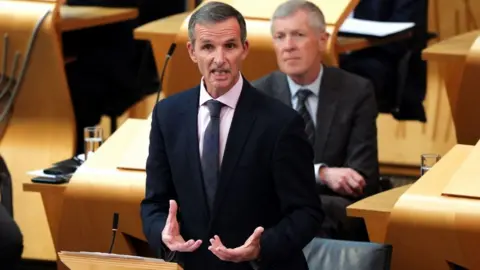
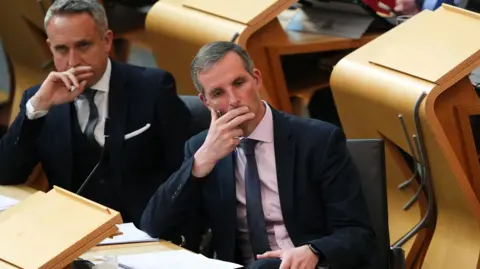
The proposals, brought by Liberal Democrat MSP Liam McArthur, face a final vote this week.

A bill to legalise assisted dying in England and Wales is also making its way through the Westminster parliament, though it appears unlikely to pass.

The Assisted Dying for Terminally Ill Adults (Scotland) Bill says that eligible applicants must be:

To have capacity, the bill says a person applying for assisted death must be capable of understanding information and advice about the process.

They must also be able to make, communicate, understand and remember their decision.

People suffering from a mental disorder which might affect the making of the request would not be allowed to proceed.

The definition of capacity is a key area of difference from the UK bill, which leans on the typical approach in law that a person is assumed to have capacity unless shown otherwise.

Which approach is more suitable to assisted dying legislation is a matter for debate.

At Westminster, backbench Labour MP Kim Leadbeater introduced the Terminally Ill Adults (End of Life) Bill, as a Private Members' Bill.

Her bill would allow terminally ill people to end their life if they:

Once an application has been approved, the patient would have to wait 14 days before proceeding.

A doctor would prepare the substance being used to end the patient's life, but the person would take it themselves.

The bill defines the coordinating doctor as a registered medical practitioner with "training, qualifications and experience" at a level to be specified by the health secretary. It does not say which drug would be used.

It would be illegal to coerce someone into declaring they want to end their life, with a possible 14-year prison sentence.

The bill was passed by the Commons in June last year but has been stalled in the House of Lords for months and is now unlikely to pass.

Last week, more than 100 Labour MPs urged Prime Minister Keir Starmer to make sure there was enough time for a decision to be reached, saying a failure to do so would undermine faith in politics.

In Northern Ireland, the Department of Health said last year there were currently no plans to implement the legislation on assisted dying.

The Isle of Man became the first place in the British Isles to pass its assisted dying bill in March last year.

Jersey voted to pass its own bill last month.

Neither have yet become law.

Under the Manx bill, terminally ill adults with less that 12 months to live would be given the right to choose to end their own lives, provided they met specific eligibility criteria, including having lived on the island for five years.

It was recently confirmed by the island's health minister that her department had responded to concerns raised by the UK Ministry of Justice over protections against coercion and capacity safeguards in the bill.

Jersey, which is part of the British Isles, but sets its own laws also has its own bill.

Those eligible are people with terminal illnesses causing unbearable suffering where they are expected to die within six months, or 12 months for those with neurodegenerative conditions such as Parkinson's and motor neurone disease (MND).

The bill needs to receive Royal Assent, or formal approval, in the UK before it takes effect.

Once approved the first legal assisted deaths could happen as early as summer 2027.

Under the Holyrood bill, a person wishing to end their life would begin by signing an initial declaration.

Two medics would then check whether the person is eligible and assess whether they are being pressured or coerced.

The initial declaration would be followed by a 14-day period of reflection. In cases where the patient was expected to die of their illness before then, the period could be shortened to as little as 48 hours.

If they want to continue, the person would make a second declaration, with doctors required to speak with the patient in private to ensure they are not being pressured or coerced.

Doctors must also discuss palliative care options with the patient.

If they wished to continue, a medical practitioner or authorised health professional would give them an "approved substance" to be used to end their own life.

The lethal drug that will be used is yet to be agreed, but the bill says it must be self-administered.

The legislation would allow for a proxy to sign a declaration for those who are physically unable to do so, and create a new offence to coerce or pressure a terminally ill adult into an assisted death.

Medics involved in the process would also be exempt from criminal and civil liability.

Both the Scottish and UK bills say no-one is obliged to participate in assisted dying.

Unlike the UK bill, the original Holyrood bill included a conscientious objection provision, stating that individuals or organisations must not be "subject to any detriment" if they opt out.

However, this section was removed after the Scottish government noted that the UK government was in charge of employment protections.

Health Secretary Neil Gray said that the provisions could be added retrospectively with the consent of Downing Street. The UK government has said it is willing to work with Holyrood ministers if the bill is passed.

The bill was subsequently amended to state that the legislation could not take effect until protections are established via regulations at Westminster.

The UK government must also sign off on the use of lethal drugs for assisted dying in Scotland.

Parliamentarians in Scotland have been given a free vote on assisted dying, meaning they are not whipped to cast their ballots along party lines.

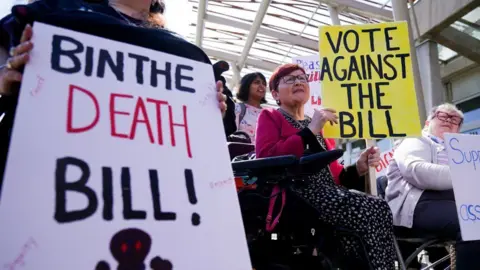
Several MSPs warned that if the bill becomes law it could face legal challenges on human rights grounds, leading to eligibility being extended over time.

This "slippery slope" argument has been repeatedly raised during debates at Holyrood.

Concerns were also raised about residency and how to fairly assess the decision-making capacity of people with mental disorders.

Further questions have been asked about the length of the period of reflection, how coercion would be assessed and which professionals would provide end-of-life assistance.

Another key issue raised has been how to define a terminally-ill person.

In the Westminster bill, a terminally ill person is defined as someone who has less than six months to live.

Originally, the Scottish bill did not have a life expectancy timescale. It instead defined someone as terminally ill if they "have an advanced and progressive disease, illness or condition from which they are unable to recover and that can reasonably be expected to cause their premature death".

Although opponents argued this definition was too broad, McArthur said he did not believe the definition should include life expectancy, citing advice from medical experts.

But seeking to reassure undecided MSPs, McArthur agreed to the change, noting it would bring Scotland into line with assisted dying legislation in other countries - as well as the UK bill.

After MSPs expressed concerns at stage one, the bill now explicitly says that disability and mental illness alone do not constitute terminal illness.

Further concerns have been raised about the risk of coercion, with some MSPs fearing people could be pressured into ending their life.

Former health secretary Michael Matheson, for instance, told parliament that coercion would be an "inevitable" consequence of the bill.

McArthur insisted the bill will provide dying people with the freedom to choose how they end their life.

Ethics aside, some have questioned whether the NHS has the capacity and funds to facilitate assisted dying.

The costings submitted with the bill are based on estimates that there will be 25 assisted deaths in the first year, rising to up to 400 deaths after 20 years.

The documents assume that about a third of people who apply for assisted dying will not proceed.

It forecasts that the NHS will bear the brunt of the financial burden – £200,000 in the first year of the legislation, rising to as much as £342,973 after 20 years.

The main costs come from paying for clinicians, staff training and the drugs used to end life.

However, supporting documents to the bill claim the legislation would be "effectively cost neutral" due to savings from the reduced cost of care and less money being spent on accessing services such as Dignitas.

Yet the government has disputed that claim and said introducing assisted dying would require a "reprioritisation" of budget plans.

Assisted dying bills have been tabled before at Holyrood, but none have ever made it this far.

Whatever MSPs decide, it will be a historic moment for the Scottish Parliament.

The final vote on the Assisted Dying for Terminally Ill Adults (Scotland) Bill is seen as too close to call.

The assisted dying bill could run out of time to pass in law, with opinion still divided.

More than 100 Labour MPs warn that failing to pass the legislation would undermine trust in politics.

The long-running political battle over assisted dying comes to an end as MSPs get ready to vote.

MSPs will vote next Tuesday on whether to allow terminally ill adults to seek medical help in ending their lives.
Comments
You must be logged in to comment.