yahoo Press
Fireball and boom? Here's what caused windows to shake in Ohio today
Images
1 / 7
2 / 7

3 / 7

4 / 7

5 / 7

6 / 7

7 / 7
A loud boom heard across Northeast Ohio that rattled homes and startled residents across the area Tuesday morning was a meteor, NASA confirmed.

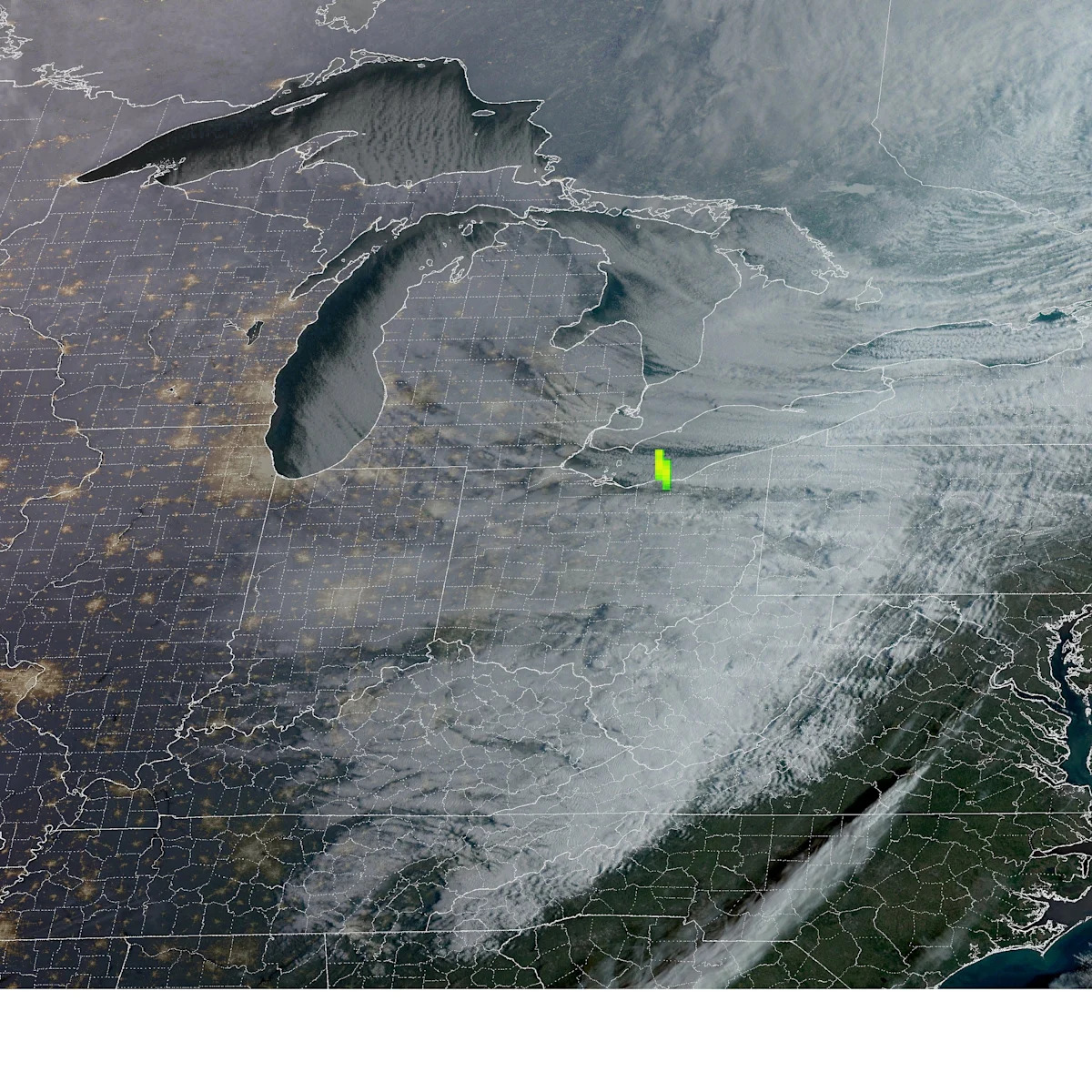
The "very bright daylight fireball was observed by witnesses from the northeast U.S. and Canada," NASA said in a Facebook post.

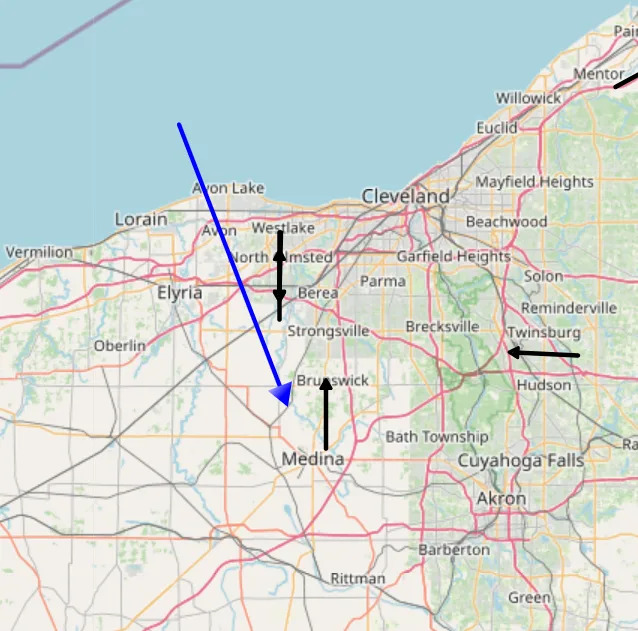
An analysis shows the meteor was first visible above Lake Erie around 9 a.m.

The sound, reported around 9 a.m. March 17, was heard across multiple communities, with people describing it as powerful enough to shake windows and briefly alarm pets and workers alike.

The fireball was caused by an asteroid nearly 6 feet in diameter and weighing about 7 tons, NASA said. It moved southeast at 45,000 mph before fragmenting over Valley City. The fragments continued on to the south, producing meteorites in Medina County.

Residents across Medina County turned to social media Tuesday to report a loud boom that rattled windows and shook houses. Some residents reported hearing a loud crackling sound, too. The boom was so loud workers inside a Medina industrial plant reported hearing it over the constant hum of machinery inside. One Medina County resident complained that her dogs wouldn't stop barking for several minutes.

Northeast Ohio wasn't the only area that felt the boom. The National Weather Service in Pittsburgh also said it was getting reports of a loud boom and a fireball in the sky in Western Pennsylvania and eastern Ohio.

One of the NWS employees stationed there caught the above video of the meteor coming through the atmosphere in the Steel City.

WKYC Chief Meteorologist Betsy Kling shared on Instagram that the National Weather Service in Cleveland believes the region experienced a sonic boom from the meteor entering Earth’s atmosphere.

“Meteors burn on entry and many times break apart," she wrote. "The sonic boom happens when an object going faster than the speed of sound (767 mph or so) creates a shock wave.”

There have been no reports of injuries.

Ralph Harvey, a geological sciences professor at Case Western Reserve University, explained why the meteor was visible over such a wide area and created a noticeable sonic boom.

“Like most rocks, it’s not very compressible,” Harvey said. “Because this meteor traveled so high in the atmosphere, people for a hundred miles around were able to see it. As it hit the atmosphere at about 50 times the speed of sound, it was like hitting a brick wall — it just exploded. The resulting sonic boom is part of what you hear as the pieces slow down.”

Harvey said the object's small size is why it wasn’t detected in advance.

“Only three times in history has NASA tracked an object all the way to Earth," he said. "This meteor was much smaller, so it was nearly impossible to see with a telescope (ahead of time).”

Events like this happen more often than people realize, he added, probably several times a day worldwide, but are rarely observed over populated areas.

How often does this happen?: Fireball meteor explodes over Ohio. How many have hit the state?

Robert Polak, director of the Kent State Planetarium and associate professor of physics, added that the meteor’s sonic boom could be heard over such a wide area because of its speed and altitude.

“The meteor disturbs the air, but the waves cannot move away from it because of its speed, so a very large wavefront builds up and is finally carried away, resulting in a loud sound," Polak said. "The sonic boom would be heard over a wide area because it is very loud at the source and carries enough energy even far away.”

Polak said he couldn't recall an event like this happening before in Greater Akron.

“There was likely a sonic boom from a meteor over Vancouver a few weeks ago, and with a quick search, you can find a few more stories over the last year – in Victoria, Australia, and Georgia, for example. These are far below catastrophic events like the Tunguska meteor in 1908.”

He also explained that meteors that reach the ground are called meteorites.

Laurence Garvie, a research professor and curator of the Buseck Center for Meteorite Studies at Arizona State University, said meteorite hunters lucky enough to locate wreckage in Medina County will likely find lots of little black rocks.

The American Meteor Society received more than 100 reports of sightings of the fireball, according to the online site EarthSky.

"I've been getting calls and texts all morning. This is very exciting for us," Garvie said. "They may just look like black stones on the ground, but you can actually hold something older than the Earth. Something from outer space. And we can learn new things from them."

Let us know where you were when you felt it.

This story has been updated.

Reporter Anthony Thompson can be reached at ajthompson@gannett.com, or on Twitter @athompsonABJ. Reuters, Craig Webb and Lauren J. Young contributed to this report.

This article originally appeared on Akron Beacon Journal: Loud boom today in Cleveland, Akron caused by meteor, NWS says
Comments
You must be logged in to comment.