huffpost Press
Advocates Warn About A Horrible Consequence Of Trump’s TPS Case
Images
1 / 4

2 / 4

3 / 4

4 / 4
After the U.S. Supreme Court announced Monday that it would hear a case about whether to end temporary protected status for hundreds of thousands of Haitian and Syrian nationals, advocates are already raising the alarm about what they see as a deadly danger.

If the 350,000 Haitians on TPS — a special status that protects immigrants from countries facing political or natural disasters from deportation — lose their legal status and are forced to leave the U.S. all at once, it will likely create a massive new family separation crisis, warned Tessa Petit, the executive director of the advocacy group Florida Immigrant Coalition. Because of dangers in their country of origin, she said, many people will likely choose to leave their U.S.-born kids behind rather than allow them to be deported with their parents.

“For any parent who is a recipient of TPS who would have to go back to Haiti, they would have to make the difficult choice of either leaving their children behind — or taking them to their death,” Petit told reporters during a media briefing Tuesday.

An estimated 50,000 U.S. citizen children have at least one Haitian parent with TPS, as well as approximately 80,000 Haitian children who are themselves TPS recipients.

“Some of these children were born in the United States and are American citizens. Others arrived at an early age and have grown up in American schools and communities,” Thamara Labrousse, the executive director of Sant La, a Florida-based organization that advocates for the needs of Haitian Americans, told reporters on the call. “For many of them, the United States is the only home that they know. Their futures now hang in the balance.”

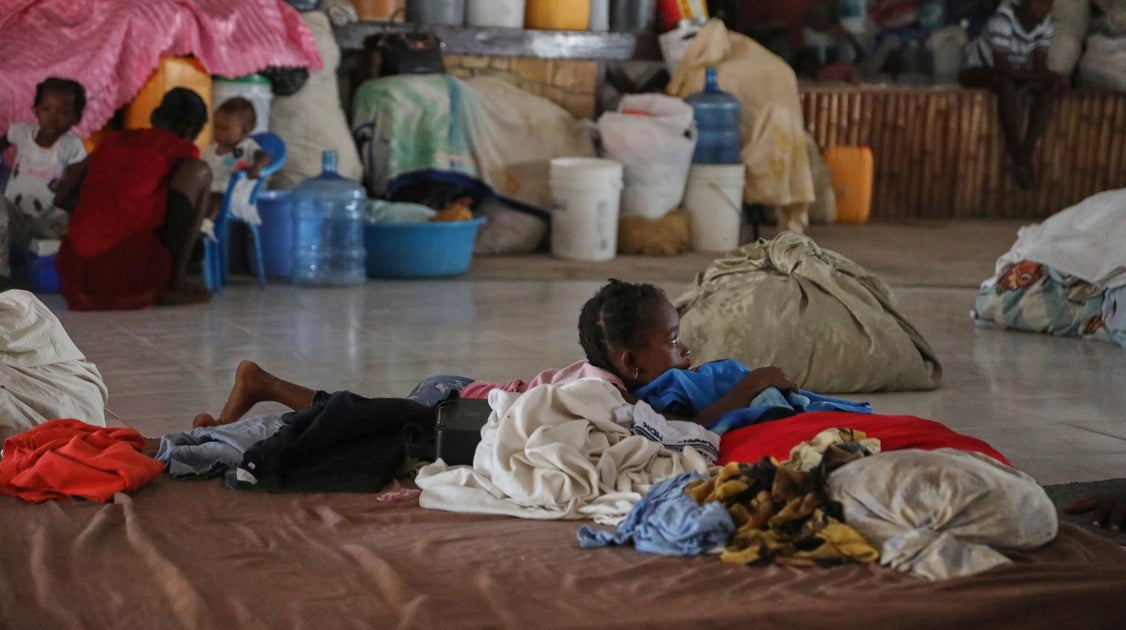
Haiti is not a safe place for children.

Haitian nationals were given TPS in 2010 after a powerful earthquake killed more than 300,000 people, and again in 2021 after Haitian President Jovenel Moise was assassinated. The collapse of the government allowed violent gangs to take over entire neighborhoods and communities in the capital city of Port-au-Prince and nearby areas. Children are often coerced into joining criminal groups, and sexual violence is rampant.

“The girls and women, also increasingly some men and boys, have been subjected to sexual violence,” William O’Neill, the United Nations’ designated expert on human rights in Haiti, said during the call. “They’re extremely vulnerable, and the state has almost no services to offer any survivors.”

Deported children would be exposed to rampant gang violence and sexual abuse, and the education system in the Port-au-Prince area is barely functioning. Most students in the region, experts said on the call, haven’t had a regular school year since 2018.

“Violence, insecurity and instability have disrupted daily lives, limited access to education, and created severe risk for families,” Labrousse added.

Despite pledges to go after only undocumented immigrants and the “worst of the worst,” the Trump administration has also been trying to revoke legal statuses and make otherwise authorized immigrants eligible for deportation.

One million TPS recipients, of varying countries of origin, live across the U.S. But the Trump administration has been trying to effectively end the program for large swaths of people. At the administration’s request, the Supreme Court last year allowed the government to end protections for about 350,000 Venezuelans, who are now vulnerable to deportation. And in addition to Haiti and Syria, the Trump administration is trying to end TPS for people originally from Somalia, South Sudan, Ethiopia and other countries. If they’re successful in ending TPS for all countries, more than 260,000 U.S. citizen children would be at risk of being separated from their families.

Some efforts have been blocked, if only temporarily: After then-Secretary of Homeland Security Kristi Noem announced last November that the agency was terminating TPS for Haitians, the order was immediately challenged and blocked by two lower courts. The Supreme Court this week agreed to take up the administration’s appeal, combining it with a similar case challenging the status of Syrian TPS recipients. Arguments are scheduled for late April, with a decision coming in the months to follow.

The court, however, has not granted the administration’s request to allow deportations to go forward as the case proceeds — giving those at risk a reprieve. For now, at least.

In the meantime, advocates are speaking out. “We need people, and we need America to hear the truth about what is happening to Haiti and the risk to our children,” Petit said.

By entering your email and clicking Sign Up, you're agreeing to let us send you customized marketing messages about us and our advertising partners. You are also agreeing to our Terms of Service and Privacy Policy.
Comments
You must be logged in to comment.