bbc Press
Plans for support on heating oil costs to be announced by PM
Images

1 / 9

2 / 9

3 / 9

4 / 9

5 / 9

6 / 9
7 / 9

8 / 9
9 / 9
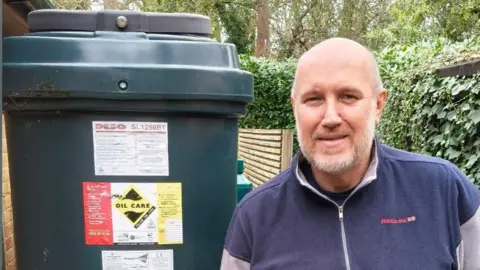
Plans to support households who have faced a sharp rise in the cost of heating oil  are to be set out by the government.

The price of heating oil has spiked since the outbreak of the US-Israeli war with Iran,  as the cost of crude oil has jumped above $100 (£75) a barrel - it was $71 a barrel before the conflict began.

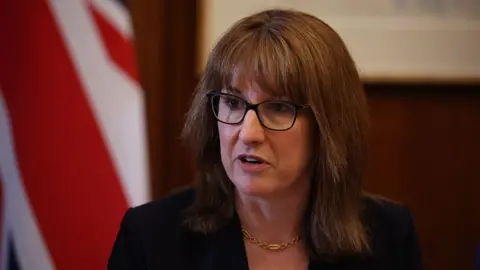
At the weekend, Chancellor Rachel Reeves told the Times she had "found the money" to help.

Prime Minister Sir Keir Starmer will set out the support plans - reportedly costing £50m - at a news conference on Monday. He is also expected to say he will "not tolerate companies trying to exploit this crisis" following accusations of price gouging.

Unlike consumers who use gas and electricity for heating and hot water, prices for households using heating oil are not capped by regulator Ofgem.

As a result, those who use heating oil have been among the first to feel the impact of rising crude prices and some customers say their costs have doubled.

The issue is particularly acute in Northern Ireland, where about 500,000 homes use it, almost two-thirds of all households.

About 3% of households in England and Wales said oil was their only source of central heating, according to a 2021 census, and 5% of households in Scotland.

Last week, Reeves said some heating oil companies were using the Middle East crisis as "an opportunity to rip off consumers" and asked the Competition and Markets Authority (CMA) to look into the issue.

In response, the UK and Ireland Fuel Distributors Association, which represents heating oil suppliers, said its members had seen "a very large and unexpected increase in demand".

"We have spoken to many distributors who, despite the very large price swings and demand, are honouring orders as quickly as they can. We know that the CMA is monitoring this, and we support this approach."

On Saturday, the head of the CMA, Sarah Cardell, said it was urgently looking into the issues and would "not hesitate to take enforcement action if potential breaches are identified".

Sir Keir is expected to raise concerns on Monday about reports of cancelled orders and prices being pushed up.

"If the companies have broken the law, there will be legal action," he is expected to  say.

Last week, the price of crude hit nearly $120-a-barrel before slipping back. On Friday it ended the day close to $104 a barrel, but that is still much higher than where it was before the conflict began.

Prices have spiked mainly due to the effective closure of the Strait of Hormuz, a vital waterway that carries a fifth of global oil supplies.

Energy Secretary Ed Miliband told the BBC's Sunday with Laura Kuenssberg programme that the UK was looking at "any options" which would help reopen the strait, including working with the US and other allies.

In an interview with the Financial Times, Donald Trump said it would be "very bad for the future of Nato" if allies did not help to secure the strait.

For now, household gas and electricity bills in England, Wales and Scotland are protected by the energy cap, which is set by the regulator Ofgem. Under this cap, bills will fall in April.

However, what happens from now until late May on the wholesale energy market will determine what happens to household bills from July. A sustained period of high wholesale costs could mean a sharp increase in energy prices for millions.

The last time there was a particular spike, following Covid and Russia's invasion of Ukraine, the government had to step in to help with the Energy Price Guarantee.

Miliband told the BBC that "if it's necessary to intervene, we will" on energy bills. However, he added, any intervention would depend on the scale of the impact from the conflict.

Speaking on the same programme, shadow energy security secretary Claire Coutinho called on the government to implement the "cheap power plan" the Conservatives outlined last year to reduce bills immediately.

Coutinho said the "first port of call should be to reduce costs" to people's energy bills, "before we go to the taxpayer again".

The local authority said it was a "difficult decision" but other support would still be available

Rachel Reeves says the Treasury is also looking at "different options" to help households most vulnerable to soaring energy bills.

Customers say they are facing inflated prices due to "unfair" practices from suppliers.

Drivers and businesses say the rising price of fuel is putting their livelihoods at risk.

Rachel Reeves says the Treasury is also looking at "different options" to help households most vulnerable to soaring energy bills.
Comments
You must be logged in to comment.