yahoo Press
Chicago man has $300K in cash and $400K in a savings account. Ramsey Show has a plan that could turn his money into $2M
Images
1 / 4
2 / 4

3 / 4

4 / 4
A 50-year-old Chicago caller recently stunned The Ramsey Show by revealing he had about $300,000 in cash sitting at home.

As Stewie explained, the habit began as a personal challenge to stash away $100 bills whenever possible. Then, over the course of 10 years, that “game” snowballed into a massive pile of idle cash (1).

Thanks to Jeff Bezos, you can now become a landlord for as little as $100 — and no, you don't have to deal with tenants or fix freezers. Here's how

Dave Ramsey warns nearly 50% of Americans are making 1 big Social Security mistake — here’s what it is and the simple steps to fix it ASAP

Robert Kiyosaki says this 1 asset will surge 400% in a year — and he begs investors not to miss its ‘explosion’

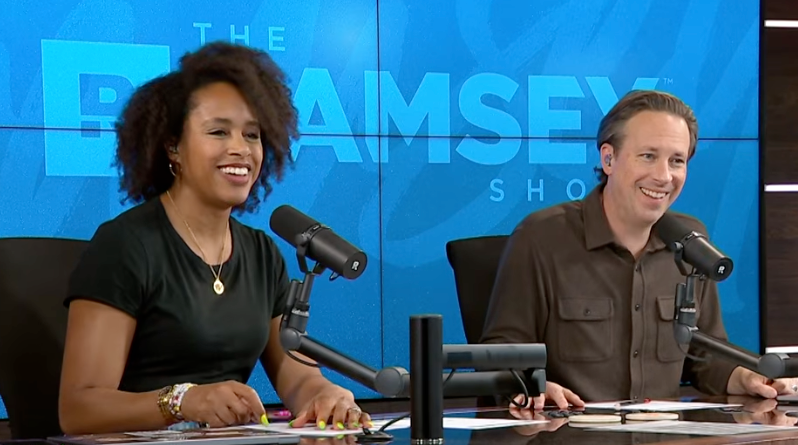
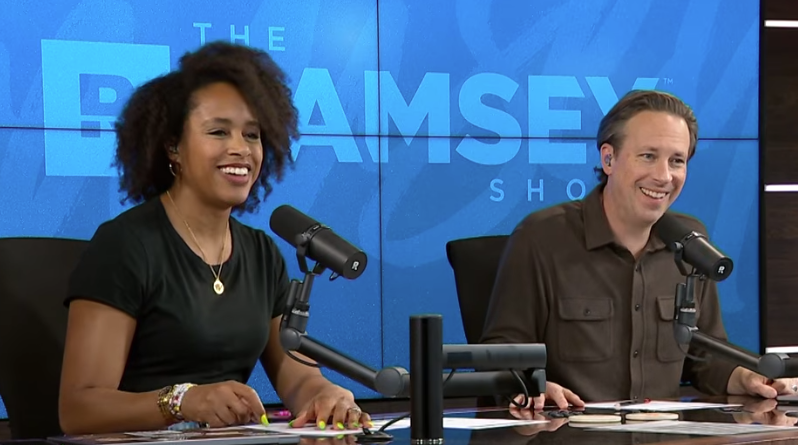
When Stewie called in to the show looking for advice, co-hosts Jade Warshaw and Ken Coleman applauded him for saving so much, but also advised him to stop stuffing it all in drawers.

If he were to invest that $300,000 into the stock market while also investing $500 a month — an amount Stewie said he’s comfortable with — compound growth could potentially turn it into nearly $2 million by retirement, according to Warshaw and Coleman.

Here’s how that math works, and why leaving large amounts of money in cash and avoiding the stock market can be costly.

Related: How to build a nest egg your grandkids will thank you for

Cash stored at home doesn’t earn interest, which means its purchasing power gradually erodes over time as living costs rise. Over a decade, those losses can really add up.

For example, according to the U.S. Bureau of Labor Statistics’ CPI inflation calculator, $300,000 in January 2016 would need to grow to about $411,857 by January 2026 just to maintain the same purchasing power. That means money kept in cash over that decade effectively lost more than $110,000 in real value (2).

“We need to harness the power of compounding interest, and when it's at home, there's zero compounding interest,” said Warshaw. “As a matter of fact, it's almost negative. It's depleting the value of your money because [of] inflation.”

One option, Warshaw added, is parking the money in a high-yield savings account and “maybe get 3.5% or 4%.” That would at least help the money keep up with inflation, which has averaged roughly 2.5% annually over the last 20 years (3).

However, Warshaw advised against that option, too, suggesting the best option, particularly since Stewie has no retirement savings, is investing in the stock market.

“If you were to invest it in … [a] basic index fund … [or a] mutual fund … you could really have an average annualized rate of return of around 10%, like you could pretty much bet on that,” she said.

The data above led to an inevitable question: why had Stewie so far refrained from investing any of his money? Stewie admitted that he was “fearful of the stock market,” largely because of stories he’d heard from his grandfather about the Great Depression.

The hosts explained that while fear is understandable, it can hold people back from building wealth, and they encouraged Stewie to focus on long-term data rather than short-term anxiety.

“Yes, there's been downturns, but usually it [the stock market] recovers very quickly within the next year or two after it’s fully recovered, and then some,” said Warshaw. “And so the point of the stock market is it's a long-term ride. It's not something you hop in and hop out of.”

Read More: 8 essential money moves to make once you’ve saved $10,000

Read More: You can now invest in this $1B private real estate fund starting at just $10

During the call, the co-hosts pulled up an investment calculator to illustrate the potential impact of long-term investing.

They walked through a simple scenario based on Stewie’s situation:

Invest the $300,000 in cash into an index fund

Contribute $500 per month going forward from his salary, which is the amount Stewie said he’s currently able to save

Keep investing for 17 years, from age 50 to 67

Inputting those numbers and assuming an average 10% annual return, the co-hosts concluded that Stewie could end up with about $1.89 million by retirement.

Of course, investment returns aren’t guaranteed. Markets fluctuate, and future performance may differ from historical averages. Still, long-term data suggests that investors who put money in broad index funds and stay invested through downturns tend to come out ahead.

The example above illustrates the potential power of compound growth. Earning returns not only on the original investment but also on accumulated gains can dramatically accelerate wealth building. And for late starters like Stewie, with significant capital to invest and well over a decade of working years ahead, the results can be surprising.

As it turns out, the $300,000 in cash wasn’t the only money Stewie had saved.

Later in the conversation, Stewie revealed he also had around $400,000 deposited in a high-yield savings account, bringing his total savings to roughly $700,000.

With this in mind, Warshaw and Coleman recommended keeping three to six months’ worth of expenses in that account and investing the rest in the stock market, along with the $300,000 in cash.

“Let's say he keeps a hundred in there,” said Coleman. “So, now we've got $600,000 that you need to get invested soon … and let that money go to work for you.”

Coleman concluded that if Stewie follows through on all of this advice, he’s going to be “a very, very wealthy person.” But he also warned Stewie not to waste time, adding that by waiting this long to invest, he has already missed out on “millions of dollars” in potential gains.

This 20-year-old lotto winner refused $1M in cash and chose $1,000/week for life. Now she’s getting slammed for it. Which option would you pick?

Turning 50 with $0 saved for retirement? Most people don’t realize they’re actually just entering their prime earning decade. Here are 6 ways to catch up fast

Young millionaires are rethinking stocks and banking on these assets instead — here’s why older Americans should take note

Here’s how I’m keeping my $2M nest egg safe at 71 — and making sure my grandkids inherit every penny

Join 250,000+ readers and get Moneywise’s best stories and exclusive interviews first — clear insights curated and delivered weekly. Subscribe now.

We rely only on vetted sources and credible third-party reporting. For details, see our editorial ethics and guidelines.

The Ramsey Show Highlights (1); U.S. Bureau of Labor Statistics (2); Federal Reserve Bank of Minneapolis (3).

This article provides information only and should not be construed as advice. It is provided without warranty of any kind.
Comments
You must be logged in to comment.