yahoo Press
The Bay Area's ‘city of trees' is cutting down hundreds of historic eucalyptuses
Images
1 / 12
2 / 12

3 / 12

4 / 12

5 / 12

6 / 12
7 / 12
8 / 12
9 / 12

10 / 12

11 / 12

12 / 12
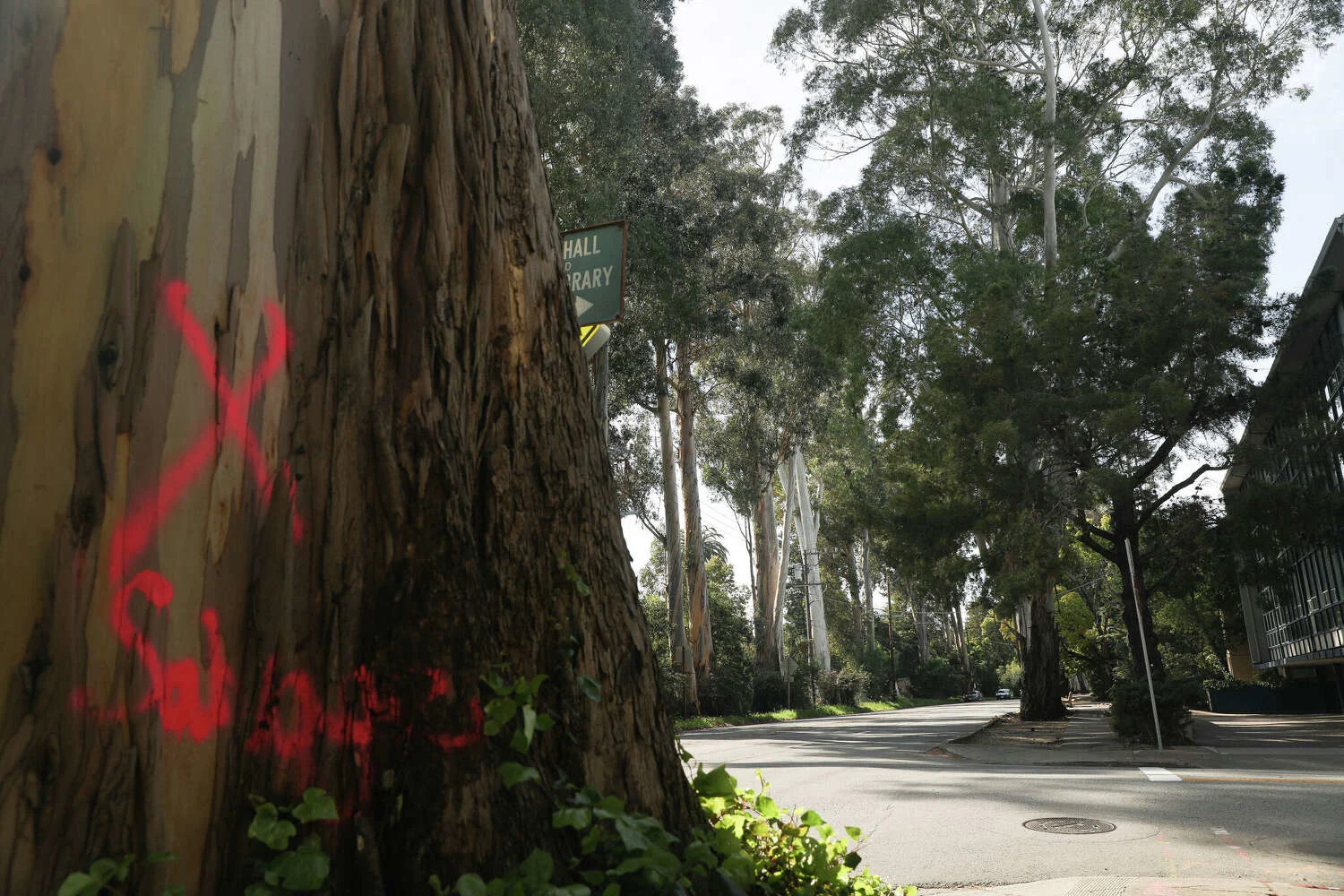
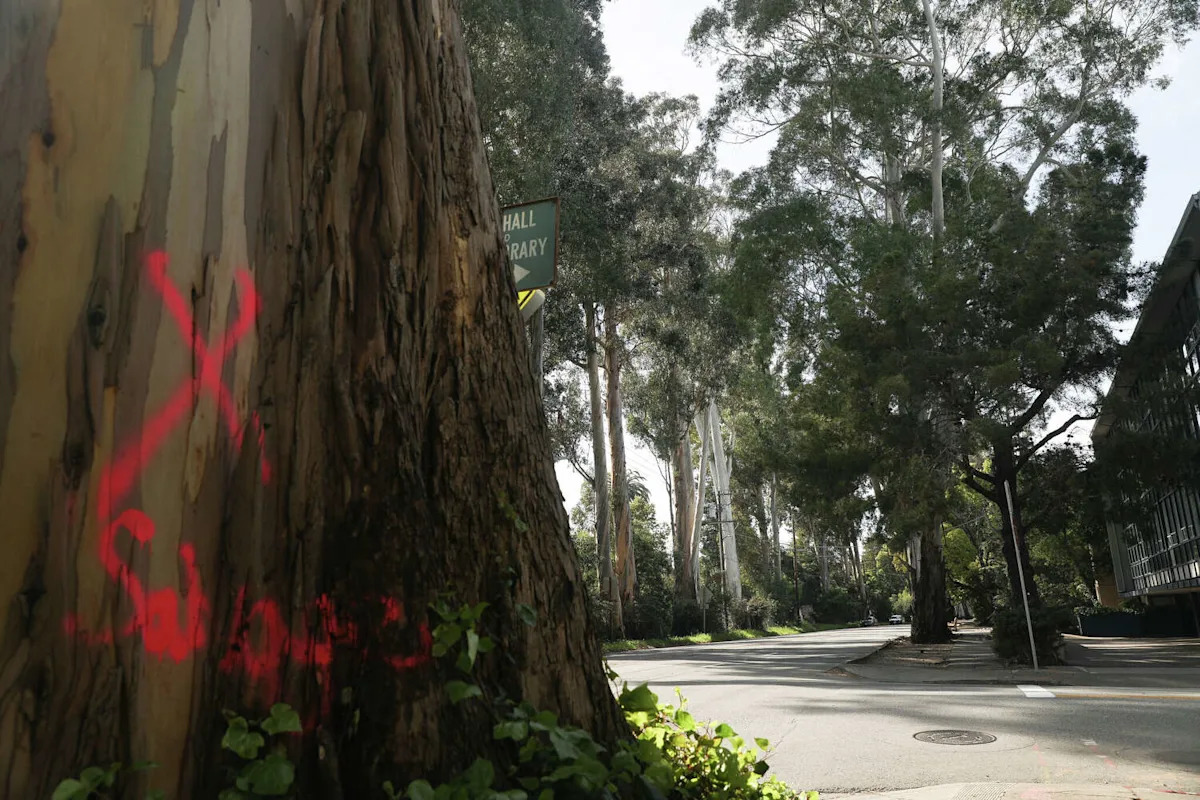
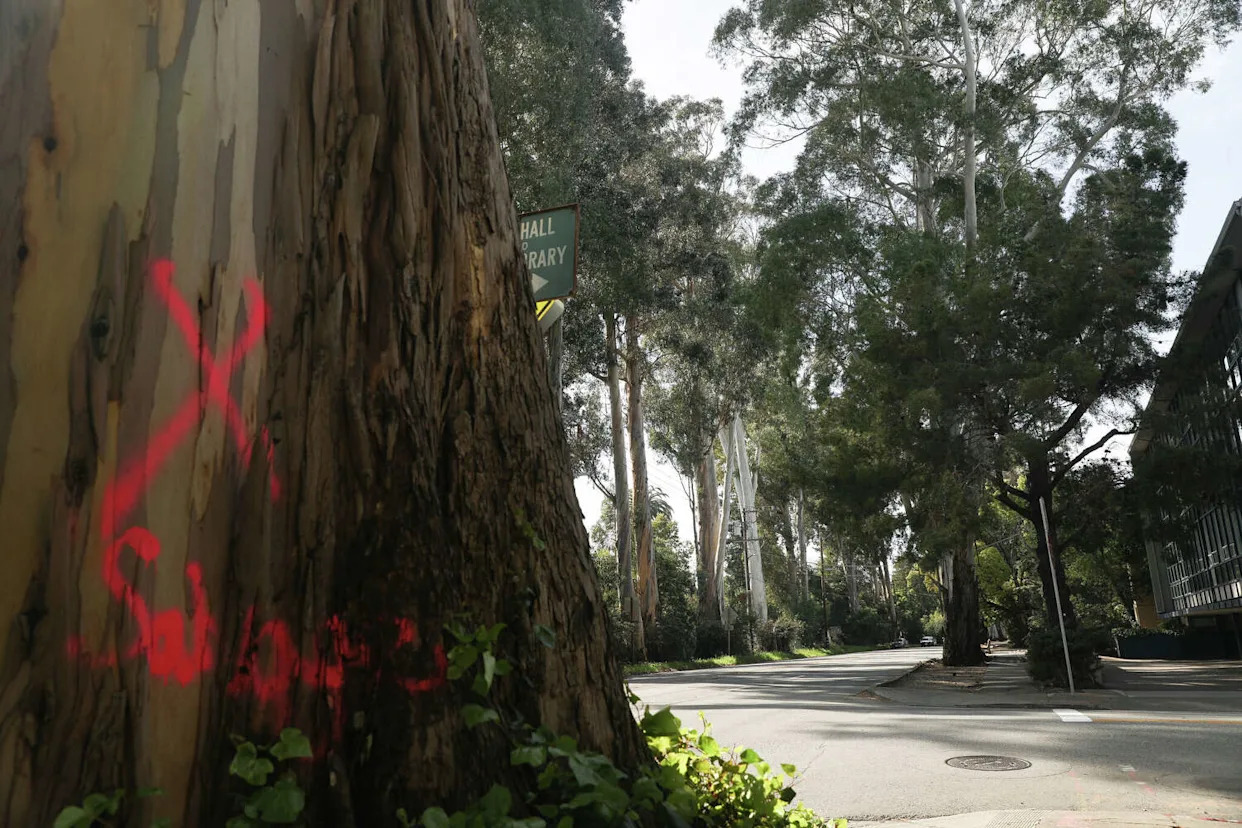
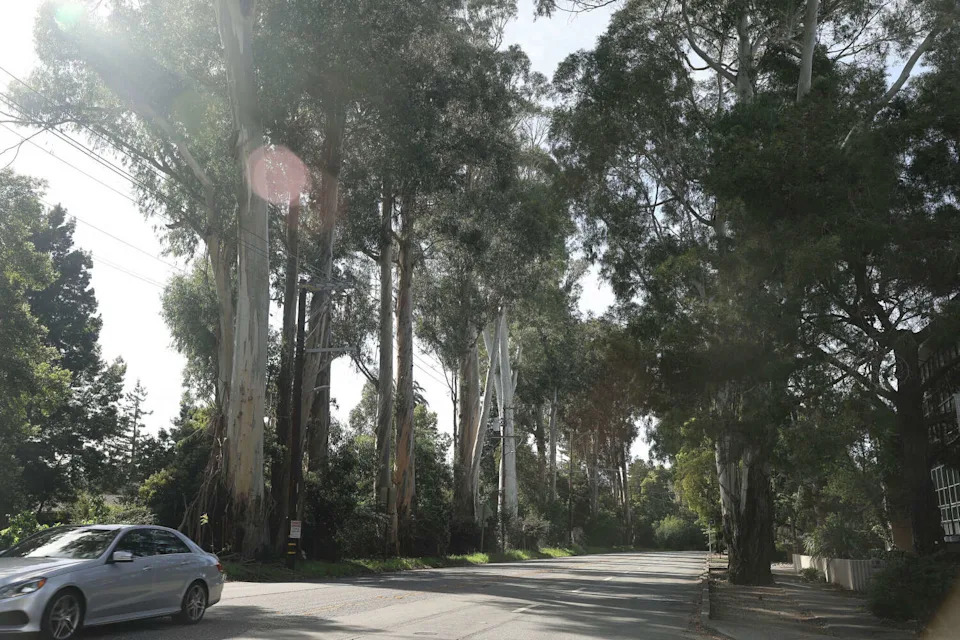
For as long as anyone in Burlingame has been alive, the town's main thoroughfare has been lined with eucalyptus trees. They form a silvery canopy above 2.2 miles of El Camino Real, earning the stretch a spot on the National Register of Historic Places.

But in January, the state's transportation department rolled cherry-picker trucks into Burlingame and took chainsaws to the 150-year-old trees.

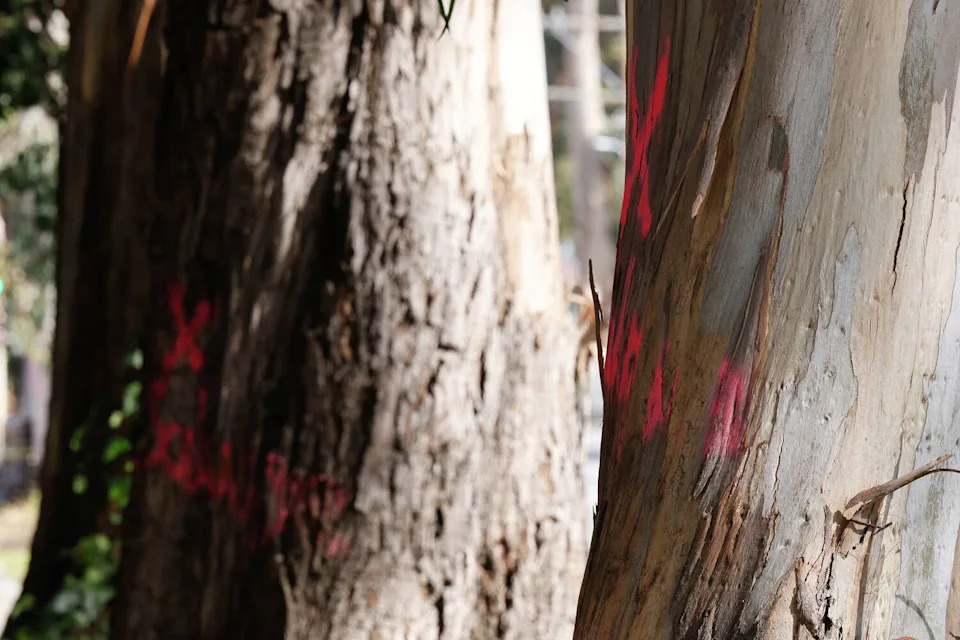
Caltrans, which manages this section of state road, has already felled about 80 of the roughly 400 eucalyptus trees. Over the next two years, more than 80% of them will be removed and replaced by saplings.

While many Bay Area cities continue to fight the inevitable, from new housing to rising sea levels, Burlingame, which calls itself "the city of trees," is finally making peace with a fate it had long sought to avoid. The project concludes decades of fraught negotiations between Caltrans and Burlingame officials over the trees, which have slowly taken over the road. Their roots have split and rippled the sidewalks, making them impassable by wheelchair or walker, and their overgrown branches make it hard for drivers to see. Many of the trees are unhealthy, rocking perilously above nearby power lines during storms.

The growing risks have been persuasive even to people who were once staunch opponents of the tree removal project, like Burlingame Historical Society President Jennifer Pfaff. But their loss is still painful, said Pfaff, who has used the trees as landmarks since she was growing up in Burlingame. She feels "lost" now that some of them are gone.

"Particularly the large ones, they're always embedded in your head when you're driving along," Pfaff said. Now, she said "it's like going to a town where I don't know where I am. It's like I need a map."

The eucalyptus grove was planted in 1870 by horticulturist John McLaren, who would later design San Francisco's Golden Gate Park. Now officially known as the Howard-Ralston Eucalyptus Tree Rows, the trees were intended to create a scenic windbreak along the road to the peninsula's historic mansions.

McLaren's original corridor extended into San Mateo and Millbrae, although many of those cities' eucalyptus trees were pulled down so the road could be widened. The long history of activism around the trees in Burlingame began in 1908, when the city's then-mayor signed an ordinance to protect them at the urging of the Burlingame Woman's Club.

"‘El Camino Real' - the King's Highway, if you please" proclaimed a 1913 edition of a local newspaper that Pfaff read aloud at a community meeting on the trees' removal this month. "Remove the trees and it is no more a king's highway, but an ordinary country road."

The town has scrambled to protect the trees from the creep of development in the decades since, passing zoning ordinances to prevent stores from opening along the road's edge. Meanwhile, the trees grew more unwieldy, with many cresting more than 100 feet.

As the road's condition deteriorated, the city and Caltrans debated the best way to repair it for "30 or 40 years," according to Burlingame Mayor Michael Brownrigg.

"All of us who drive El Camino know it's in bad shape," Brownrigg said. "But there was a real impasse between the city, who wanted to preserve all of the trees and then fix the road, and Caltrans, who said, ‘Well, we can't fix the road if we leave all the trees.'"

The breaking point came about a decade ago: under increasing pressure from Caltrans, the city commissioned an El Camino Real Task Force to decide the trees' fate. Pfaff was one of several members of that committee who went in determined to find a way to repair the road and also save the trees. Meetings sometimes ended in tears, she said, as the task force gradually realized that wouldn't be possible.

The compromise that the task force reached will see more than 400 new eucalyptus and elm trees planted along the road. The new eucalyptus trees will be a skinnier variation that drops less bark on the road, Brownrigg said. While eucalyptuses grow faster than most trees, it will still take decades before the bright, bare road is shaded by a canopy again.

"It's going to be tough visually for a while, for all of us who've lived here for all this time," Brownrigg told a packed room of mostly older Burlingame residents at a community meeting this month. "But they say that you plant a tree not for yourself, but for your kids."

As recently as six months ago, Brownrigg told the Chronicle, people were telling him he "had better not be in town when the work started." But his constituents have generally been resigned to the tree removal since it began in January.

Now, Burlingame's residents are more agitated about the traffic tangles the project has created, Brownrigg said. Construction is set to conclude in fall 2029, as crews remove and replant the trees, repave the roads and move the street's power lines underground.

The city aims to keep at least one lane of the road open in both directions over the next three years, Brownrigg said, although he acknowledged that there will also be times when residents will have to detour around the entire road while crews are felling trees.

The first months of construction have forced Burlingame's residents to take routes through residential neighborhoods, clogging streets that have never had traffic problems before, said former Burlingame Mayor Terry Nagel. Despite the headache it has created, she thinks the city and state have done a "fabulous job" accommodating the city's attachment to its tree-lined road as they rebuild the stretch.

"It is by far the biggest project we've had in the city since I've been here," Nagel said. "I think we have to make our peace with it."

This article originally published at The Bay Area's ‘city of trees' is cutting down hundreds of historic eucalyptuses.
Comments
You must be logged in to comment.