yahoo Press
NJ mom was gowned and had an IV in when hospital tried to cancel her surgery. She ended up owing $126K for it
Images
1 / 4
2 / 4

3 / 4

4 / 4
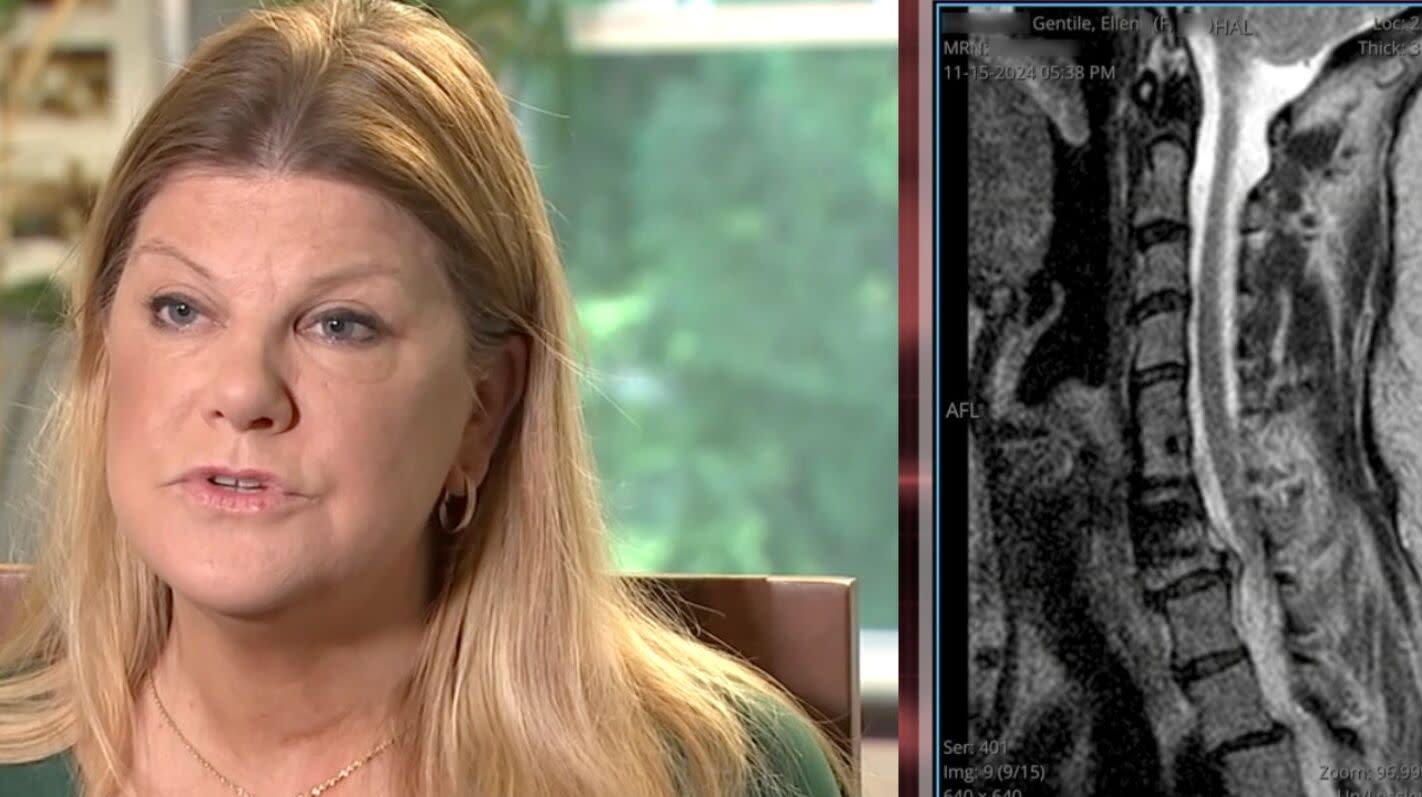
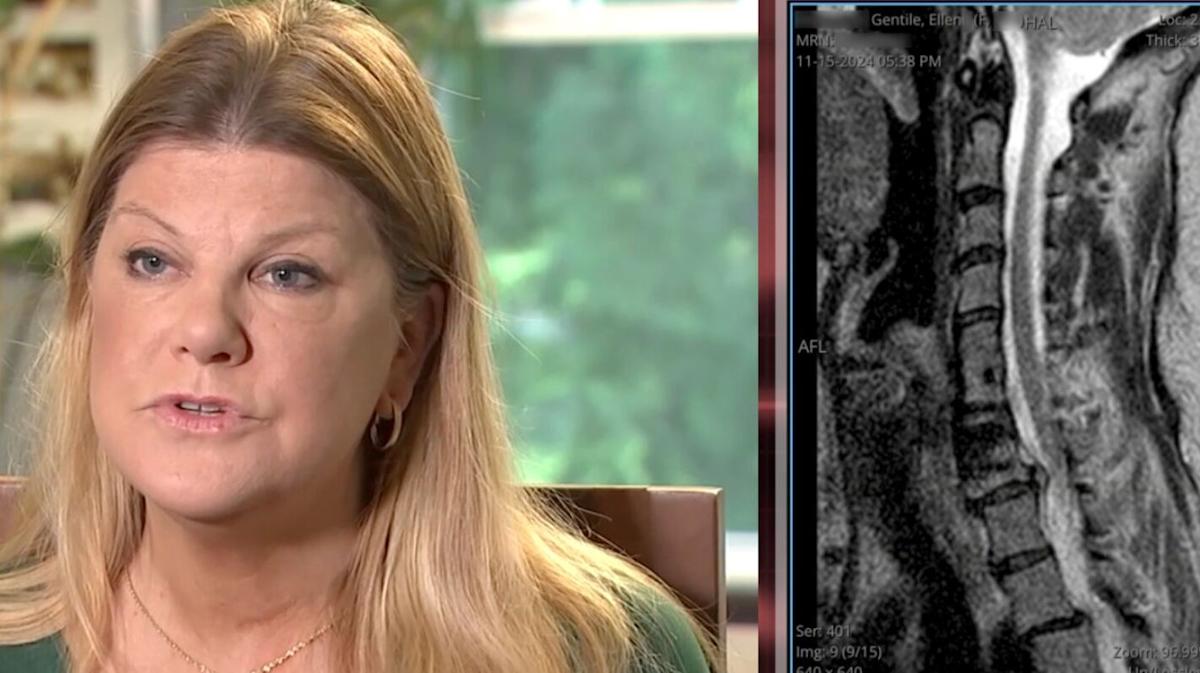
Ellen Gentile was already lying on the operating table with a hospital gown on and an IV in her arm when her family says they learned the neck surgery she believed had been approved might not be covered after all.

The Millburn, New Jersey mother had been living with what she described as excruciating pain from a ruptured disc that left her partially paralyzed and unable to move her arms or hands. Expecting long-awaited relief, she arrived at the hospital ready for the procedure after being told to come in the night before.

Thanks to Jeff Bezos, you can now become a landlord for as little as $100 — and no, you don't have to deal with tenants or fix freezers. Here's how

Dave Ramsey warns nearly 50% of Americans are making 1 big Social Security mistake — here’s what it is and the simple steps to fix it ASAP

Robert Kiyosaki says this 1 asset will surge 400% in a year — and he begs investors not to miss its ‘explosion’

"The night before they called me and told me, come on in," Ellen told ABC’s 7 On Your Side consumer reporter Nina Pineda (1). "You know, we assumed everything was approved."

With her condition worsening and mobility at risk, the surgery ultimately went ahead. But when the bills were later tallied, Gentile and her husband, Matthew, were left facing roughly $126,000 in medical costs.

However, what Ellen experienced isn’t uncommon. A 2024 study from the Commonwealth Fund found that nearly half of insured Americans have faced unexpected medical expenses (2). Here’s how the situation unfolded and what patients can do when coverage falls through.

When Pineda later sat down with the couple to trace where the breakdown may have happened, she asked whether anyone had warned them the procedure might not be covered.

"Well, the business director said this usually gets worked out," Matthew recalled.

After submitting their claim – which totalled six figures and included roughly $37,000 for an artificial spine device and about $9,000 in anesthesia costs – the couple was denied coverage. They went on to appeal the decision twice, but both attempts were unsuccessful.

When 7 On Your Side later contacted her insurance company, Independence Blue Cross, and provided letters of medical necessity from Gentile’s physician, the insurer maintained its position, citing that the device was not approved by the U.S. Food and Drug Administration and that the surgery had not been formally authorized. Still, the exchange revealed one remaining option: the couple could pursue a final review through an independent third party.

For many Americans, navigating medical bills and coverage disputes can feel overwhelming. Data from the Kaiser Family Foundation shows that about 44% of U.S. adults say it is very or somewhat difficult to afford their health care costs (3). Financial strain is especially pronounced among those without coverage, with roughly 82% of uninsured adults under 65 reporting difficulty paying for care, compared with about 42% of those who have health insurance.

Ellen’s experience reflects a broader reality: insurance denials can affect patients across income levels, even those who understand the health-care system. In a separate case previously covered by Moneywise in November, physician Nicole Hughes, director of the Farley Health Policy Center at the University of Colorado, was initially left facing a nearly $64,000 hospital bill after surgery for a broken ankle.

Her insurer agreed the procedure itself was medically necessary but denied coverage for her overnight hospital stay, explaining that the services had been billed together as part of a bundled claim. The technical distinction ultimately shaped what the insurer was willing to pay. Hughes later told Moneywise that in the immediate aftermath of trauma, patients are rarely in a position to think strategically about insurance approvals or network status.

“Even as a physician who works in health policy, asking about my level of care and/or calling my insurance company weren't on my mind at all at that moment,” Hughes said.

While the details of the two cases are different, both share a common thread: neither patient accepted the initial denial. Disputing coverage decisions can make a difference, yet many Americans never take that step. The Commonwealth Fund found that 45% of insured adults reported receiving a bill for care they believed should have been covered, while nearly one in five said they had been denied coverage for a doctor-recommended service (4).

Even so, fewer than half of those who experienced billing errors or denials formally challenged them, often because they were unaware they had the right to appeal.

Read More: 8 essential money moves to make once you’ve saved $10,000

Read More: You can now invest in this $1B private real estate fund starting at just $10

In the end, Ellen said she was grateful that 7 On Your Side helped point the family toward a final review option.

"I mean, you were able to give us an avenue to pursue that was more favorable, and it was approved," Matthew said.

The denial was overturned through an independent third-party review, and the $126,680.25 bill was covered. Still, unexpected medical bills can happen to almost anyone. Sara Collins, senior scholar and vice president for health care coverage and access at the Commonwealth Fund, told CBS MoneyWatch that confusion around the billing process often leaves patients unsure how to respond (5).

“Many people with insurance are facing unexpected bills and having doctor-recommended care denied," she said. "And many are at a loss as to what to do about it — people are confused about the health care process itself, both in the way things are billed and who is responsible for it."

From Hughes’ experience, she said it’s important to document everything and ask the right questions when faced with a denial.

What criteria were used?

Who evaluated the case?

Was there a peer-to-peer discussion between physicians?

Requesting a written explanation of the denial can also help clarify whether the issue relates to prior authorization, medical-necessity standards, network status or billing codes. Patients may be able to work with their provider’s billing office to resubmit claims with updated documentation or corrected coding.

If concerns remain, consumers can file a formal appeal with their insurer or request an external review through their state’s insurance department, an important step that proved decisive in Ellen’s case.

Even if a denial ultimately stands, options may still be available. Some hospitals offer financial-assistance programs, often referred to as “charity care (6).” The Internal Revenue Service defines charity care as free or discounted health services provided to people who meet an organization’s eligibility criteria and cannot pay for all or part of their treatment.

State insurance departments and patient advocacy groups may also offer guidance, helping patients better understand their rights and navigate complex billing disputes. Ellen’s experience is a reminder that the first answer from an insurer isn’t always the final one.

This 20-year-old lotto winner refused $1M in cash and chose $1,000/week for life. Now she’s getting slammed for it. Which option would you pick?

Turning 50 with $0 saved for retirement? Most people don’t realize they’re actually just entering their prime earning decade. Here are 6 ways to catch up fast

Young millionaires are rethinking stocks and banking on these assets instead — here’s why older Americans should take note

Here’s how I’m keeping my $2M nest egg safe at 71 — and making sure my grandkids inherit every penny

Join 250,000+ readers and get Moneywise’s best stories and exclusive interviews first — clear insights curated and delivered weekly. Subscribe now.

We rely only on vetted sources and credible third-party reporting. For details, see our editorial ethics and guidelines.

ABC 7 (1); The Commonwealth Fund (2, 4); Kaiser Family Foundation (3); CBS News (5); IRS (6)

This article provides information only and should not be construed as advice. It is provided without warranty of any kind.
Comments
You must be logged in to comment.