buzzfeed Press
Hospital Workers Are Revealing The Heartbreaking Regrets Patients Had On Their Deathbeds, And Wow
Images
1 / 12
2 / 12

3 / 12
4 / 12
5 / 12
6 / 12
7 / 12
8 / 12
9 / 12
10 / 12
11 / 12
12 / 12
"She was 17, and she died in the ER a few hours after my shift. It's been five years, and when I think about it, I start crying like a baby."

As a Senior Staff Writer at BuzzFeed, I cover real-life stories that explore relationships, lifestyle (including travel and beauty), and the internet's most fascinating trends.

Note: Some responses were pulled from this Reddit thread.

"He passed away later that week, and while I distinctly recall some of my classmates being upset, I felt relief for him. I knew he was where he wanted to be. I've had many patients since, but you tend to remember your first ones. Other than that, ditto what everyone's saying, more time with family/loved ones, wish they wasted less time with work or other BS, etc."

"The woman looked me directly in the eyes, and in a hoarse, labored voice she stated, 'I was angry. I told her I was disappointed in her.' She began to cry; her vitals plummeted. 'I'm sorry,' was the last thing she said before her heart stopped. We coded her, intubated her, performed round after round of ACLS, only to eventually have to call time of death.

I still see her face at times, her eyes filled with more emotional pain than physical. It took much longer and was so much harder to write this than I thought it would be...."

"A week later, I was diagnosed with breast cancer. I instantly told the doctor that I wanted a bilateral mastectomy with reconstruction. I also had an aggressive form of cancer. My doctor kept pushing a lumpectomy, which I probably would've gotten before I had heard how much she regretted her decision. I feel that she actually saved my life by sharing and opening up with her regret of all time."

"I left, and she was stable in the ER. The next day, I came in and asked if she had gone home or if she was in an inpatient unit. They told me she died a few hours after my shift. It's been, like, five years, and when I think about it, I start crying like a baby. I don't cry. I think the last time I cried other than this was my grandpa passing, but even that I can discuss without crying now. Her death is the only thing that completely breaks me down."

"Colon cancer is horrific. It looks exactly like the word cancer. It's disgusting. It looks alien. Please, please, please, people, get your colonoscopy when you are told. It's not just you who you are saving — it's your kids who will get screening earlier if they find something in you. But if you don't, they'll never know they are at risk."

"Come to find out, her dog was on his deathbed, too. I guess she put her dog down a few days before going into the hospital; she knew her life was over, so she put him down first. She hated herself for it and for the fact that she blew the opportunity for them to spend their last moments together. It was really heartbreaking to watch, to hear that unfold.

She passed early in the morning two days later. I took a couple of mental health days off after she passed and spent some time looking up dogs to adopt and new jobs to apply for."

"Many older patients had some interesting life stories and most wanted to tell them before they died. Most were at peace with the life they lived. Many regretted working so much and not spending enough time with family."

"Now, at least, if I want to do something purely for the fun of it, and my wife asks why I want to, all I have to say is I want to pet the squirrel. (Obligatory, please don’t actually pet wild squirrels; they will not be entertained that you are messing with them and put their teeth to work)."

For more info, tombstones on an EKG are indicative of massive damage being done to the muscle of the heart due to blockage, and due to electrical signals actually looking like tombstones, aka widowmakers, due to the fatality rate. I couldn’t tell him what his EKG said because of my level of training; I can only obtain and transmit them, not interpret them. He asked to see it and knew what he was looking at."

"I sighed and told the nearest CNA to wait by so I could tell him the time of death. I did my PPE and went in, and she was still alive! So, I restart her pump and stand there a minute, listening to the hum of the HEPA filter. I realized throughout her entire stay at the hospital, she wasn’t allowed a single visitor. She’s gone through this entire experience alone.

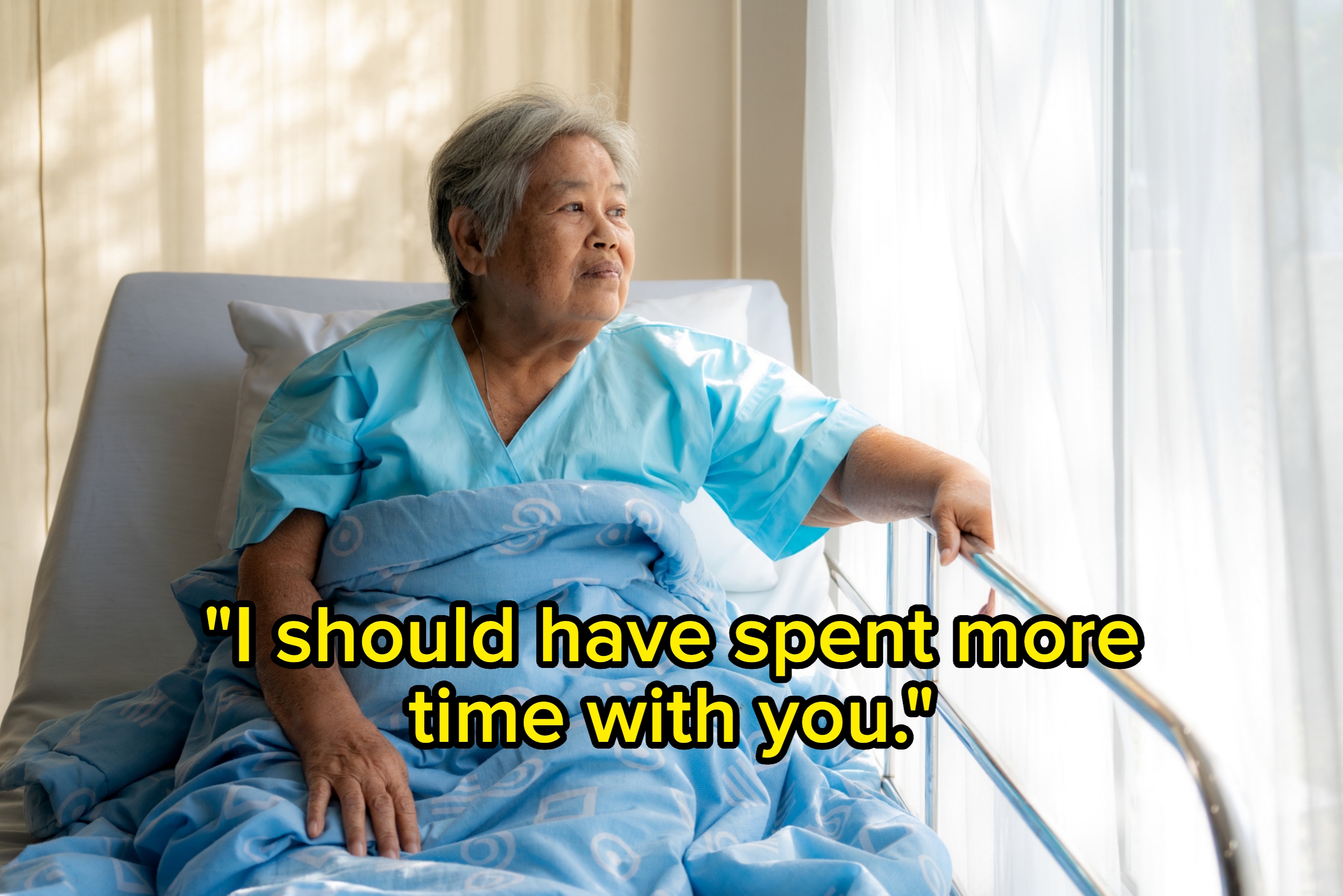
I grabbed a warm washcloth and started wiping around her eyes. The moment the warm cloth touched her skin, she whimpered and leaned into me, then sighed deeply. She opened one eye and gave me a very quiet, very slurred, 'Thanks, (daughter’s name). I should have spent more time with you.' I left the room and cried for the first time since the pandemic started. She died a few days later."

"Years later, I met a guy at work who ended up moving across the country for work. I remembered the older man and followed my heart. I never let my love get away. I married him this summer. You should always at least try; even if it doesn't work out, go for it and find out so you never wonder."

"But what I'm doing with my day is trying to remind those same people that under the tubing, behind the equipment and the drugs (that are the bread and butter of my job), under the blanket and on the bed is their loved one. The person is the point.

Machines for breathing, machines for making the heart keep pace, machines helping to reduce the effort a tired heart needs to pump, machines to do the work of the failing kidney, machines to remove the need for the tiny spaces left in diseased lungs to push more gas than they can ever hope to move. And we tend to use drugs. Drugs that assist the machines. Drugs that push the body to do what it currently or no longer can.

And the patient moves from day to night and back to day. And the family wants us to do one more thing. And another. Because they want their person back. Sometimes we can do that. We can give you more time together in life. Sometimes we can't. And if you've ever wanted to know about the regrets of dying patients, these are the regrets many people can never express.

The regret that they weren't able to tell their loved ones and families that they didn't want all the things. Maybe some of the things, for a while. But not all of them, until the end. The regret that the loved ones and families want to help, but as the patient, they physically could not tell them no, don't do that, it's not helping. The regret that those who understand that there are worse things than dying are those for whom those worse things present their current reality.

So, I guess the point is this: Don't wait until you are there. Have a conversation with your significant others about what you want to happen if the worst happens. Don't put it off as having bad thoughts or ideas, or unpleasant, or even that it'll invoke some sort of fate that wasn't otherwise going to happen. Discuss organ donation as if you really had the chance to do it. Let your loved ones know what you think, and leave your actual end-of-life regrets for stuff like not going to Disneyland that time, or spending too much time driving to work."

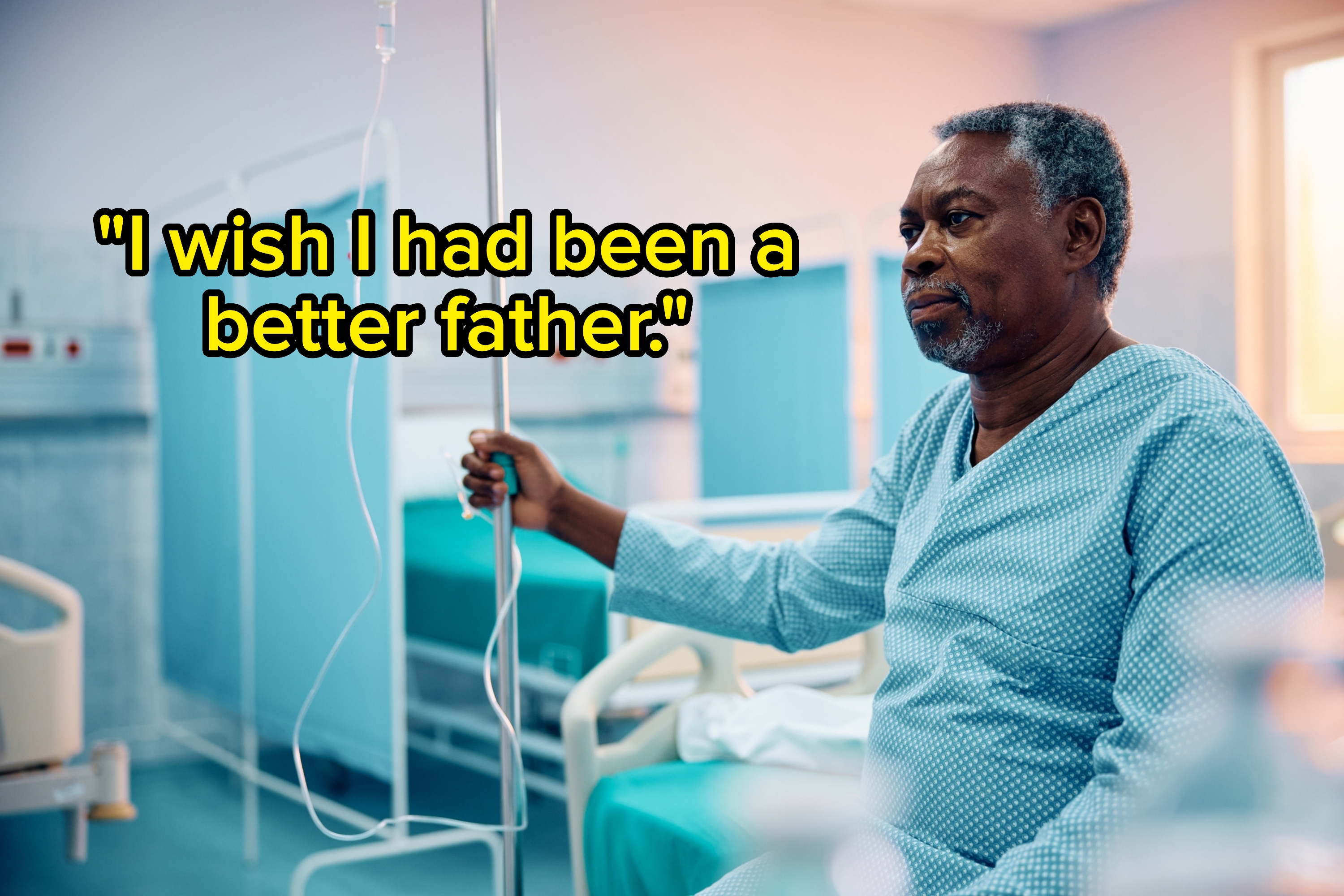
"They stuck together for 60 years, but apparently, she was constantly cheating/not involved. He ran into her in their 40s, and she was clearly still in love with him, but he refused to leave his wife. He had two chances but didn't take them. He talked about what could have been, and that was his biggest regret. It was heartbreaking."

Note: Some responses have been edited for length and/or clarity.
Comments
You must be logged in to comment.