yahoo Press
Live Nation exec brags about ‘robbing fans blind’ on fees — then got promoted. Here’s what you’re really paying for
Images
1 / 4
2 / 4

3 / 4

4 / 4
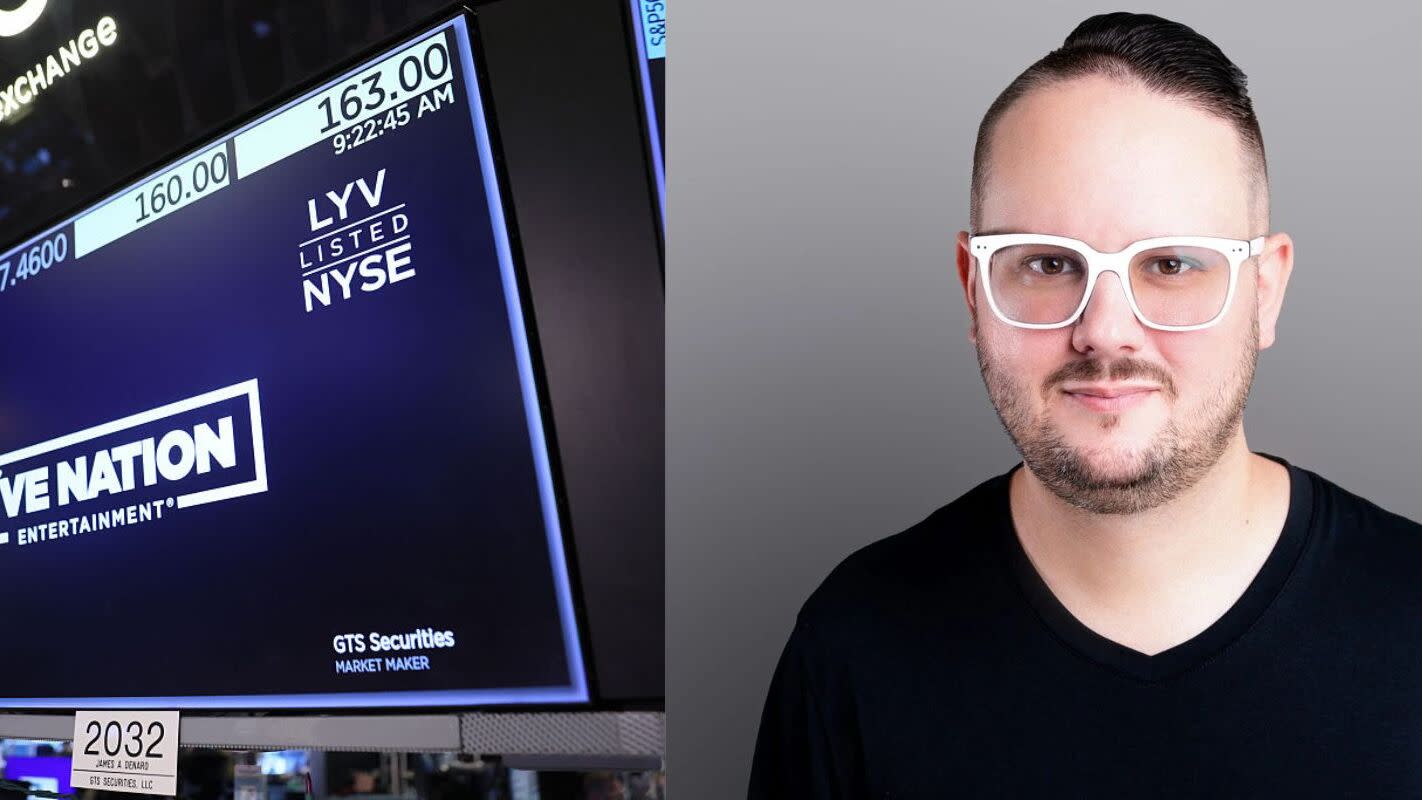
They joked about their customers being “stupid” and how they were “robbing them blind.” Now, two Live Nation execs could be off the hook after the Department of Justice (DOJ) settled its antitrust lawsuit against the event promotion company and Ticketmaster, which it owns.

Prosecutors sought (1) to enter the private Slack messages from 2022 that were exchanged between Ben Baker and Jeff Weinhold, both Live Nation regional ticketing directors at the time, into evidence in the case that aims to break up the company’s “monopoly power” over live events (2). They also hoped to compel Baker — who’s since been promoted to head of amphitheater ticketing according to Pollstar (3) — to testify. But Baker has evaded that, for now, with the prospect of a settlement (4).

Thanks to Jeff Bezos, you can now become a landlord for as little as $100 — and no, you don't have to deal with tenants or fix freezers. Here's how

Dave Ramsey warns nearly 50% of Americans are making 1 big Social Security mistake — here’s what it is and the simple steps to fix it ASAP

Robert Kiyosaki says this 1 asset will surge 400% in a year — and he begs investors not to miss its ‘explosion’

Meanwhile, the Slack messages gloated about fleecing customers, with Baker admitting “I gouge them on ancil prices,” including how “I charge $50 to park in the grass … $60 for closer grass.” He added “robbing them blind baby … that’s how we do,” to which Weinhold laughed (5).

Weinhold also boasted about raising prices, including VIP parking at an event to $250 (6). “These people are so stupid,” Baker quipped. “I almost feel bad taking advantage of them.”

The messages imply that the perceived price gouging is deliberate, even celebrated, while fans are left holding the increasingly hefty bill — an issue so pervasive that the Federal Trade Commission (FTC) used it as one of the key points in a lawsuit against the companies last year (7).

That said, despite the antitrust settlement, numerous state attorneys general plan to continue the fight — which means there could be justice for frustrated fans on the horizon.

The antitrust suit, launched in 2024 by the DOJ and more than 30 states, aims to undo the 2010 Live Nation and Ticketmaster merger. The New York Times reported that the union gave Live Nation “global reach and a sprawling business model unmatched by any rival” — a $25 billion revenue generator in 2025 alone, that includes control over hundreds of venues and artists (8).

But, the Times added, the government accused Live Nation of repeatedly breaking a merger agreement to not refuse live events to venues that didn’t use Ticketmaster’s service, which eventually led to the current antitrust battle.

The case started under the Biden administration but is now under President Trump’s DOJ, and this week government and Live Nation attorneys shocked everyone (9) — including presiding Manhattan Judge Arun Subramanian — by announcing they’d reached a tentative settlement.

The settlement essentially states that Live Nation must allow unaffiliated sellers 50% of their tickets to shows at venues they own, put a 15% cap on their services fees and make a portion of its tickets available to third-party sellers (10). It must also relinquish 13 amphitheaters, pay $280 million in damages and agree to an eight year extension of DOJ oversight.

The government touted the settlement as a consumer win, but critics disagree. Syracuse University’s Bill Werde said it’s “generous to call that fine a slap on the wrist (11)”; Stephen Parker, of the National Independent Venue Association, told the AP that it “does not appear to include any specific and explicit protections for fans, artists, or independent venues (12)”; and former DOJ antitrust attorney John Newman warned that ending the lawsuit means “carte blanche” for Live Nation and Ticketmaster to “keep jacking up prices, keep cutting out competition (13).”

That’s a huge disappointment for fans who’ve decried Live Nation and Ticketmaster’s practices for years — including a highly-publicized 2022 lawsuit by Taylor Swift fans for price fixing, fraud and other complaints related to the sale of tickets for her Eras tour (14).

The settlement, however, can’t stand without Judge Subramanian’s approval — the same judge who called it “absolutely unacceptable (15)” and demanded both sides appear in court next week.

And even if it’s approved, nearly 30 states (16), from New York to Utah, plan to continue the legal battle — meaning Baker and Weinhold’s words could still come back to haunt them in court.

Read More: 8 essential money moves to make once you’ve saved $10,000

Read More: You can now invest in this $1B private real estate fund starting at just $10

California Attorney General Rob Bonta echoed the sentiments of his fellow state attorneys general when he said that “we’ve already heard that Live Nation fully intended to take advantage of fans” and promised to “continue this fight and get a better deal for consumers (17).”

And the states made it clear in a letter to the court, filed two days after the settlement announcement, that they still want to use Baker and Weinhold’s Slack messages as evidence — and compel Baker to testify in court (18).

That, of course, could be bad news for Baker and Live Nation. The business world is rife with examples of executives paying a steep price for appearing to mock their own customers. Campbell’s soup vice-president Martin Bally was fired last year after a leaked recording heard him disparaging customers as “poor people (19).” In November 2013, Lululemon founder Chip Wilson blamed “some women’s bodies (20)” for a stretching issue with some of the brand’s black yoga pants, leading to executives resigning and the stock falling. Wilson resigned a month later (21). And British businessman Gerald Ratner famously tanked his family jewelry company after a 1991 speech where he called their product “total crap” that “doesn’t represent prosperity (22).”

Meanwhile, as the public awaits the outcome of the settlement proposal, Baker’s possible testimony and the ongoing state-led fight against Live Nation and Ticketmaster, those looking to purchase tickets to music events and festivals can explore alternative options.

That includes buying tickets directly from the venue or signing up for presale codes from the artist’s website. Some credit cards also offer presale ticket access to their holders, while ticket sellers and secondary market sellers that are not affiliated with Live Nation could also work — though fans should remain wary of the pervasive scourge of high service fees and related costs.

This 20-year-old lotto winner refused $1M in cash and chose $1,000/week for life. Now she’s getting slammed for it. Which option would you pick?

Turning 50 with $0 saved for retirement? Most people don’t realize they’re actually just entering their prime earning decade. Here are 6 ways to catch up fast

Young millionaires are rethinking stocks and banking on these assets instead — here’s why older Americans should take note

Here’s how I’m keeping my $2M nest egg safe at 71 — and making sure my grandkids inherit every penny

Join 250,000+ readers and get Moneywise’s best stories and exclusive interviews first — clear insights curated and delivered weekly. Subscribe now.

We rely only on vetted sources and credible third-party reporting. For details, see our editorial ethics and guidelines.

Bloomberg (1); United States District Court Southern District of New York (2, 5, 6, 18); Pollstar (3) AP News (4, 9, 12, 16); Federal Trade Commission (7); The New York Times (8, 15); NBC News (10, 13); Los Angeles Times (11); NPR (14); State of California Department of Justice (17); USA Today (19); CBS News (20); Adweek (21); The Hustle (22)

This article provides information only and should not be construed as advice. It is provided without warranty of any kind.
Comments
You must be logged in to comment.