bbc Press
Austrian glaciers disintegrating due to climate change, say scientists
Images
1 / 9

2 / 9
3 / 9
4 / 9
5 / 9
6 / 9
7 / 9

8 / 9
9 / 9
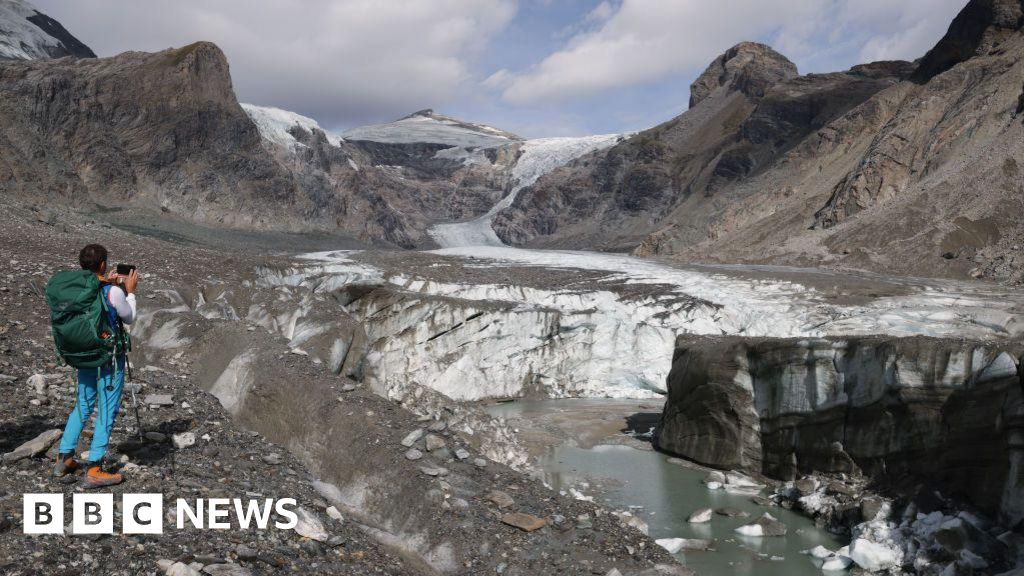
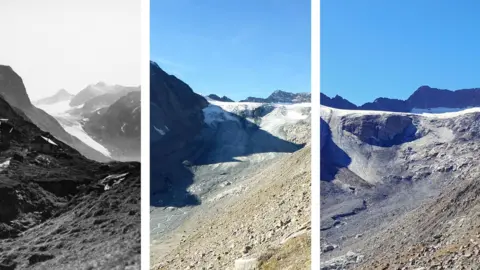
Scientists are warning that glaciers in the Austrian Alps are not just shrinking, but are disintegrating, because of climate change.

The latest report on glaciers by the Austrian Alpine Club say they "continue to shrink dramatically in length, area and volume".

"Many glaciers are not only shrinking in length but are increasingly entering a phase of structural disintegration," said Andreas Kellerer-Pirklbauer from the University of Graz.

"Exposed rock ledges, sections of ice breaking away and glacier tongues collapsing in on themselves are increasingly shaping the landscape."

In its annual report, the Austrian Alpine Club, said 94 out of the 96 glaciers that it measured over the past year in Austria, had shrunk.

The report said the most badly affected glaciers during this period were the Alpeiner Ferner glacier in Tyrol which shrunk by 114.3m and the Stubacher Sonnblickkees in the province of Salzburg, which lost 103.9m in length.

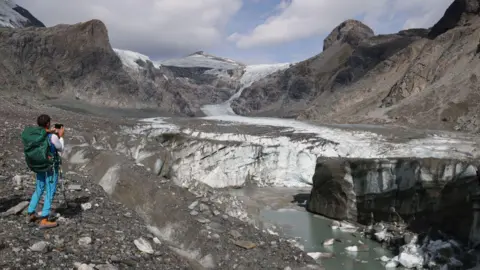
Austria's largest glacier, the Pasterze in Carinthia, also continues to shrink. The report said it was very likely that the glacier tongue would break off in the coming years, splitting the glacier in two.

The report said the trend was once again due to climate change. "A warm winter with little snow and an exceptionally warm early summer, with June being almost 5C warmer than average," it added.

It said temperatures at the high-altitude stations were 2C (36F) above the long-term annual average.

Gerhard Lieb, who runs the glacier monitoring service with Andreas Kellerer-Pirklbauer, said the weather conditions in recent years had been "extremely unfavourable for glaciers".

"Many glaciers are now losing so much mass that they barely react to periods of short-term cooling, such as that seen in July 2025," he said.

Climate change is particularly evident in the Alpine region, the scientists said.

Progressive warmer temperatures, they said, were leading to "more extreme weather events and natural hazards".

"Alpine infrastructure is increasingly at risk; and as the glaciers disappear, the landscape is undergoing profound changes," the report said.

"Climate change has long been a reality in the Alps, and we are experiencing its consequences... right now," Nicole Slupetzky, Vice-President of the Austrian Alpine Club said.

"It is no longer a question of whether we can still save the glaciers in their former state. It is a question of mitigating the consequences for ourselves".

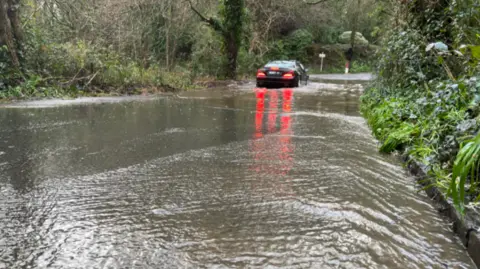
It comes as the weather service recorded the 10th wettest winter since its records began.

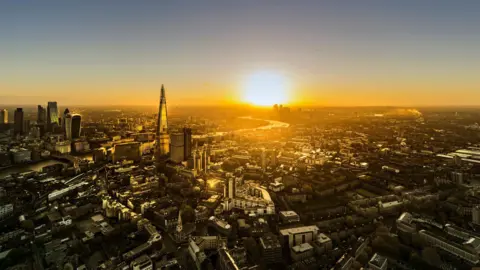
City Hall is currently drafting London's Heat Risk Delivery Plan in a bid to cool down the city.

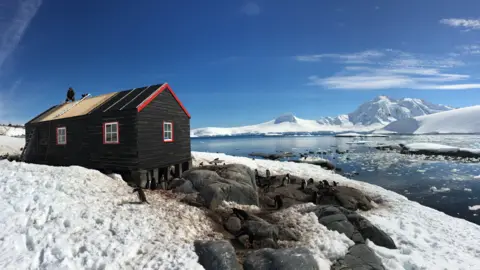
Jo Oliver from Wedmore has been working in extreme conditions in Antarctica.

The government plans to give data centres priority access to the electricity grid to speed up development.

The Climate Council says the island will not meet its aims unless it changes its approach.
Comments
You must be logged in to comment.