yahoo Press
Uniper Starts Paying Again as Berlin Eyes the Exit
Images
1 / 5
2 / 5

3 / 5

4 / 5
5 / 5
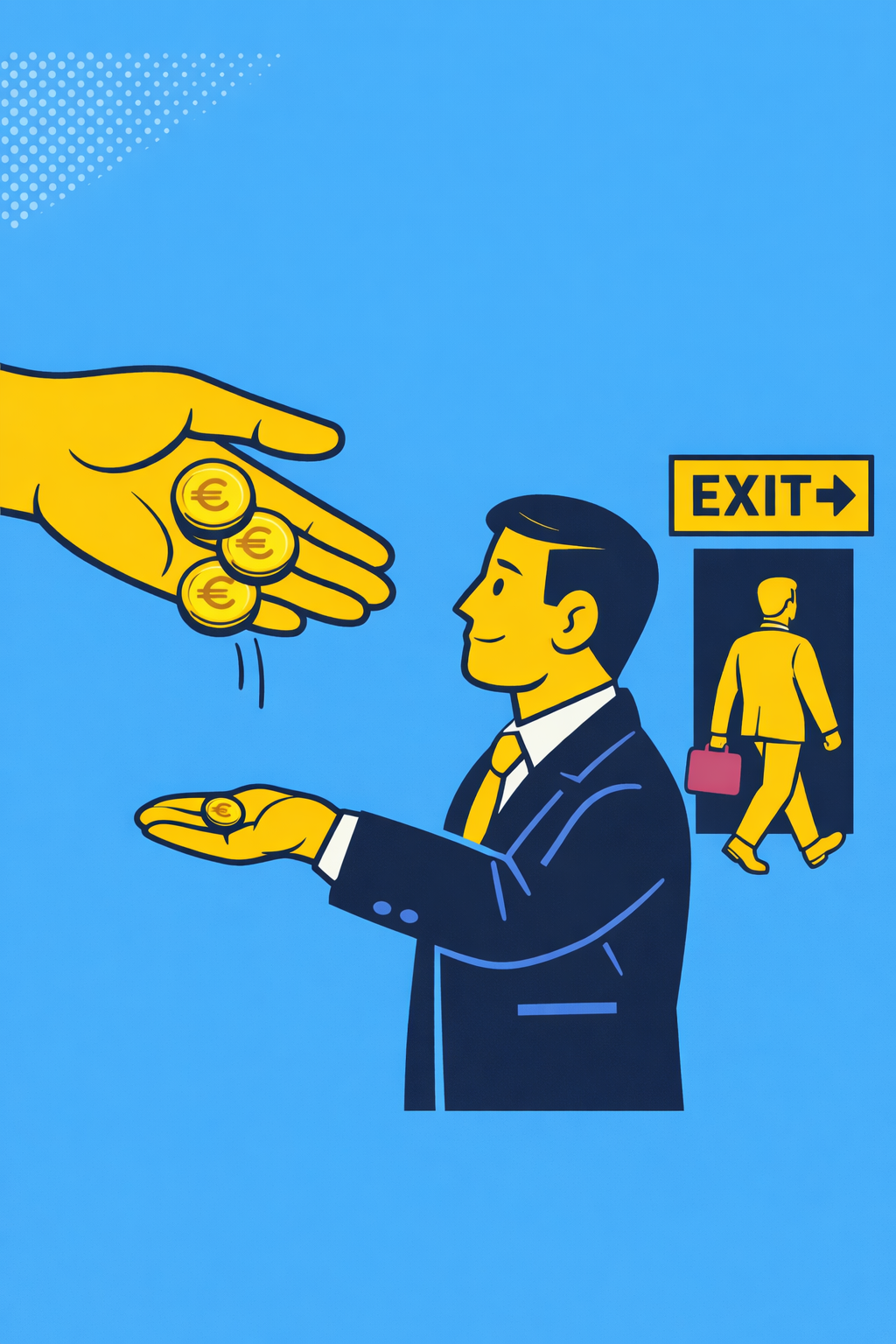
Uniper is doing something normal again. It is paying a dividend. For most companies, that barely counts as news. For a business that had to be rescued by the German state when Europe’s gas market blew up, it’s a signal that the emergency phase is ending and the long march back to the stock market is getting real.

Uniper, a German energy multinational, said it will propose a dividend of €0.72 (about 83 cents) a share for 2025, its first payout in four years and worth about €300 million in total. Because the German government still owns 99.12% of the company, Berlin will collect almost all of it.

The company also forecast 2026 adjusted EBITDA of €1 billion to €1.3 billion, broadly in line with the €1.1 billion it delivered in 2025. Adjusted net income is expected at €350 million to €600 million, compared with €544 million last year.

Those 2025 results were well below the prior year. Adjusted EBITDA fell from €2.6 billion in 2024, while adjusted net income dropped from €1.65 billion. But management said that decline was expected and reflected a more normalized earnings base after the extreme distortions of the gas crisis era.

The dividend ban imposed as part of Germany’s 2022 rescue was lifted at the end of 2025. That reopened the door to shareholder payouts and marked another step in Uniper’s effort to become viable for capital markets again.

That matters because Berlin cannot stay in control forever. Under EU state-aid rules tied to the bailout, Germany must reduce its stake to 25% plus one share by the end of 2028. That means either a sale, a re-listing, or some mix of the two.

Uniper also said it plans to invest around €5 billion through 2030, with more than half going into Germany. A large share of that will go toward hydrogen-ready gas-fired power plants, including roughly 2 gigawatts planned at Gelsenkirchen and Staudinger.

This is not really a dividend story. It is a rehab story.

Our analysts just identified a stock with the potential to be the next Nvidia. Tell us how you invest and we'll show you why it's our #1 pick. Tap here.

Back in 2022, Uniper became the poster child for Europe’s energy panic. Russia cut gas supplies, replacement fuel had to be bought at painful prices, and Berlin stepped in with a bailout big enough to all but nationalize the company. It was one of those moments when the phrase too important to fail stopped sounding theoretical.

Now the state is no longer just the rescuer. It is the giant shareholder trying to figure out how to leave.

That is why the dividend matters. Not because €300 million is some spectacular payout, but because it makes Uniper look like a normal listed company again. Dividends are boring. In this case, boring is the whole point. Management is trying to show that the company has moved past survival mode and into something steadier, more predictable, and more investable.

The funny thing is that profits are much lower than they were a year ago, yet the story is arguably healthier. That is because 2024 was inflated by odd crisis-related tailwinds, legal settlements, and portfolio effects. Investors do not really want emergency-era earnings that vanish as soon as the market calms down. They want a business that can earn decent money without needing the world to be on fire.

Uniper is also being recast as a transition utility rather than just an old gas-heavy survivor of Europe’s energy mess. The pitch now is lower-carbon generation, hydrogen-ready infrastructure, LNG diversification, and a role at the center of Germany’s security-of-supply plans. In other words, it wants to be seen as part of the energy transition, not just a relic of the last crisis.

That does not mean the risks are gone. Energy remains a geopolitical minefield, and Uniper is still heavily exposed to all the things utilities hate most, including volatile prices, political intervention, and governments constantly redesigning the rules of the game. Management said current market pricing suggests investors expect the Middle East conflict to be short-lived. That is reassuring right up to the point it stops being true.

The next step is shareholder approval of the dividend in May. After that, the real focus shifts to Berlin and how it wants to shrink its stake without damaging the investment case.

A re-IPO would be the neatest ending. The state steps in during a crisis, stabilizes the company, and sends it back to market with a dividend, a cleaner balance sheet, and a more credible strategy. That is the tidy version, anyway.

Until then, Uniper sits in an awkward middle ground. It is no longer a rescue case, but it is not fully back to being a normal public company either. The dividend is a clear signal that the company wants to leave that limbo behind. The harder part is convincing investors that this time, it really can.

One stock. Nvidia-level potential. 30M+ investors trust Moby to find it first. Get the pick. Tap here.
Comments
You must be logged in to comment.