yahoo Press
'Contrarianism is overrated': Stan Druckenmiller says invest in US stocks but hedge the dollar. Here’s how
Images
1 / 4
2 / 4

3 / 4

4 / 4
Moneywise and Yahoo Finance LLC may earn commission or revenue through links in the content below.

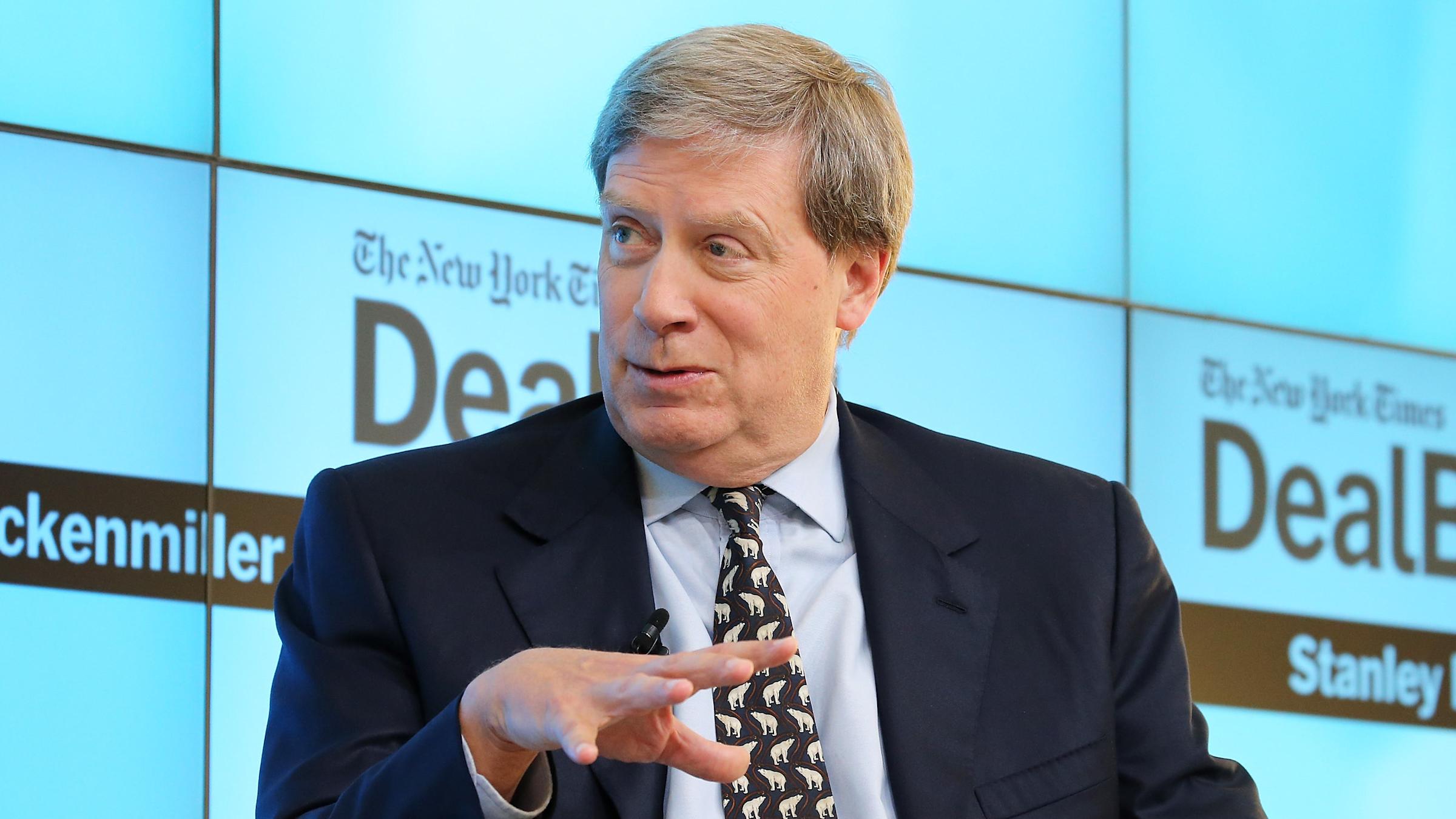
Billionaire investor Stanley Druckenmiller says he has a simple explanation for how he built his fortune.

“I have this gift for compounding money,” the hedge fund manager recently said in a Morgan Stanley interview (1).

Thanks to Jeff Bezos, you can now become a landlord for as little as $100 — and no, you don't have to deal with tenants or fix freezers. Here's how

Most Americans earn a dismal 0.39% APY on their cash at big banks. Unlock up to 4.05% APY and pay $0 in account fees instead with a Wealthfront Cash Account

Dave Ramsey warns nearly 50% of Americans are making 1 big Social Security mistake — here’s what it is and the simple steps to fix it ASAP

Druckenmiller, who ran Duquesne Capital for decades and famously helped George Soros make billions betting against the British pound in 1992, has long been regarded as one of the most successful macro investors of his generation (2).

Druckenmiller reportedly delivered average annual returns of around 30% for three decades without a losing year, making him one of the most successful hedge fund managers in history (3).

Now he’s sharing how he’d approach markets if he had to start building a portfolio from scratch today.

His answer? Lean into the strength of the U.S. economy, but hedge the risks that come with it.

Despite concerns about high valuations and an AI bubble, Druckenmiller says the U.S. economy remains one of the best investment stories in the world.

“The U.S. economy is strong and getting stronger,” he said, pointing to fiscal stimulus and the possibility of interest rate cuts ahead.

That doesn’t mean he believes markets are cheap.

“We’re toward the top of the valuation range historically,” he warned.

Still, Druckenmiller says investors shouldn’t obsess over being contrarian.

“Contrarianism is overrated,” he said in the interview. “Consensus is right 80% of the time. I don’t care if a trade is crowded if I think the trend is with me.”

For everyday investors, one simple way to align with the billionaire’s advice is by investing broadly in the U.S. stock market — particularly the S&P 500, which tracks many of the country’s largest companies.

This is also a favourite strategy of legendary investor and former Berkshire Hathaway CEO Warren Buffett.

“The goal of the non-professional should not be to pick winners,” Buffett wrote in his 2013 letter to shareholders (4).

Rather, retail investors should look to carve out a “cross section” of America’s best that “in aggregate” can be expected to do well. Buffett has also taken his own advice, stipulating that 90% of the cash reserves inherited by his wife after his passing should be invested in the S&P 500.

Read More: I’m almost 50 years old and don’t have retirement savings. Is it too late to catch up?

Read More: Non-millionaires can now invest in this $1B private real estate fund starting at just $10

Index funds and ETFs that track the S&P 500 allow investors to capture the overall growth of the U.S. economy without picking individual stocks. This is a strategy many long-term investors rely on to build wealth over time.

Over long periods, that kind of exposure can compound dramatically. The S&P 500 has historically returned about 10% annually on average, including dividends (5).

At that rate, a $500 monthly investment could grow to roughly $1.1 million over 35 years. Even smaller contributions add up; investing just $100 a month at the same return could grow to about $270,000 over the same period.

That compounding effect is exactly what Druckenmiller was referring to when he said he had a “gift for compounding money.” It’s also part of the reason for Buffett’s long term confidence in the S&P 500.

The beauty of ETF investing is its accessibility — anyone, regardless of wealth, can take advantage of it. Even small amounts can grow over time with tools like Acorns, a popular app that automatically invests your spare change.

Signing up for Acorns takes just minutes: Link your cards, and Acorns will round up each purchase to the nearest dollar, investing the difference — your spare change — into a diversified portfolio. You can also set up a recurring monthly contribution if you want to supercharge saving with your spare change.

With Acorns, you can invest in a dividend ETF with as little as $5 — and, if you sign up today, Acorns will add a $20 bonus to help you begin your investment journey. All you have to do is establish a small monthly deposit.

That kind of automated approach can help investors steadily build exposure to the U.S. economy without needing to pick individual stocks.

But automated investing isn’t for everyone. Some retail investors want complete control of their stock picks and the freedom to pursue higher risk opportunities.

After all, steady growth is fine on its own, but sometimes dedicated research can beat out an aggregated approach. If that sounds like you, then making sure that you’re investing with a full suite of expert knowledge can give you an edge.

That’s where Moby can help. Their team of former hedge fund analysts can offer research and recommendations to help you identify strong, data-driven long-term investments.

In four years, and across almost 400 stock picks, their recommendations have beaten the S&P 500 by almost 12% on average. They also offer a 30-day money-back guarantee.

Moby’s team spends hundreds of hours sifting through financial news and data to provide you with stock and crypto reports delivered straight to you. Their research keeps you up-to-the-minute on market shifts and can help you reduce the guesswork behind choosing stocks and ETFs.

Plus, their reports are easy to understand for beginners, so you can become a smarter investor in just five minutes — and better understand when it may make sense to diversify beyond stocks.

Even though Druckenmiller likes the U.S. economy, he’s less enthusiastic about the long-term outlook for the U.S. dollar. To hedge that risk, he holds assets that tend to benefit when the dollar weakens, including commodities like copper.

“We own copper,” he said in the Stanley Morgan interview. “It’s not a genius trade, it’s a consensus trade — very tight supply.”

Copper has become increasingly important in global supply chains as electrification, renewable energy projects and data-center infrastructure drive demand. But it’s not the only metal in his portfolio; Druckenmiller also keeps some exposure to gold.

“We have some gold,” he said. “That’s mainly a geopolitical trade.”

Precious metals have historically been used as a hedge against currency weakness, inflation and geopolitical instability. Unlike fiat currency, gold can’t be printed at will, and it tends to store its value during a market downturn compared to stocks.

Even better, the previous yellow metal has been on a historic bull run. Over the past year, the spot price has skyrocketed 79% as of March 10, trading at $5,219.10 per ounce even after a late January correction (6).

One way to invest in gold while also providing significant tax advantages is to open a gold IRA with Priority Gold.

Gold IRAs allow investors to hold physical gold or gold-related assets within a retirement account, which combines the tax advantages of an IRA with the protective benefits of investing in gold, making it an attractive option for those looking to potentially hedge their retirement funds against economic uncertainty.

To learn more, you can get a free information guide that includes details on how to get up to $10,000 in free silver on qualifying purchases.

Hedging risk is only part of the equation, however. Markets rarely move in a straight line — and periods of uncertainty can also create opportunities.

That’s where Druckenmiller’s next investing principle comes in.

While many investors worry about market turbulence, Druckenmiller says volatility can create the best opportunities.

“Use the volatility rather than being abused by the volatility,” he advised.

Druckenmiller believes that the coming years could be ‘dynamic’ for investors.

“What I’m excited about is there’s massive disruption and massive change ahead,” he told Stanley Morgan. “The opportunity for the next three to four years, I’m really excited about.”

His argument centers on the shifts in major technological markets, including artificial intelligence, which are creating entirely new industries and investment opportunities.

Back in 2022, when asked what macro factor mattered most, Druckenmiller famously brushed aside interest rates.

In his more recent interview, Druckenmiller joked that he doesn’t remember saying it, but agrees it “sounds right.”

“I couldn’t care less about rates,” he said. “All that matters is AI and Nvidia.”

For investors trying to identify these kinds of disruptive opportunities, Druckenmiller says you don’t need to be a professional stock analyst. Instead, he encourages investors to focus on the future rather than today’s market conditions.

“If you look at today, you’re not going to make money,” he said. “You have to look ahead and think about what could happen in the future and how people may react to it.”

In other words, successful investing often comes down to positioning yourself for the trends that haven’t fully played out yet. After all, Nvidia’s stock traded at around $21 in January of 2022, and has now settled at between $180 and $190 during early March (7).

For investors looking to put that mindset into practice, accessible trading platforms can make it easier to start building a portfolio around those long-term ideas.

SoFi’s easy-to-use DIY investing platform lets you buy stocks, ETFs and more with no commission fees and no account minimums.

SoFi is designed for both beginners and seasoned investors, with real-time investing news, curated content and the data you need to make smart decisions about the stocks that matter most to you.

Plus for a limited time you can get up to $1,000 in stock when you fund a new account.

Druckenmiller’s strategy isn’t about chasing every market move. It’s about identifying the biggest trends shaping the global economy and positioning early.

The means staying invested in strong economies like the U.S., hedging risks when necessary and learning to use volatility as an opportunity rather than something to fear.

For the investor willing to take that long-term approach, the next decade of disruption will make opportunities that look obvious only in hindsight.

The average tax refund could hit $3,500 in 2026. Here’s how to turn that juicy check into a long-term retirement win

Vanguard reveals what could be coming for U.S. stocks, and it’s raising alarm bells for retirees. Here’s why and how to protect yourself

Robert Kiyosaki begs investors not to miss this ‘explosion’ — says this 1 asset will surge 400% in a year

Warren Buffett used these 8 repeatable money rules to turn $9,800 into a $150B fortune. Start using them today to get rich (and stay rich)

Join 250,000+ readers and get Moneywise’s best stories and exclusive interviews first — clear insights curated and delivered weekly. Subscribe now.

We rely only on vetted sources and credible third-party reporting. For details, see our editorial ethics and guidelines.

Morgan Stanley (1); Motley Fool (2); Yahoo!Finance (3), (7); Berkshire Hathaway (4); Business Insider (5); APMEX (6)

This article provides information only and should not be construed as advice. It is provided without warranty of any kind.
Comments
You must be logged in to comment.