huffpost Press
There’s An Italian Word That Redefines Aging ― And It’s Becoming A Global Obsession
Images
1 / 12
2 / 12
3 / 12
4 / 12
5 / 12
6 / 12
7 / 12

8 / 12

9 / 12

10 / 12
11 / 12

12 / 12
From the passeggiata to the art of aperitivo, many aspects of Italian culture capture imaginations around the world. One particularly inspiring figure is the “sciura Milanese.”

The archetype is so recognizable that there’s even an Instagram account dedicated to documenting these iconic women of Milan.

“‘Sciura’ is a word from the Milanese dialect that simply means ‘lady,’” Elisa Torello, founder of Elisa’s Italian School, told HuffPost. “It is pronounced ‘shoo-ra,’ with a rounded ‘u’ sound typical of the Milanese dialect. Traditionally, it was a respectful way to address a married or mature woman, especially someone of a certain social standing.”

People from Milan who speak the local dialect might say “sciura” to mean “lady” or the title of “Mrs.”/“Ms.” before a last name. But it also has another specific meaning.

“Today the regional word ‘sciura,’ often paired with the adjective ‘Milanese,’ is used in informal Italian as well, fueled by social media trends,” said Lucrezia Oddone of Learn Italian with Lucrezia. She explained that a “sciura Milanese” is an older woman, “usually aged 60+ ― but not exclusively, as this trend also embraces women in their 50s who live in the center of Milan ― who belongs to the upper middle class and has a very classic look.”

The team behind the blog Milanesi a Milano ― Ilaria Polo, Caterina Pacianti and Laura Stricchiola ― say these well-to-do Milanese women share a set of recognizable traits.

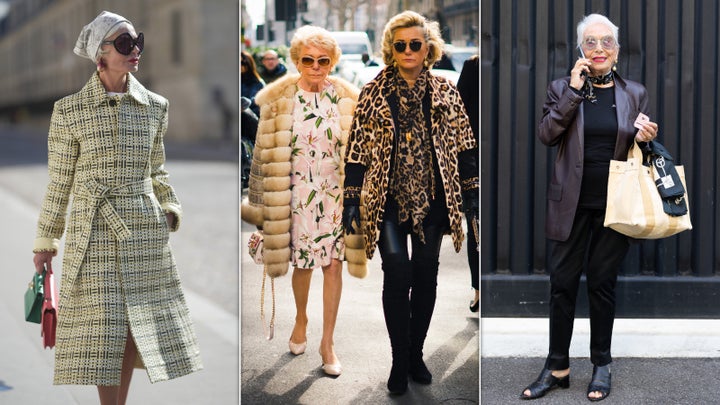
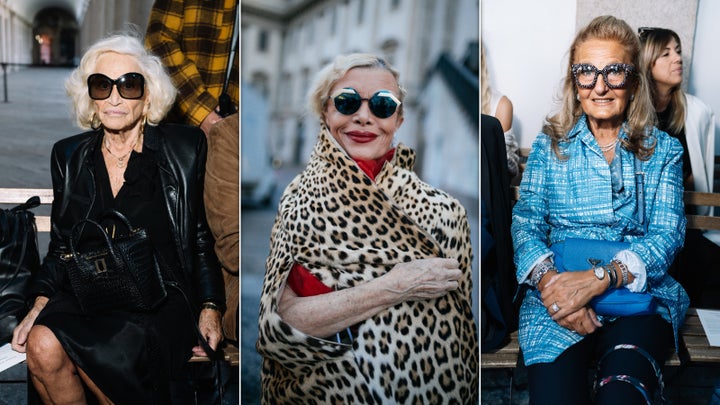
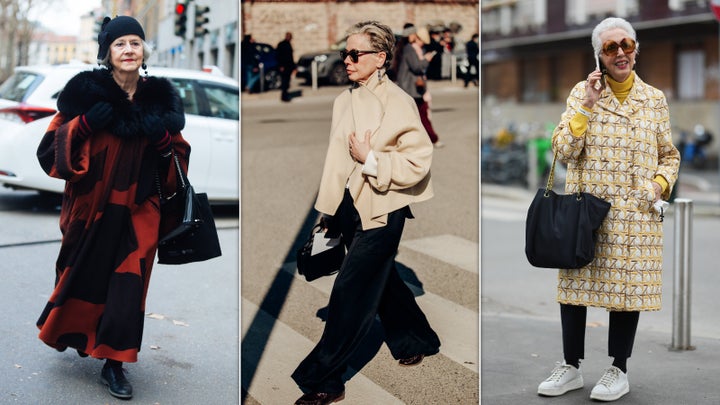
“The ‘sciura Milanese’ is a very specific cultural figure,” they explained in an email. “She is elegant, well-groomed and unmistakably Milanese in her taste. She often wears timeless luxury pieces ― structured handbags, important jewelry, tailored coats ― and moves through the city with quiet confidence. She is a regular at historic cafés in the city center, attends cultural events and embodies a certain idea of understated but recognizable sophistication.”

This figure represents a visual identity, taste and lifestyle deeply tied to the city of Milan.

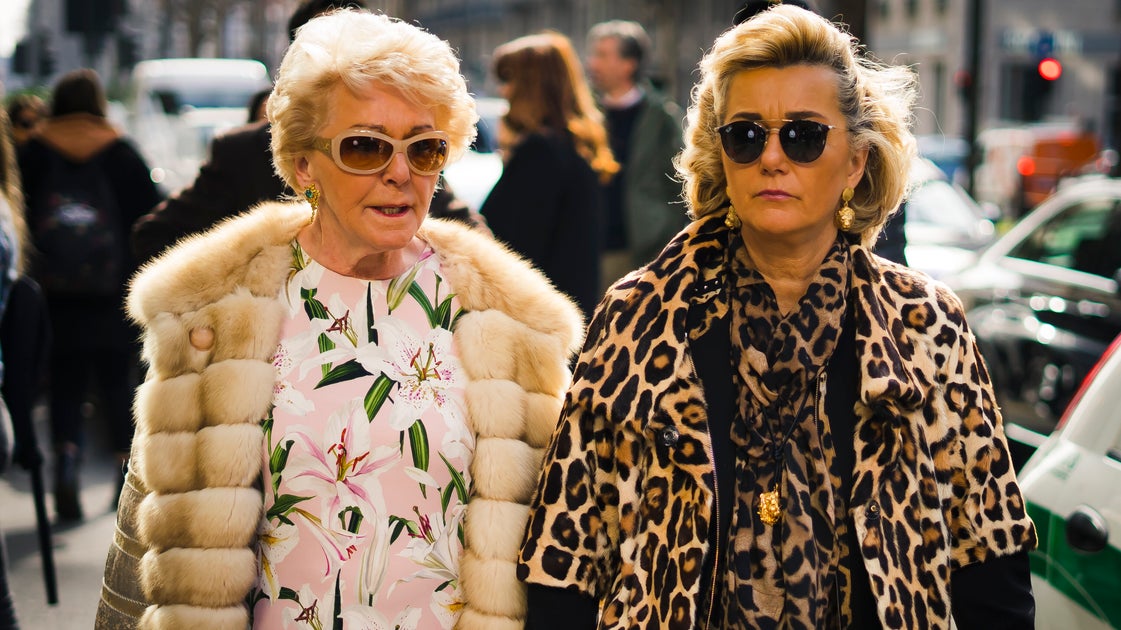
“The sciura Milanese is an institution,” said M. Grazia Montagnari, founder of Italian with Grace. “Picture her like this: perfectly coiffed hair (usually an impeccable ash blonde), a tailored coat, a silk scarf knotted with a nonchalance that actually took hours of practice and the inevitable luxury handbag perched on her forearm.”

She believes the sciura perfectly embodies the concept of “quiet luxury.” Rather than trying to keep up with rapidly changing contemporary trends, she owns her personal style and pays little attention to what others are doing. The sciura knows who she is.

“She is the personification of ‘old money,’” echoed Andrea Novello, the Milan tours manager for Walks of Italy. “Her ‘uniform’ is iconic ― a perfect blonde bob, a Max Mara camel coat, an Hermès foulard and plenty of gold jewelry. She is the undisputed queen of the borghesia ― the bourgeoisie.”

There’s another accessory that sometimes completes the look as well. “She may even be accompanied by a small dog,” said Martina Carucci from the language learning app Preply.

In many ways, the sciura functions as a visual symbol of continuity, a reminder of tradition in a city that is constantly modernizing and evolving.

“The word ‘sciura’ has long circulated in everyday Milanese speech as the local equivalent of ‘signora,‘” Torello said. “In many cases, a ‘sciura’ would have been the wife of a ‘sciur,’ a gentleman, often associated with the city’s professional or industrial class. In older generations, it functioned simply as a neutral or polite form of address.”

Although the word has been around for centuries, the image associated with the sciura has evolved.

“The more recognizable figure of the ‘sciura Milanese’ took shape in the decades following World War II, when Milan experienced rapid economic growth and became a center of finance, publishing and fashion,” Torello said. “The women who lived through that transformation, rooted in tradition but surrounded by rising luxury culture, gradually came to embody a specific type of composed, understated elegance.”

Gianluca Pedrotti, a principal learning content strategist at the language app Babbel, described the post-World War II sciura as a recognizable archetype ― “an elegant, impeccably groomed, often affluent older woman tied to the city’s bourgeois or old-money milieu.”

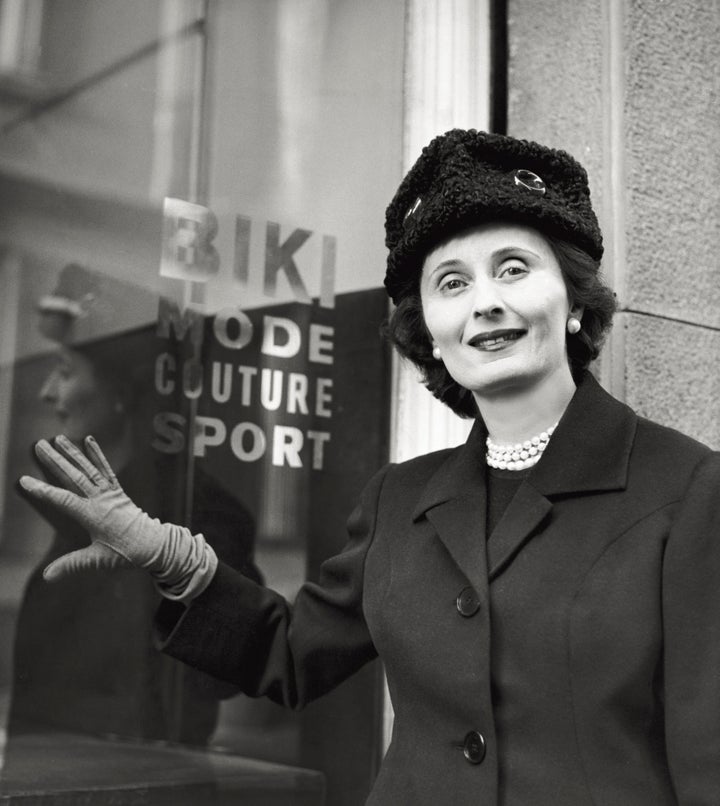
Many credit Milan-based designer Elvira Leonardi Bouyeure ― known as Biki ― with shaping the polished 1950s aesthetic associated with the sciura, an image that continued to influence Milanese style for decades.

“The 1980s were the ‘Golden Era’ for the sciura Milanese,” Novello said. “This was the time of ‘Milano da Bere’ when the city was the jet-setting playground of Europe. The sciura was a fixture in the front row at Armani or Versace, hopping from private gallery openings to weekends in St. Moritz. She represents that specific moment in history when Milanese industrial wealth met global fashion glamor.”

In the 21st century, the sciura experienced a pop-culture explosion thanks to social media. The Instagram account @sciuraglam (formerly @sciuragram) was founded in 2016 and now boasts more than 420,000 followers.

“Since its origin, the term’s popularity has soared,” Carucci said. “Originally, the term served to represent, and slightly mock, a specific stereotype within Milan. Throughout the years, it has evolved from one of mockery to become a phrase which represents a newfound respect and admiration for a sciura Milanese.”

Today, the term “sciura” operates on multiple levels.

“In formal or dialect contexts, especially among older speakers, it can still simply mean ‘lady,’” Torello said. “In informal speech, particularly among younger generations who may not actively use dialect, it refers to a recognizable figure ― the elegant Milanese woman of a certain age.”

“Polished hair, fur coats, designer handbags, and a fiercely local pride all became part of the imagery,” Pedrotti said. “The term evolved from simple address to cultural shorthand.”

Today, the term “sciura” or “sciura Milanese” evokes a range of opinions, but perhaps the most common response is admiration.

“They represent the idea of aging with extreme grace and dignity,” Montagnari noted. “Who wouldn’t want to reach 80 with that kind of poise?”

She emphasized that being called a “sciura” is a compliment to your sophistication and elegance. Novello added that many view these figures as style icons who invest in high-quality, enduring pieces.

“They are the ‘cool nonnas’ who actually lived the ’80s jet-set life,” he said.

The “sciura” is not purely aspirational, however.

“What makes the term especially interesting linguistically is how its meaning shifts depending on tone and context,” Pedrotti said. “While it can signal respect or admiration, it can also be used ironically or pejoratively. In the expression ‘Ué, sciura!’ ― with Ué functioning as a greeting — it can take on a mocking tone, closer to calling someone an entitled or stereotypical older woman.”

He added that “sciura” may evoke a sense of social rigidity or conservatism as well. Some might use the term to poke fun at snobby upper-class people or those who are overly concerned with proper etiquette.

“There can be a tongue-in-cheek undertone regarding her perceived ‘snob appeal’ or attachment to social rituals,” noted the Milanesi a Milano team.

Thus, the term can carry a slightly negative connotation around materialism in certain contexts.

“The word ‘sciura’ is mainly registered in the north of Italy, but it would not be unusual to hear it in other parts of the country to describe a certain type of outdated clothing or to comment on an outfit in a joking way,” Oddone said. “‘Fa un po’ sciura!’ ― in English, ‘it’s giving old lady vibes’ ― can be interpreted positively or negatively depending on tone and context.”

One’s perception of the “sciura” might also depend on generation.

“Older generations often use the word with a tone of affectionate irony, to describe a woman of a certain age who still cares deeply about her appearance and continues to wear her elegant, often luxurious wardrobe with confidence,” Torello said.

For many younger people, however, the sciura represents the idea of dressing for yourself, not for others’ approval, and prioritizing authenticity over performance.

“When used thoughtfully, ‘sciura’ celebrates individuality, consistency of taste and pride in one’s roots,” said the Milanesi a Milano team. “While there is a risk of caricature, many creatives and fashion observers are reclaiming the term to highlight authenticity and the idea that elegance is built over time. In that sense, the sciura feels surprisingly contemporary.”

The popularity of the term today also allows the broader world to get a taste of something distinctly Milanese.

“I think it’s a fun cultural stereotype that captures a Milanese woman’s personality,” said Italian teacher Margherita Berti. “Like many stereotypes, it exaggerates reality but reflects recognizable habits and style. When used playfully, it celebrates Milan’s character and humor.”

Thus, Milan’s identity and history don’t just live on in museums and monuments but also in this confident, selective, stylish and elegant way of dressing, speaking and living in the city.

“In a time when cities risk becoming interchangeable and desires increasingly shaped by global trends, the figure of the ‘sciura’ can also be read as a quiet form of resistance,” Torello said. “Her taste was not built by algorithms or seasonal drops, but through lived experience. In that sense, she stands against cultural homogenization.”

If you want to bring a bit of sciura magic into your life, there are many ways to find inspiration ― both online and in Milan itself.

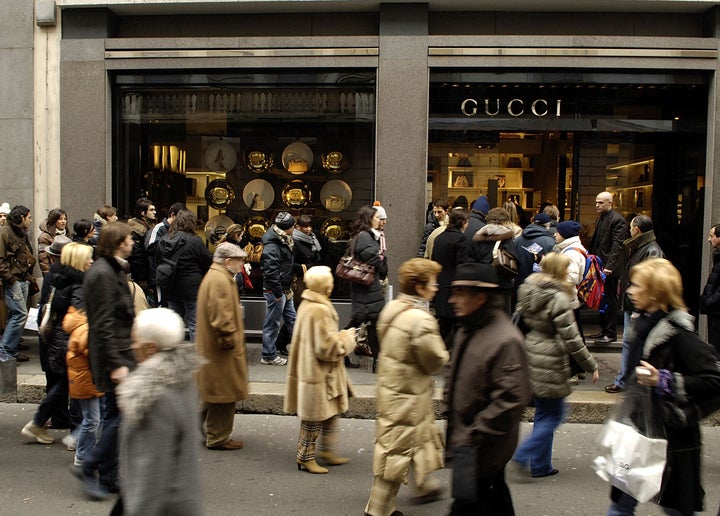
“There are Instagram pages like @sciuraglam where you can see exactly who a sciura is and how they spend their time,” Novello said, adding that they’re ”mostly shopping in ‘Montenapo’ ― Via Monte Napoleone, Milan’s most famous luxury shopping street ― or having long breakfasts in the most glamorous pastry shops, such as Marchesi.”

Milan-based photographer Anastasia Fedoseeva echoed that there are specific places in Milan where you’re more likely to spot sciure (the plural for sciura) in person.

“I personally see them often around Piazza Risorgimento, and also at classic spots like a restaurant Sant Ambroeus or Pasticceria Cova on Via Monte Napoleone,” she said. “However, they are not usually concentrated in the most touristy areas ― they tend to stay within the neighborhoods where they have historically lived.”

For those looking for an authentic taste of the sciura lifestyle, Fedoseeva also recommended stepping off the main tourist routes of Milan and exploring the elegant residential districts like Corso Vercelli.

“One of my favorite areas is between Porta Venezia, Cinque Giornate and Porta Romana,” she said. “There you will not only see beautiful façades and entrance halls, but also the real Milanese lifestyle in motion.”

She also suggested checking out local neighborhood markets, for instance around Piazza San Marco, for another chance to “observe sciure in their natural habitat” (and get some shopping done yourself).

But how can you be sure you’ve got the right image in mind?

“Next time you’re in Milan, sit at a café near Sant’Ambrogio and just watch,” advised Montagnari. “When you see a lady with a perfectly groomed dog and a beige trench coat that looks like it was painted on her, you’ll know exactly who you’re looking at. What was once a local dialect word has become a recognized aesthetic code worldwide: the timeless style of the Milanese bourgeoisie.”

“You can be a ‘sciura at heart’ even in your twenties if you value quality over quantity and prefer an afternoon tea to a loud club,” Montagnari said. “It has become a philosophy of life ― taking care of oneself and the details.”

Just as you can embrace your inner sciura at any age, you also don’t have to be part of the Milanese bourgeoisie ― or even especially wealthy ― to incorporate this timeless aesthetic into your everyday style.

“To emulate her look, one must search for clothes in second-hand and vintage shops, re-evaluating what to wear in a more sustainable way,” Oddone said.

In today’s fast-paced world, getting in touch with your inner sciura means slowing down to put care into aesthetics. The sciura look is all about finding different ways to style classic pieces that can endure the test of time. Good tailoring and impeccable grooming are also part of the picture.

“Sometimes you just want that moment ― to go to a beautiful café, to do your hair, to dress up,” Fedoseeva said. “In that sense, I find sciure very motivating! And it’s also simply very pleasant visually ― elegant women walking through the city arm-in-arm with equally well-dressed husbands, which we should not forget, as the husbands often have great classic style too. Their outfits are usually very matchy in textures and colors.”

Ultimately, personal expression must prevail in the sciura aesthetic. Polish your look with some thoughtful accessories ― maybe a nice pair of sunglasses and/or a little silk scarf around your neck or the handles of your bag. Don’t be afraid to experiment with pops of color.

“I think it’s fun and view it as a reminder not to get lost in the whirlwind of things in terms of fashion and cultural expression, to remain true to oneself even when change is constant and would like to lead us towards a world in which we should dress the same, like and do the same things,” Oddone said.

This strong sense of identity is part of what makes the sciura so compelling. And there’s an underlying message: You don’t have to conform to expectations or abandon elegance as you age.

“In a world shaped by overconsumption and fast fashion, the renewed interest in the ‘sciura’ feels almost countercultural,” Torello said. “She represents longevity and quality in contrast to disposable trends. Her wardrobe was built over time, with patience, investment, and personal history. Each piece carries memory, and her style tells the story of her life.”

By entering your email and clicking Sign Up, you're agreeing to let us send you customized marketing messages about us and our advertising partners. You are also agreeing to our Terms of Service and Privacy Policy.
Comments
You must be logged in to comment.