yahoo Press
IRS alerts taxpayers to risky refund claims spreading online
Images
1 / 5
2 / 5

3 / 5

4 / 5
5 / 5
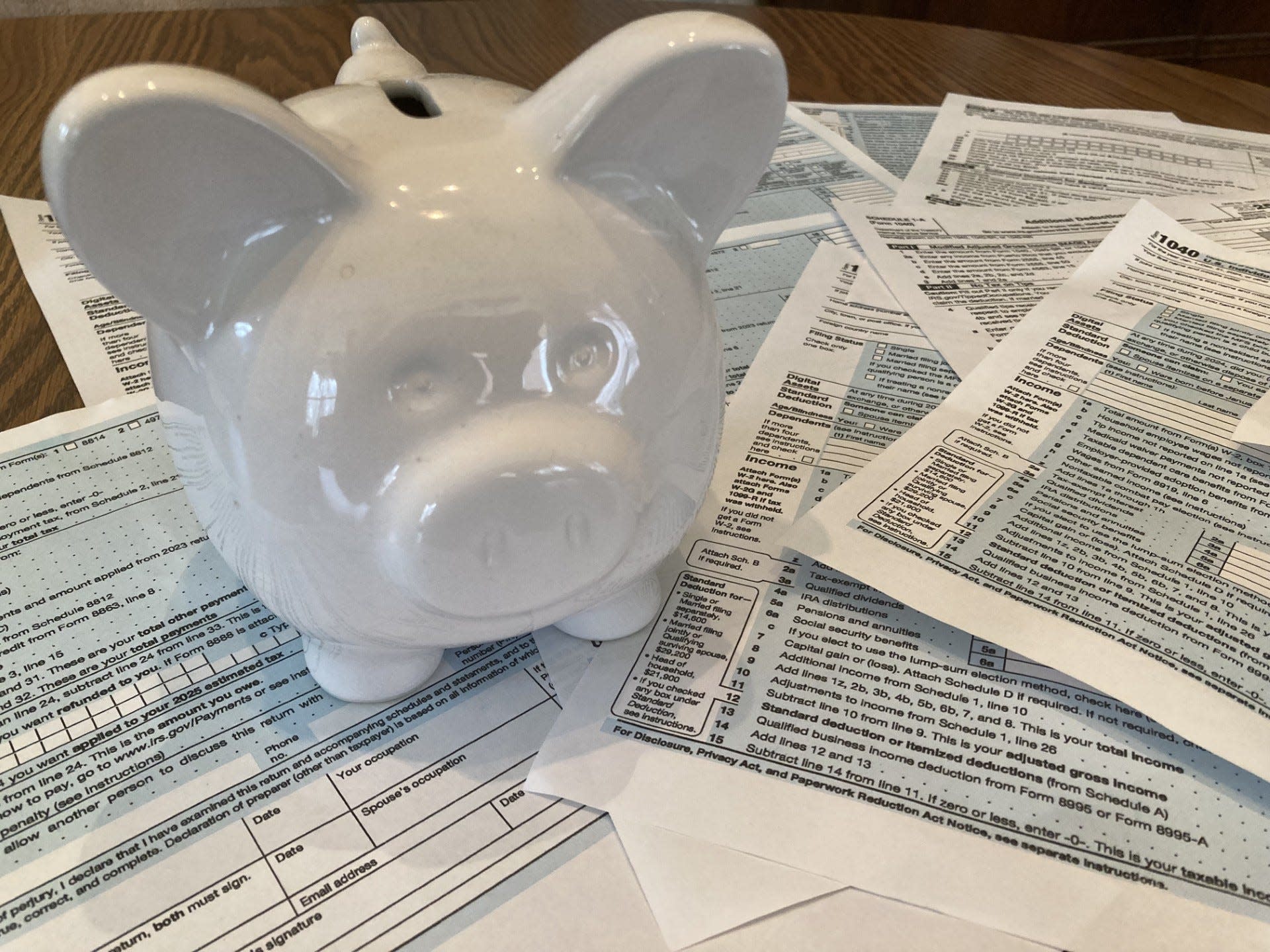
Sure, not many people would say no to a shot at a bigger tax refund. But the Internal Revenue Service is warning about phony tax tips, oddball tax credits and other scams that will trigger trouble with your taxes.

Instead of a quick rush of more refund cash, you'll likely wait much longer than you'd expect for any legitimate tax refund that you're likely owed.

What's new this year: The IRS is seeing an uptick in overstated or fabricated claims tied to undistributed long-term capital gains claims via Form 2439, Notice to Shareholder of Undistributed Long-Term Capital Gains.

This form, which looks vaguely like other documents that report income, gives shareholders of certain investment funds or real estate trusts a way to claim a refundable credit for taxes paid on undistributed capital gains.

This year, the IRS reported that it has identified schemes where claims regarding undistributed long-term gains are overstated or totally fabricated. Sometimes the undistributed capital gains claims are connected to organizations that are not even legitimate investment funds or real estate trusts.

But the IRS has also seen fake claims that are falsely linked to real, well-known organizations. "Improper claims may result in refund delays, audits, penalties, or enforcement action," the IRS warns.

In case you missed it: 2026 tax refunds are up $351. Here’s what it means for you.

So far this year, the average federal income tax refund is $3,742 through Feb. 27, according to data released March 6.

That's up 10.6% from the average of $3,382 for the same time frame a year ago. On average, taxpayers received an extra $360 so far this tax season versus the same time last year.

The IRS has received nearly 51.5 million income tax returns, down 1.7%.

The IRS has issued nearly $136.6 billion in tax refunds, up 9.4%.

Plenty of legitimate new targeted tax deductions exist on 2025 federal income tax returns that might reduce your tax bill or drive up your tax refund – the new enhanced deduction for adults age 65 and older, a tax deduction on tip income, a tax deduction on new car loans for cars and trucks with final assembly in the United States, and a tax deduction on qualifying overtime pay earned in 2025.

Yet every year, the IRS alerts us to wild claims being made on social media and elsewhere about flighty tax strategies that will come back to bite you.

The IRS rolls out a "Dirty Dozen" list each year to alert taxpayers to potential tax scams and a few frivolous deductions and other tax claims are on that list.

During the 2026 tax season, the IRS warns taxpayers about this new uptick in bogus "undistributed long-term capital gains" claims, as well as:

Dumb tax tips via social media: "Viral 'tax hacks' can push taxpayers to file returns with false information or claim credits they don’t qualify for, leading to refund delays, audits, penalties, or worse," the IRS warns.

"Social media-driven misinformation and disinformation remain a major driver of tax scams," according to the IRS.

Taxpayers who knowingly file fraudulent tax returns, according to the IRS, could potentially face significant civil and criminal penalties.

Claims that a "self-employment tax credit" applies to you: The IRS has warned about this bad boy in the past, including in 2024 and 2025. Somehow, promoters are convincing self-employed people and gig workers that they can get huge amounts of money for events dating back to the COVID-19 pandemic.

"Similar to misleading marketing around the employee retention credit, there is inaccurate information being circulated that suggests many people qualify for the tax credit and payments of up to $32,000 when they actually do not," the IRS warned in 2025.

It's basically a misleading social media claim that could trick even some well-meaning taxpayers into thinking a giant payday is around the corner, if only they claim this odd credit.

"Many taxpayers do not qualify for these credits, and the IRS is closely reviewing claims coming in under this provision, so taxpayers filing claims do so at their own risk," according to an IRS statement in early March.

Believing in these misleading claims will lead you to file an inaccurate return to "generate improper refunds," according to the IRS.

Inflated appraisals of property donated to charities: The IRS warns that some schemes fool around with non-cash charitable contributions. "Some schemes involve inflated appraisals of donated property using syndicated conservation easements or art," the IRS said.

The fake promise used by promoters is that somehow this strategy will "eliminate or substantially reduce" your tax liability.

The big risk? The IRS is likely to review these claims and hold up any legitimate refund that you are owed.

"The IRS warns taxpayers not to file returns with made-up information and reminds taxpayers that it can hold refunds while verifying claims," the IRS stated.

Overstating your withholdings: In some cases, scammers are encouraging people to create fake W-2 forms to generate a bigger refund. The IRS also notes that the "overstated withholding credit scheme" also can involve Form W-2G and Forms 1099-R, 1099-NEC, 1099-DIV, 1099-OID, and 1099-B.

Some scammers hide behind a fake "Alaska Permanent Fund Dividend," and Schedule K-1 with withholding reported, and unspecified source of withholding credit claimed," according to the IRS.

"Scammers encourage taxpayers to inflate withholding amounts (sometimes described as 'other withholding') to manufacture a larger refund by reporting zero or little income on incorrect forms," the IRS said.

The risk? The IRS states that the agency may delay processing your tax return if you take part in such schemes. The IRS will need to verify actual wages and withholding against third-party records.

"Inaccurate claims can lead to penalties and enforcement action," the IRS said.

Many times, people who are owed actual refund money can face extra long delays when they've included dubious claims on a tax return. The entire tax refund is held up and delayed while the IRS navigates through the other baloney that some con artists convinced you to claim on the return.

"The IRS reminds taxpayers to rely on trusted sources and qualified tax professionals, not social media promotions, when determining eligibility for credits," according to the IRS.

Any tax season, you want to carefully review the rules associated with any credit or tax deduction that you don't understand. Take time to research whether the credit you just read about is actually one being abused by bad actors.

Contact personal finance columnist Susan Tompor: stompor@freepress.com. Follow her on X @tompor.

This article originally appeared on Detroit Free Press: IRS cracks down on bogus tax tips promising bigger refunds
Comments
You must be logged in to comment.