yahoo Press
War on Iran: After triumphant Davos speech, experts slam Mark Carney's Iran stance — 'maze of contradictions'
Images
1 / 10
2 / 10

3 / 10

4 / 10
5 / 10
6 / 10
7 / 10

8 / 10

9 / 10

10 / 10
The Canadian government’s support for the United States-Israel bombing campaign against Iran started out as resolute and unwavering. Things shifted quickly, but slightly, when Canadian Prime Minister clarified that he supported strikes on Iran with "some regret."

“Canada’s position remains clear: the Islamic Republic of Iran is the principal source of instability and terror throughout the Middle East,” the PM first said in a statement, also posted to social media on Saturday, after U.S. President Donald Trump announced military strikes on Iran. “Canada supports the United States acting to prevent Iran from obtaining a nuclear weapon and to prevent its regime from further threatening international peace and security.”

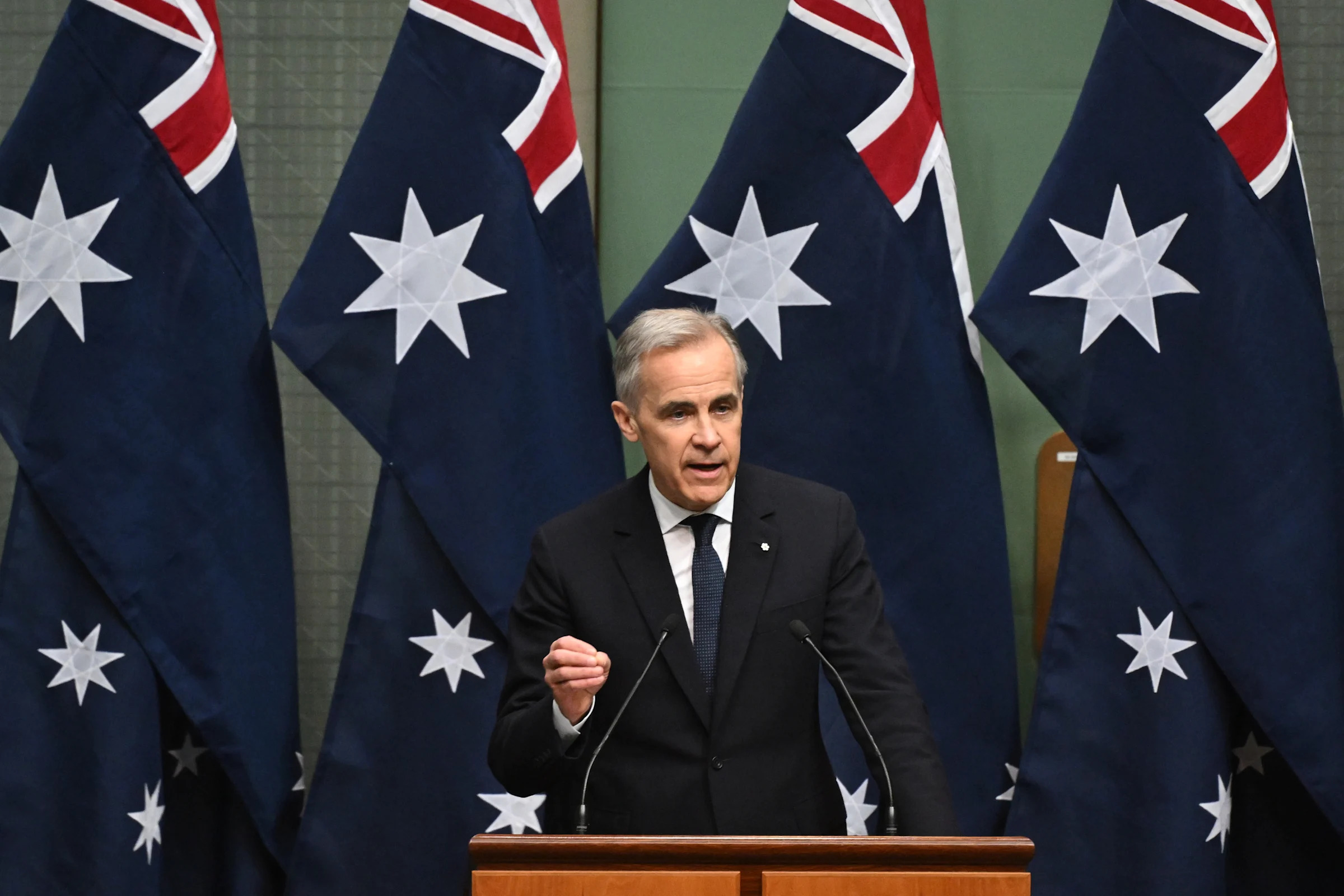
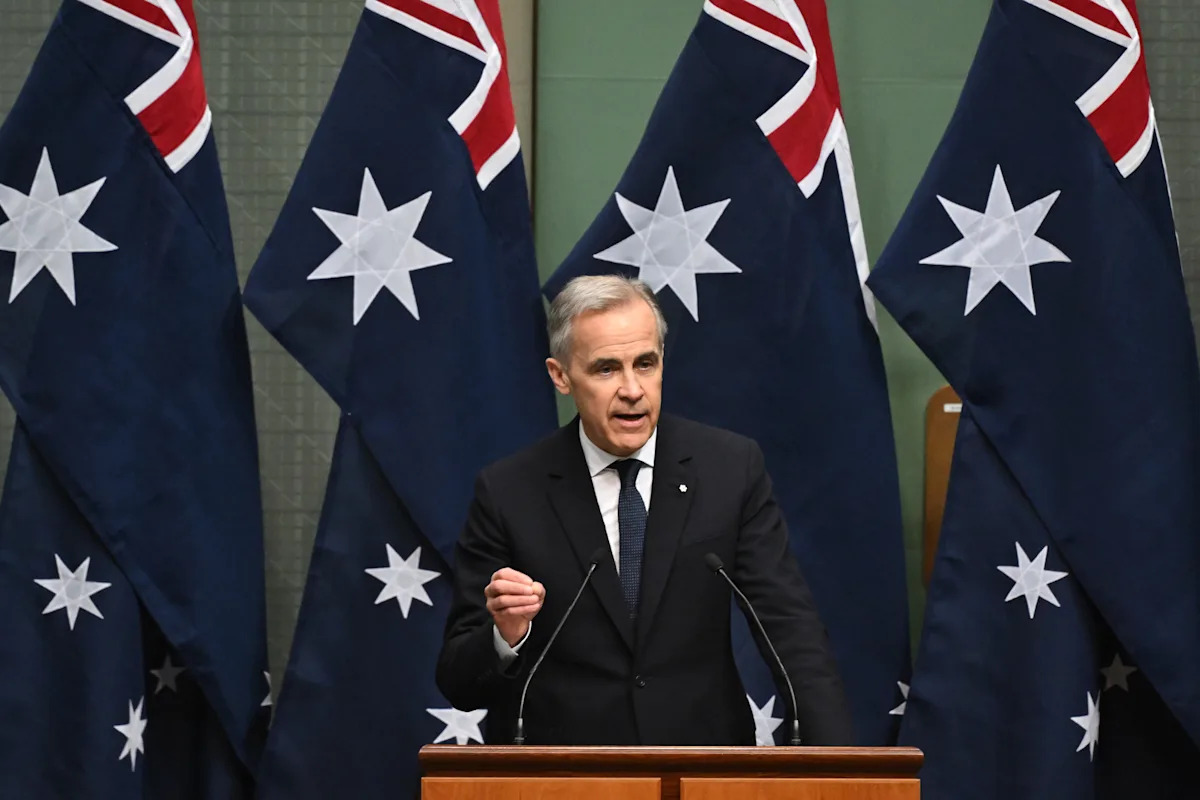
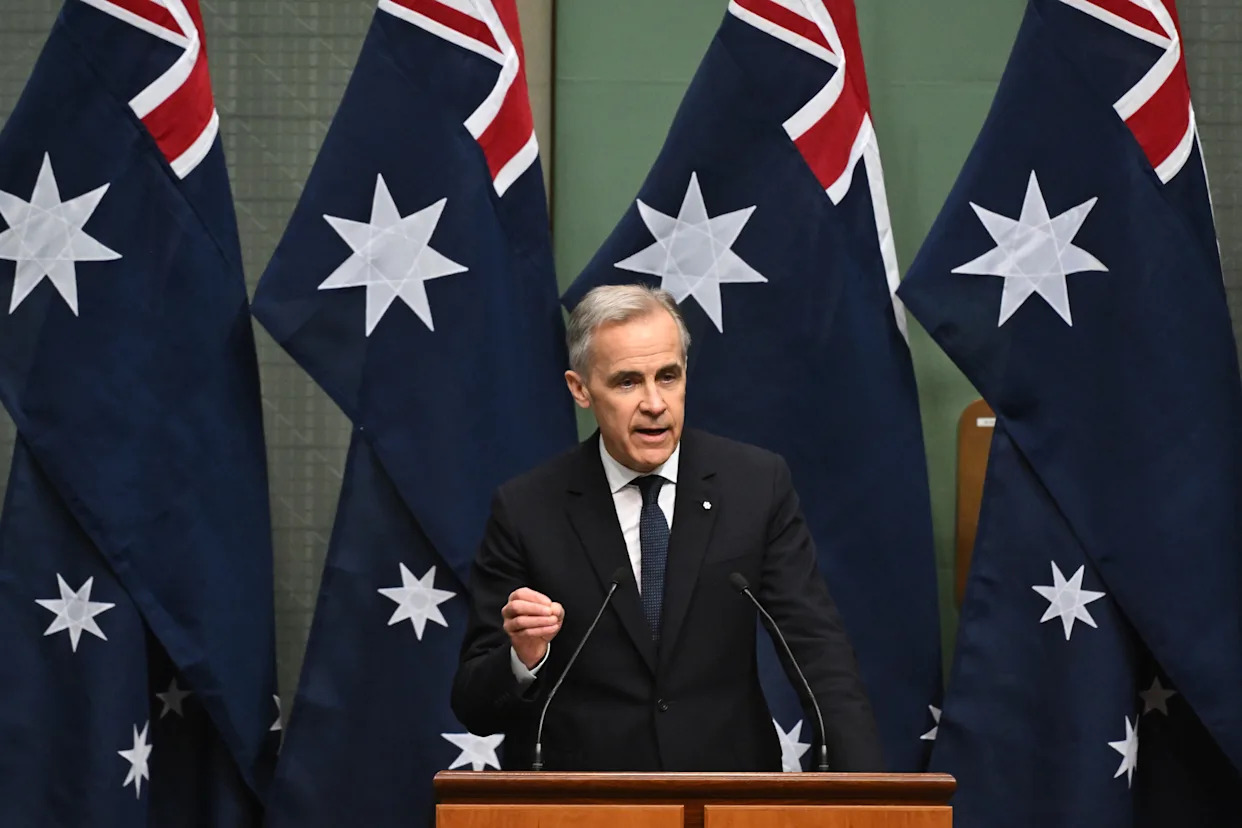
Backlash from Canadians and human rights groups on both Carney and foreign affairs minister Anita Anand’s statements (one of Anand’s statements was subsequently deleted), compelled the PM to recalibrate Canada’s stance in a press conference from Australia while on a trade negotiations trip across the Asia-Pacific.

“The United States and Israel have acted without engaging the United Nations or consulting allies, including Canada,” he amended. “Canada reaffirms that international law binds all belligerence … We implore all parties, including the United States and Israel to respect the rules of international engagement.”

The PM also said: “It is a case for the U.S. and Israel to make, and those who are more expert than me — I’m certainly not an international lawyer — who are more expert to make that determination … It appears these actions are inconsistent with international law.”

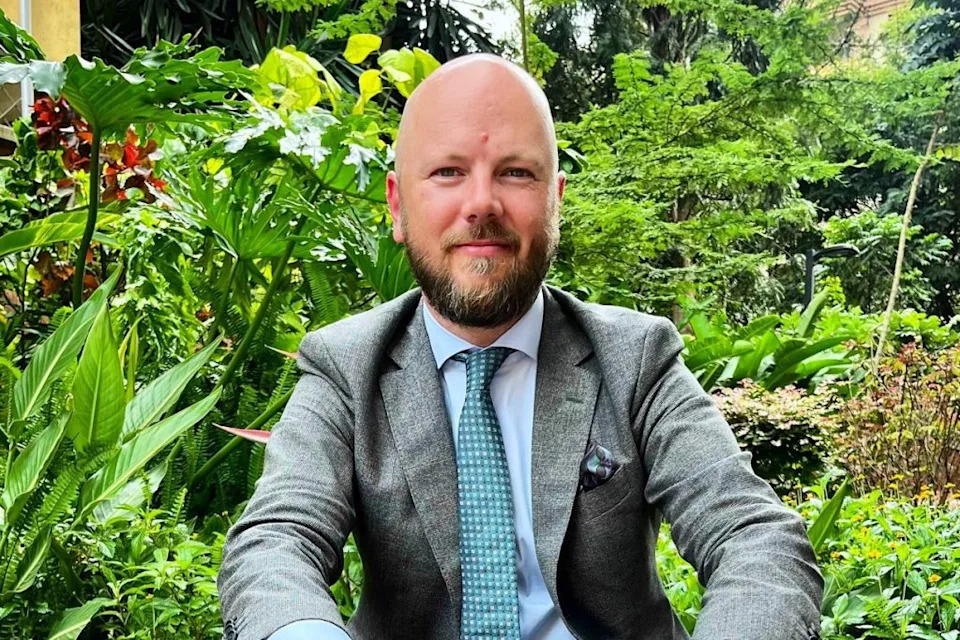
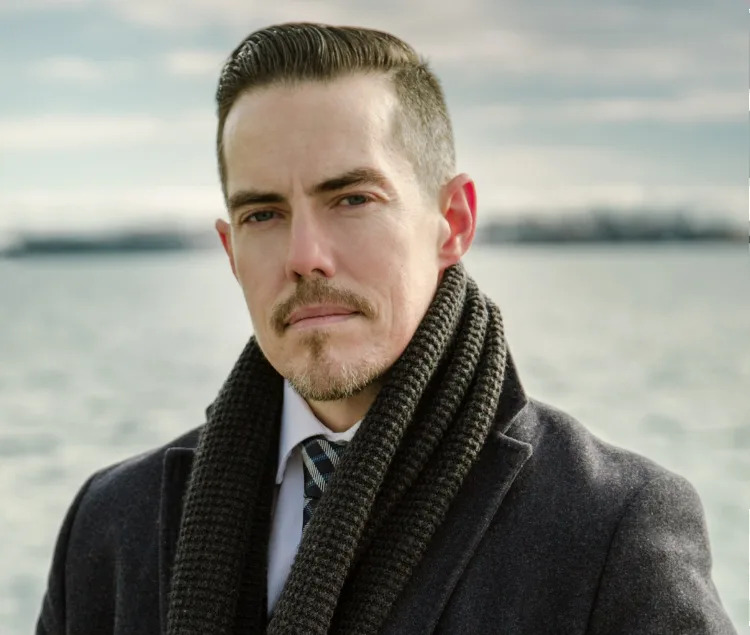
Yahoo Canada spoke to two international law experts — Mark Kersten, an international law professor at the University of Fraser Valley in Abbotsford, and Shane Martínez, a human rights and defense lawyer at Martínez Law in Toronto — to make sense of why the Carney government was initially quick to side with the U.S. and Israel without a thought about international law.

We also asked them if Carney’s revised rhetoric is anywhere near enough.

Mark, you say that Carney’s original statement on the U.S. and Israel going into Iran was a hit and a miss. Please explain.

Mark Kersten: Carney was absolutely correct that this is a time to articulate solidarity and support for the Iranian people who have been oppressed and the target of so many atrocities and human rights violations — not just recently with the thousands of disappeared and tortured, but for decades there has been no accountability. Many have called for Iranian perpetrators to be investigated and prosecuted, including in Canada. So to oppose the regime is 100 percent correct; there is no ambiguity there.

What the PM missed was that he appears not to believe that international law is relevant — the consensus is very strong among international lawyers that this is an illegal war. So the question isn’t whether the Iranian regime should continue to exist or to oppress its citizens. It shouldn’t.

The consensus is very strong among international lawyers that this is an illegal war.

The question is, firstly, does international law have a place? And secondly: What is the cost of abandoning international law just because you don’t want to apply it to a state or regime that you don’t like? I think it’s dangerous to whittle away at the protections that international law offers to states and to people by not applying it to states you don’t like. I’m concerned that if we don’t consistently note that international law applies, and the violations outside the scope of the United Nations charter — if we don’t consistently apply those international laws — then we are in a much weaker standing to denounce or articulate that international applies when sovereignty of Cuba is violated, which many people believe, is going to happen next.

How does Canada square the fact that we believe that threats against the territorial sovereignty of Greenland are unacceptable when we don’t make that same claim for all states?

The PM adjusted the government’s position on March 3 because of the pressure from everyone who understood from Day One that these attacks on Iran were illegal. But many were confused by the amended stance. In the words of iHeart Radio Talk Network’s Bill Carroll: “Canada supports a war that we believe is illegal. What kind of position is that?”

Shane Martínez: After Canada received public backlash for endorsing the illegal acts of aggression taken by the U.S. and Israel against Iran, the PM’s statement unsuccessfully explained the government’s position.

Carney called for a “rapid de-escalation strategy of hostilities” while reiterating his support for the very attacks he acknowledges are spreading conflict and threatening civilian life.

The prime minister does not withdraw his support for the U.S. and Israel — both of whom have egregiously breached the U.N. Charter. He, rather hypocritically, reminds us that “international law binds all belligerents.” His statement expresses vague sentiments of “regret” for Canada’s position but suggests that it is one taken because of “failure of the international order.”

The attempted rationalization is a maze of contradictions: The PM is basically saying that although international law ought to prevail, it is necessary to endorse the violations to achieve an elusive peace even though said “peace” requires diplomatic engagement. The only coherence to be extracted is that liberalism is, yet again, serving imperial interests.

The PM is basically saying that although international law ought to prevail, it is necessary to endorse the violations to achieve an elusive peace

On top of the mixed messaging, the PM has also said that “One can never categorically rule out participation. We stand by our allies.” Does this ping-pong position on Iran diminish or even undo the effect of his much-lauded speech at the World Economic Order in Davos, Switzerland?

MK: In Davos, just weeks ago, Carney said that as a middle power that was both pragmatic and principled, Canada would defend territorial integrity, sovereignty, and the UN Charter, and oppose the use of force unless it was authorized under the Charter under two exceptions that exist under international law. Almost immediately, we have chosen not to do any of those things. The calculus is, “Look, this isn’t Cuba, Greenland, or Ukraine. This is our historic foe: We have no diplomatic relationships with Iran — the Stephen Harper government shut those down. So our calculus here is to side with the United States in order to curry favour with them in the midst of difficult economic negotiations.

This has nothing to do with defending [the people of] Iran. You can defend international law without defending a country. You can say that international law applies without saying you support it in a way that would allow a particularly brutal regime to persist, or to continue existing or oppressing its people. There’s a way to say those things at the same time. The regime should end, and the people of Iran deserve much better than the cruelty and oppression they’ve experienced. At the same time, international law protects territorial integrity and sovereignty and prohibits the use of force except under very narrow circumstances, and that’s important not just in some places, but in all places, because those rules of international law are not about individual states, they are about the collective security of the globe. There are very, very few examples of the illegal use of force leading to further protection of civilians.

You can say that international law applies without saying you support it in a way that would allow a particularly brutal regime to persist.

In the Davos speech, Carney said what most of the world said, which is that this rules-based order basically didn’t exist and what it really was, was hypocrisy masquerading as global politics. He said Canada had contributed to that by allowing the United States to more or less do anything it wanted too often, and that that was going to change. I think people read the Davos speech as an indication that something different was going to come.

To this day, one of the defining moments of Canadian history is when we didn’t go with the United States into Iraq. It stands out as this quintessentially Canadian moment because on so many other things we just went along with them. Now, it’s especially a difficult moment for Carney because on the one hand you want to remove yourself from this dependency; on the other hand, you want to avoid possibly having your own territorial integrity violated in the future and having your sovereignty threatened or diminished by the United States in the future. That’s not an easy tightrope to walk. We have to take that seriously. But if we take international law as an afterthought, basically saying it doesn’t really matter over here (like we did with Iran), we weaken our position of being able to say it and getting others to side with us if and when our territorial sovereignty is put in the crosshairs.

SM: In the speech, [it seemed like] the PM made commitments to going down a new path. The only thing that ushered that little bit of acknowledgement of truth in the speech was that Canada being put in the same position it has historically contributed to other countries being put into. Only Canada was in a somewhat comparable position — not anywhere close to what the Global South goes through — but once it was at odds in some way with the United States, then we saw it acknowledging this arrangement or “order.”

So there was some truth there, but I don’t think there was ever any kind of sincerity behind doing things differently. At least not differently in terms of who benefits. The same class-based interests are going to end up benefitting. There’s not going to be any kind of shift of power. It was about a different way of doing it, but it’s ultimately going to result in the same outcome.

The contradiction to the speech with Iran is that Carney specifically put out a statement and endorses an illegal imperialist war and does so in such a short temporal period from when he made the speech in Davos that it illustrates that contraction so significantly. It shows how you can say something one day — he can acknowledge the truth of this fundamentally unfair arrangement and the next day take a position, like he did on Iran — just reaffirms the very problem he was identifying with that speech.

We have to remember that it’s a problem for us, the people. It’s not a problem for ruling class interests. The status quo is exactly what they want to maintain by endorsing what the United States and Israel have embarked on, here.
Comments
You must be logged in to comment.