yahoo Press
‘Prices could surge past $100’: What the Iran war means for gas prices — and how to lower your car costs now
Images
1 / 5
2 / 5

3 / 5

4 / 5
5 / 5
Moneywise and Yahoo Finance LLC may earn commission or revenue through links in the content below.

The global oil market has a pressure point, and it sits in a narrow stretch of water off the coast of Iran.

Roughly one-fifth of the world’s oil supply moves through the Strait of Hormuz each day. When warnings come as tensions in the Middle East escalate — and oil trade flows through the Strait of Hormuz grind to a halt — traders price in the risk immediately.

Thanks to Jeff Bezos, you can now become a landlord for as little as $100 — and no, you don't have to deal with tenants or fix freezers. Here's how

Dave Ramsey warns nearly 50% of Americans are making 1 big Social Security mistake — here’s what it is and the simple steps to fix it ASAP

Most Americans earn a dismal 0.39% APY on their cash at big banks. Unlock up to 4.05% APY and pay $0 in account fees instead with a Wealthfront Cash Account

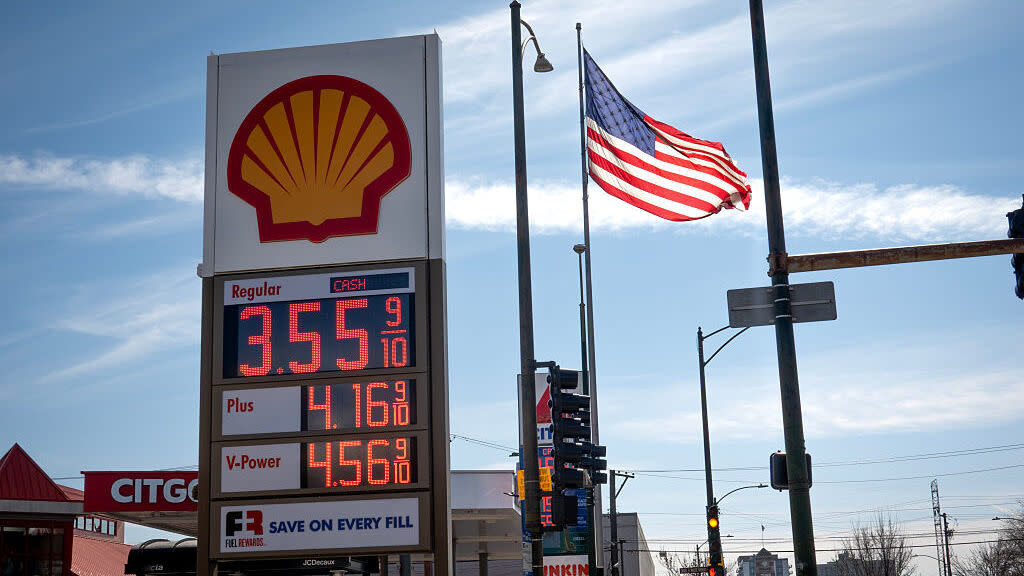
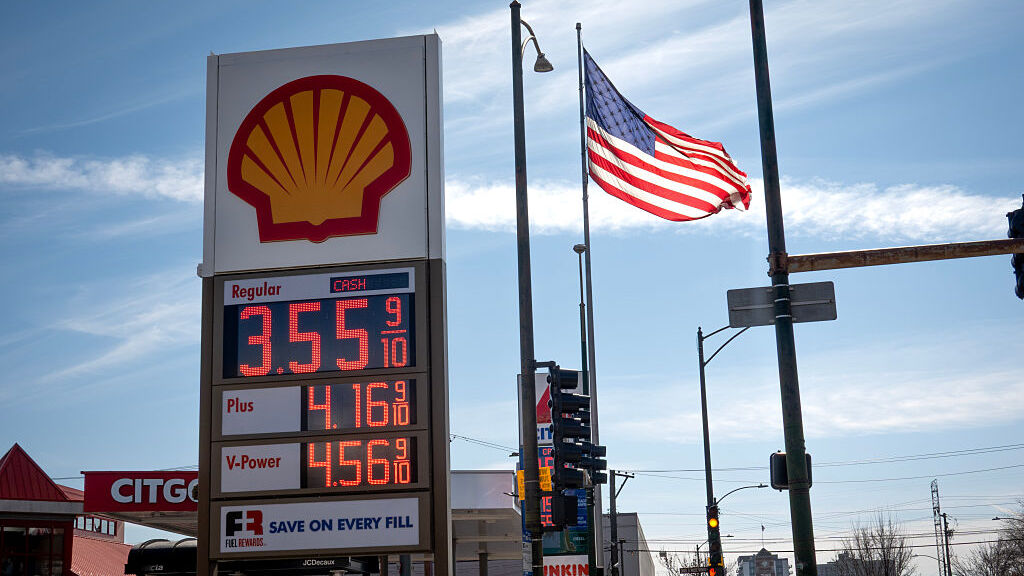
“If the strait were disrupted, prices could surge past $100 per barrel, potentially driving gasoline close to $5 per gallon,” said Claudio Galimberti, chief economist at Rystad Energy (1).

Gasoline prices have already climbed above $3 per gallon nationwide, though Galimberti says further escalation could push prices much higher (2).

“Iran is infinitely more desperate today… which means it’s more inclined to lash out if only to raise the cost of U.S. intervention,” Matt Reed, vice president of Foreign Reports, reportedly told Fortune.

For American drivers, that risk translates into something painfully simple: higher fuel bills.

Gas isn’t the only expense driver, either. When fuel costs climb — and historically, they do — the total cost of car ownership rises. Insurance premiums, maintenance, financing costs and day-to-day driving expenses are likely to increase.

While you can’t control oil markets, you can control how your household handles its auto costs.

Markets respond quickly to geopolitical instability.

Any threat to shipping lanes in the Persian Gulf can trigger overnight spikes in oil prices, especially if traders believe supplies could tighten.

At the heart of this sensitivity is the Strait of Hormuz, a narrow waterway between Iran and Oman that serves as a chokepoint for global oil trade. Roughly 20% of the world’s petroleum liquids and about one-fifth of all liquefied natural gas pass through it each day (3).

Because there are few practical alternative routes, even the perception of disruption can send gas prices higher. In 2025, analysts said even a partial shutdown of the Strait of Hormuz would drive Brent crude past $100 per barrel — and possibly above $110 if the disruption dragged on (4).

This kind of reaction isn’t new. From the Iran-Iraq War in the 1980s to repeated tanker incidents in the Gulf in the 2010s, history’s pattern is consistent — oil markets jump on geopolitical risk even if physical supply doesn’t change immediately (5).

Today’s situation reinforces those dynamics. With tensions rising across the region and looming threats to close or disrupt shipping lanes in the air, the price of oil is likely to reach a level not seen in months (6). As a refined product of crude oil, gasoline will follow suit.

Gasoline is one of the most visible examples of how global conflicts hit household budgets. For many Americans, fuel costs can run into the hundreds of dollars each month for daily commuters (7).

And when fuel costs rise, they don’t rise in isolation. They collide with everything else.

Read More: I’m almost 50 years old and don’t have retirement savings. Is it too late to catch up?

Read More: Non-millionaires can now invest in this $1B private real estate fund starting at just $10

Gas prices are volatile, but the real strain for most American families lies in the rising costs of everything all at once.

Right now, Americans face rising costs in many ways. Insurance premiums, car payments and routine maintenance costs are all on the rise. That’s to say nothing of costs in other sectors, like groceries.

It’s easy to see how a gas spike can expose weaknesses in a household where the budget is being stretched thinner by the year.

The real question isn’t just about how to save an extra 10 cents per gallon — it’s whether your overall budget can absorb this shock without derailing your financial goals.

One of the fastest ways to ease pressure is by reviewing fixed car expenses, especially insurance.

Insurance is usually the second-largest recurring car expense after fuel. Yet, many drivers stick with the same carrier for years without comparing rates, even as premiums increase.

With fuel costs set to rise, it’s a good time to review every car-related expense, especially your insurance coverage.

Even modest savings can make a difference. Cutting $50 to $100 per month from your premium could significantly offset pump costs.

If you haven’t compared rates in the past year or two, there’s a chance you could be overpaying.

According to Forbes, the national average cost for full-coverage car insurance in 2025 was $2,149 per year, or $179 per month (8). However, rates can vary widely depending on your state, driving history and vehicle type.

Online insurance marketplaces let you input your information once and receive multiple quotes from competing carriers, so you can quickly find the best rate available.

By using OfficialCarInsurance.com, you can easily compare quotes from multiple insurers like Progressive, Allstate and GEICO, to ensure you’re getting the best deal.

In just two minutes, you could find rates as low as $29 per month.

Another option is Insurify — a digital comparison platform that lets drivers compare quotes from dozens of insurers in minutes.

Insurify helps you take charge of your insurance-shopping journey with tools and insights no one else has.

Insurify uses driver data and real-time rate information to match you with policies tailored to your profile, whether you’re looking for minimum coverage to cut costs or more comprehensive protection.

The potential savings aren’t trivial. If switching carriers saves you $75 per month, that $900 per year can help absorb the impact of rising gas prices.

When unpredictable costs hit, having a clear view of where your money is going can keep you from being blindsided.

A financial advisor can help crunch the numbers and build a budget that works even when the world economy is struggling.

But hiring an advisor can be a lifelong commitment — one that could make or break your budget. That means finding an advisor you can trust is crucial.

That’s where Advisor.com can help. The platform quickly connects you with an expert near you for free.

Advisor.com does the heavy lifting for you, vetting advisors based on track record, client ratios and regulatory background. Plus, their network of fiduciaries are legally required to act in your best interest.

Just enter a few details about your goals and Advisor.com’s AI-powered matching tool will connect you with a qualified expert best suited for your needs.

Set up a free initial consultation today to see if they’re the right fit for you.

Having a clear picture of where your money’s actually going can help you budget appropriately. Budgeting tools can help you easily track and manage your car expenses.

By seeing the full picture, you can identify patterns — maybe you’re driving more than you thought, or your maintenance costs are creeping up.

Tools like Monarch Money allow you to categorize and monitor fuel spending, insurance payments, maintenance costs and loan payments in one dashboard.

When prices rise, this visibility gives you leverage. You can adjust spending elsewhere, plan for seasonal fuel spikes or rethink transportation choices before costs spiral.

For a limited time, get 50% off your first year with the code WISE50.

If you’re a retiree living on a fixed income, every dollar counts.

When your income doesn’t adjust easily, a moderate increase in gasoline or insurance premiums can put a strain on your budget.

While a million-dollar retirement fund sounds significant, after taxes, a 4% withdrawal leaves you with just $40,000 a year. That amount doesn’t go far in a world of rising costs and is quickly eroded by health expenses and market downturns (9).

Senior-focused organizations like AARP can help offset some life expenses. They offer discounts on almost everything — from prescriptions and dental plans to travel, entertainment and insurance.

As one of the most trusted organizations for older Americans, AARP not only offers money-saving perks but also helps you make informed financial and health decisions.

AARP members get access to guides that can help you make the most of Social Security, choose the right Medicare plan and uncover other government benefits — potentially saving you thousands.

Sign up with AARP today and get 25% off your first year.

Global energy markets may be reacting to events half a world away, but your household budget isn’t powerless.

While you can’t control the Strait of Hormuz, you can control how efficiently your car and your finances operate at home.

There are practical steps you can take now to reduce what you spend at the pump:

Carpool when possible. Even cutting one or two solo commutes per week can meaningfully reduce monthly fuel spending.

Keep tires properly inflated. Underinflated tires reduce fuel efficiency and increase wear. According to the U.S. Department of Energy, proper tire pressure alone can improve gas mileage by up to 3% (10).

Drive more efficiently. Avoid aggressive acceleration and high-speed driving, which can significantly reduce fuel economy.

Use fuel-tracking apps. Monitoring your fuel usage can help you identify patterns, compare fuel prices across stations and adjust habits before costs creep up.

Consolidate trips. Combining errands reduces cold starts and unnecessary mileage — a small shift that adds up over time.

None of these tactics eliminate the impact of rising oil prices, but they can create some breathing room.

When fuel prices climb, the goal isn’t perfection — it’s resilience. By rethinking insurance, budgeting strategically and using available resources and discounts, you can help keep your overall car expenses grounded, no matter what happens overseas.

Robert Kiyosaki says this 1 asset will surge 400% in a year — and he begs investors not to miss its ‘explosion’

Vanguard reveals what could be coming for U.S. stocks, and it’s raising alarm bells for retirees. Here’s why and how to protect yourself

Warren Buffett used these 8 repeatable money rules to turn $9,800 into a $150B fortune. Start using them today to get rich (and stay rich)

Here are 5 easy ways to own multiple properties like Bezos and Beyoncé. You can start with $10 (and no, you don’t have to manage a single thing)

Join 250,000+ readers and get Moneywise’s best stories and exclusive interviews first — clear insights curated and delivered weekly. Subscribe now.

We rely only on vetted sources and credible third-party reporting. For details, see our editorial ethics and guidelines.

The Mirror (1); Reuters (2); IER (3); Reuters (4); Discovery Alert (5); Global News (6); JD Power (7); Forbes (8); Investopedia (9); U.S. Department of Energy (10)

This article provides information only and should not be construed as advice. It is provided without warranty of any kind.
Comments
You must be logged in to comment.