yahoo Press
California widow and fire victim, 71, loses $38K she saved to repair family home. Protect yourself from disaster scams
Images
1 / 4
2 / 4

3 / 4

4 / 4
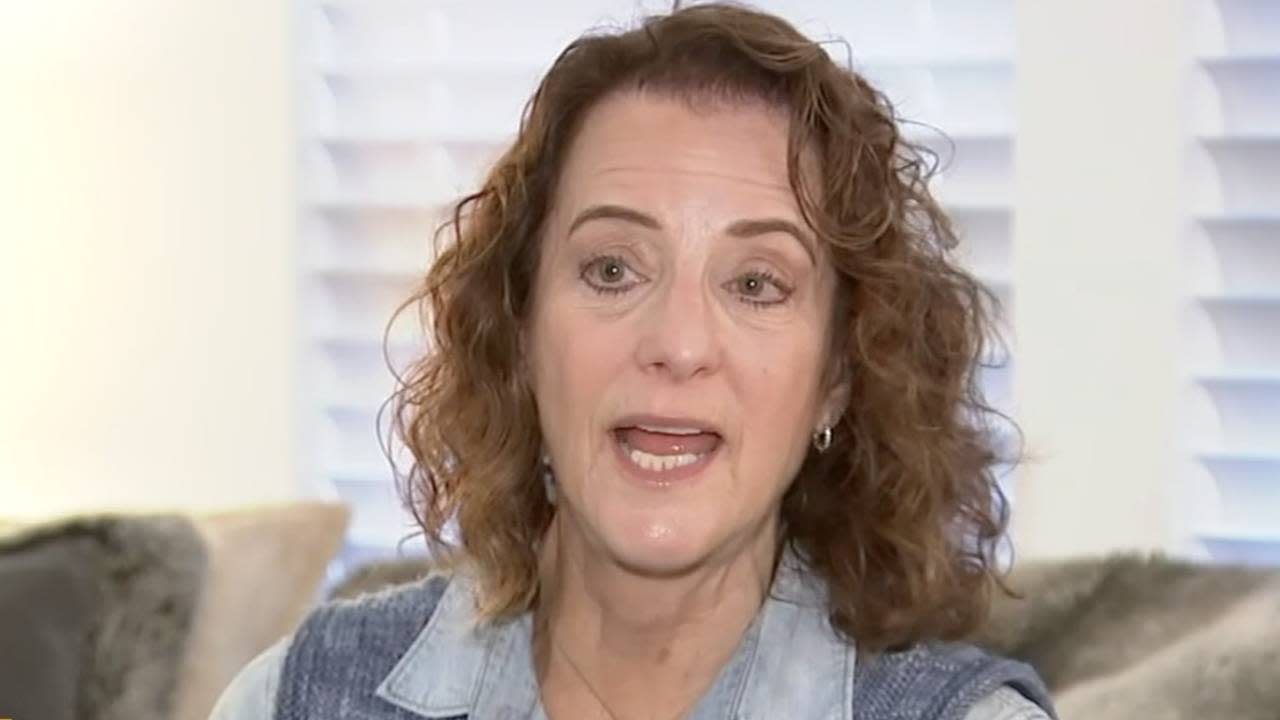
Ellen Rudolph, 71, has suffered incredible loss in the past year. She was displaced by the Pacific Palisades wildfire. She lost her husband to cancer in October.

Then, as she told NBC4 Los Angeles, she lost $38,000 to an online scam — money she’d saved for repairing the damage to their family home. (1)

“Every time I think about it, I’m reliving it,” Rudolph told ABC 7 Eyewitness News (2).

She notes that con artists exploited her vulnerability as both as a disaster survivor and grieving widow.

“They took advantage when I was, and am still, at my most vulnerable in my entire life,” Rudolph told ABC.

Now she’s speaking out in the hope that others like her will take steps to protect themselves.

Thanks to Jeff Bezos, you can now become a landlord for as little as $100 — and no, you don't have to deal with tenants or fix freezers. Here's how

Dave Ramsey warns nearly 50% of Americans are making 1 big Social Security mistake — here’s what it is and the simple steps to fix it ASAP

Turning 50 with $0 saved for retirement? Most people don’t realize they’re actually just entering their prime earning decade. Here are 6 ways to catch up fast

Fraudsters claiming to be from PayPal emailed Rudolph about a ‘suspicious’ charge on her account.

Having lost her home and her husband, she was vulnerable and gave the con artists access to her bank account. They promptly stole the $38,000 she had saved up for home repairs.

Disaster scams target people like Rudolph precisely because they’re emotionally vulnerable in the wake of loss, and frequently concerned about finances. They may be struggling with insurance delays, contractor shortages and mounting repair costs.

Indeed, a Harris Poll survey found that more than a third (37%) of Americans impacted by a natural disaster have reported fraud (3).

According to the American Institute of CPAs, which commissioned the survey, the top disaster scams include:

identity theft (14%)

government assistance fraud (11%)

loan scams (11%)

vendor fraud (10%)

utility scams (10%)

charity fraud (10%)

insurance fraud (10%)

contractor fraud (8%)

The Consumer Financial Protection Bureau (CFPB) notes that some identity thieves pose as be Federal Emergency Management Agency (FEMA) workers in the wake of disasters, demanding victims pay them for home inspections or help with applications (4).

These fraudsters may also ask disaster victims to ‘verify’ their identity, collecting their names, addresses and Social Security Numbers, then use these stolen credentials to apply for FEMA assistance.

Scammers might impersonate mortgage lenders, insurance companies or government agencies, claiming they need your account information to deposit funds for an insurance claim, settlement or aid.

The CFPB also advises disaster victims to be wary of door-to-door contractors using high-pressure tactics.

Fraudsters might even set up a fake charity to funnel good-hearted people’s donations directly into their own pockets.

Read More: The average net worth of Americans is a surprising $620,654. But it almost means nothing. Here’s the number that counts (and how to make it skyrocket)

Rudolph advises anyone who’s feeling emotionally vulnerable to avoid making any major financial decisions without first checking in with their bank, law enforcement or a friend.

If you’re approached by someone claiming to be from FEMA, an aid organization, your bank or your insurer, don’t give away any information upfront, like bank account or credit card numbers.

Instead, ask for their ID and paperwork so you can verify their identity independently. Confirm their credentials online and call the official phone number (for example, FEMA) directly.

To avoid charity scams, do your due diligence on sites like Charity Navigator and CharityWatch.

Before hiring a contractor or trade worker, see if they’re accredited with the Better Business Bureau. Ask for their business license and proof of insurance, and have them sign a formal written contract. Final payment shouldn’t be made until the work is completed. Also beware of price gouging.

Never send large upfront payments using unusual payment methods such as wire transfers, cryptocurrency or peer-to-peer apps, since it’s nearly impossible to get your money back afterward.

As a precaution, you can freeze your credit record for free at the three national credit reporting companies: Equifax, TransUnion and Experian.

“Freezing your credit restricts access to your credit file by potential new creditors. This makes it harder for identity thieves to open new accounts in your name,” according to CFPB. (4)

You can report a disaster-related scam or fraud online at the National Center for Disaster Fraud or call the Disaster Fraud Hotline at (866) 720-5721.

You can also contact local law enforcement, your state attorney general or the Federal Trade Commission (FTC).

Slowing down — especially in the aftermath of a disaster when you’re emotionally vulnerable — could save you from additional losses.

Robert Kiyosaki says this 1 asset will surge 400% in a year — and he begs investors not to miss its ‘explosion’

Dave Ramsey says this 7-step plan ‘works every single time’ to kill debt, get rich in America — and that ‘anyone’ can do it

Non-millionaires can now invest in this $1B private real estate fund for as little as $10. Here's how to get started in minutes

Warren Buffett used these 8 repeatable money rules to turn $9,800 into a $150B fortune. Start using them today to get rich (and stay rich)

Join 250,000+ readers and get Moneywise’s best stories and exclusive interviews first — clear insights curated and delivered weekly. Subscribe now.

We rely only on vetted sources and credible third-party reporting. For details, see our editorial ethics and guidelines.

NBC 4 (1); ABC 7 (2); American Institute of CPAs (3); Consumer Financial Protection Bureau (4)

This article provides information only and should not be construed as advice. It is provided without warranty of any kind.
Comments
You must be logged in to comment.