Press
Too early to tell 'scope' of Iran strikes, Trump tells Congress
Images
1 / 8

2 / 8
3 / 8
4 / 8
5 / 8
6 / 8
7 / 8
8 / 8
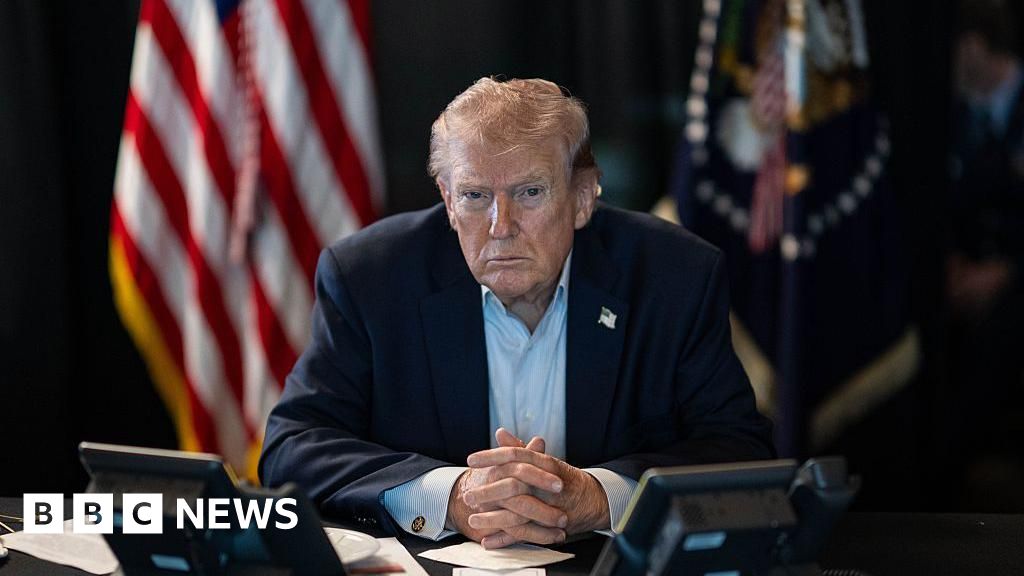
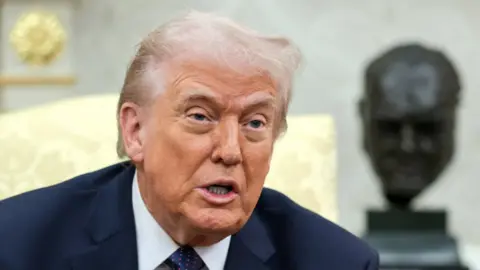
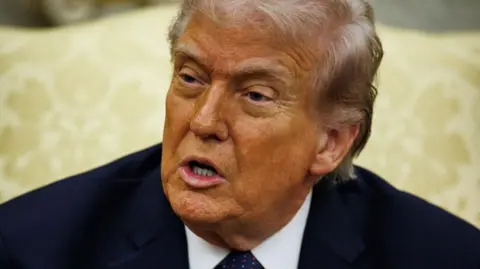
President Donald Trump has told lawmakers it is not yet possible to know the "full scope and duration" of the US operation in Iran.

In a letter notifying Congress of the military action, Trump said the threat from Iran had been "untenable" despite efforts to find a diplomatic solution.

Lawmakers are set to vote this week on a war powers resolution aimed at limiting Trump's military operations in Iran. But it faces significant hurdles, and it is unclear how much its passage would alter the conflict.

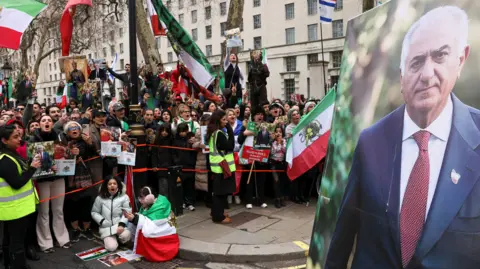
The US and Israel began striking Iran on Saturday. Iran responded by firing missiles and drones at Middle Eastern nations allied to the US.

In the letter, Trump told Senate President Pro Tempore Chuck Grassley his administration's view that Iran "remains one of the largest, if not the largest, state-sponsors of terrorism in the world".

He said it "continues to seek the means to possess and employ nuclear weapons".

"Its array of ballistic, cruise, anti-ship and other missiles pose a direct threat to and are attacking US forces, commercial vessels and civilians, as well as those of our allies and partners," the letter added.

The president also said no US ground forces have been committed to the operation and that it was designed to minimise civilian casualties.

Democratic lawmakers - and a handful of Republicans - have questioned whether Trump violated the law by launching strikes without congressional approval. Many have supported efforts to limit Trump's ability to take further action in Iran.

While the president has broad authority to launch military action without a formal declaration of war, Congress by law has to be notified within 48 hours of hostilities beginning.

"The constitution says we're not supposed to be at war without a vote of Congress," Virginia Democratic Senator Tim Kaine, a co-sponsor of the war resolution, told NPR.

"This is important. The lives of our troops are at risk," he added. "We ought to come back to Washington right away and vote on this."

Trump has previously conducted military operations without congressional approval, such as the US strikes against Iranian nuclear facilities last year, and the operation to seize Venezuela's Nicolás Maduro in January.

House Speaker Mike Johnson, a Republican, said the Trump administration had notified the Gang of 8 - a bipartisan group of congressional leaders - ahead of the strikes in Iran.

US Secretary of State Marco Rubio said he briefed those congressional leaders on 2 March, within the required time frame.

"We've complied with the law 100% and we're going to continue to comply with it," he said, confirming that the Gang of 8 was notified but not all 535 members of Congress.

Rubio has also said "it is fine" for Congress to vote on the matter, but "there's no law that requires the president to have done anything with regards to this".

"To begin with, no presidential administration has ever accepted the War Powers Act as constitutional – not Republican presidents, not Democratic presidents," he added.

Sir Keir Starmer had refused to grant the US permission to use the Diego Garcia military base.

Trump has so far not identified who he believes might lead Iran after the death of its supreme leader.

Trump lashed out after Spain barred the US from using its military bases to carry out strikes on Iran.

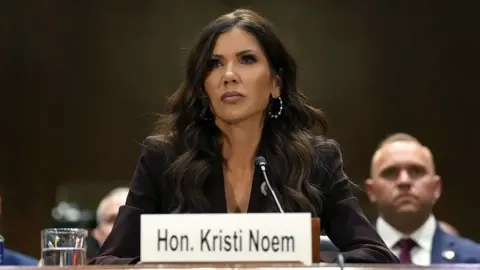
Both Republicans and Democrats criticised Noem for her leadership of the Department of Homeland Security.

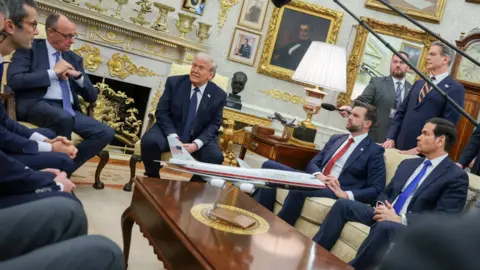
The US president criticised the Spanish government after it blocked the US from using its bases during the attack on Iran.
Comments
You must be logged in to comment.