Press
Sir John Curtice: Which issues will decide the elections in Scotland and Wales?
Images
1 / 9

2 / 9

3 / 9

4 / 9

5 / 9

6 / 9

7 / 9
8 / 9
9 / 9
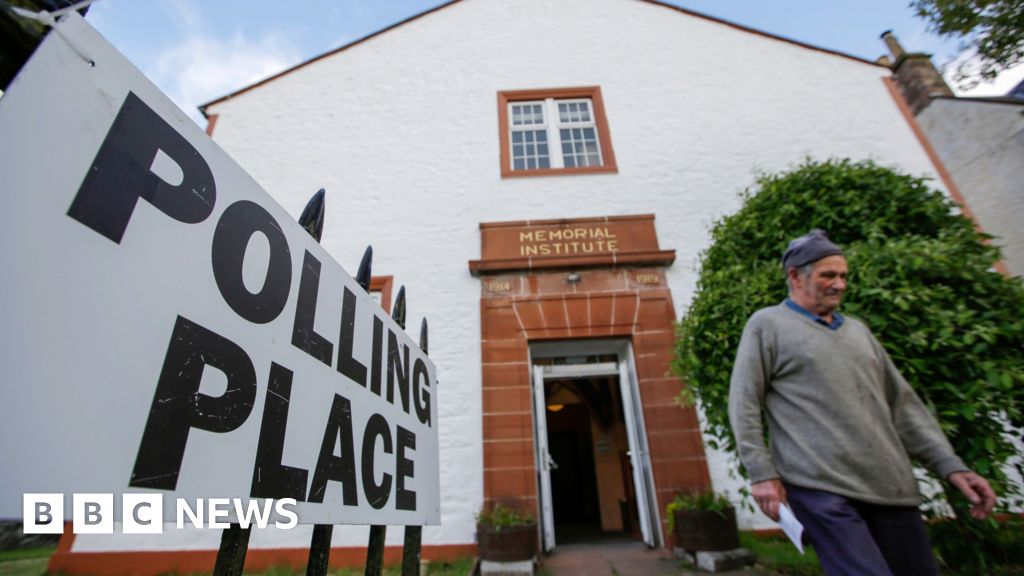
Voters will go to the polls on 7 May in elections for the Scottish and Welsh parliaments. As political parties gear up for the election, a poll for the BBC has examined the issues which will influence how people plan to cast their votes.

The poll of voters in Scotland and Wales suggests three key issues will be at the top of voters' minds when they elect their new governments in Holyrood and the Senedd.

The first is the state of the economy, including above all the cost of living. The second is the performance of health and social care services. And the third is the level of immigration.

There are some differences among voters as to how highly they place these issues.

Health and social care are mentioned particularly by older voters and women.

Immigration is particularly an issue for those who voted Reform at the 2024 election.

Meanwhile, younger voters quite often mention a fourth issue, housing.

Nevertheless, it would seem that no party can afford to ignore these three key issues if they wish to win the elections.

On all three, there is widespread concern about the direction in which their country has been heading.

In both Scotland and Wales, well over half say their country's economy has got worse over the last 12 months and around half feel their health service has deteriorated. Those who believe their economy or health service is getting better are decidedly thin on the ground.

Although in both nations more people feel that having migrants from outside the UK has been good for their country than feel it has been bad, around half feel their country now needs fewer migrants coming from abroad to live here.

Even among SNP and Plaid Cymru supporters, both of whose parties have taken a relatively liberal stance on immigration and asylum seekers, more would like to see the level of migration reduced than increased. The same is true of Labour voters in both countries.

This critical mood would seem to be bad news for the SNP government in Edinburgh and their Labour counterpart in Cardiff. Surely voters can be expected to blame them for what has happened and look to somebody else to be running their devolved government for the next five years?

However, it is not that simple. Voters do not necessarily blame their devolved government for what has been happening.

In both countries, more than two-thirds believe that responsibility for the state of the economy lies either wholly, or at least in part, with the UK government.

Around a half say the same about the health service – even though in both countries the NHS is run by the devolved government.

Crucially, SNP supporters are especially inclined to feel that responsibility lies with the UK government – particularly if they believe things have got worse over the last 12 months.

Even in Wales - where, of course, Labour is in power at both levels of government - most of the party's supporters point the finger of blame mostly, or partly, at the UK government.

One reason, perhaps, why voters are inclined to blame London is because much of the funding of the devolved governments comes in the form of a grant from the UK government – and around half feel their country does not get its fair share of that funding.

Nationalist supporters in both Scotland and Wales are particularly inclined to that view – but it is also relatively widespread among Labour supporters in Wales.

Both the Scottish and Welsh governments do have a potential remedy to hand if they feel they are suffering from a financial shortfall. They can put up taxes – above all, by using their respective powers to set a different rate of income tax from the rest of the UK.

In recent years, the Scottish government has used its wide-ranging powers over income tax to increase its revenues. In contrast, the Welsh government has not used its more limited powers.

But in both countries, there seems to be a considerable reluctance to have higher or lower income tax than across the English border. This outlook is even quite common among nationalist supporters.

Nowadays, the Scottish government also has responsibility for paying many welfare benefits north of the border – and it has used its power to implement a more generous regime.

But around a half of people in Scotland (and in Wales too) say the level of welfare spending should be the same as in England. Again, this view is not uncommon among nationalist supporters.

Devolution was intended to enable Scotland and Wales to make their own policy choices and then, at election time, to hold their devolved politicians to account for how they have exercised that freedom.

Yet it seems that in both Scotland and Wales many voters reckon their country's fate still depends significantly on decisions at Westminster, while, at the same time, they are wary about living under a tax and spending regime that is different from that in England.

A challenge for politicians of all persuasions between now and 7 May will be to demonstrate that the devolved institutions they hope to run do, and should, matter.

Gary Goldie said life was "continuing as normal" in the UAE despite Iranian missile strikes.

The Alba Continuation Group demands that leader Kenny MacAskill stand down after he said it was unlikely the party would contest May's Scottish parliament election.

A review of the front page stories from the daily newspapers in Scotland.

A thanksgiving service followed the private cremation of the 72-year-old who died on 7 February, just 25 days after being diagnosed with cancer.

Plaid launches its plan for what it would do in the first 100 days if it wins May's Senedd election.
Comments
You must be logged in to comment.