yahoo Press
The morning yoga pose I do for strength, stability and energy—and it’s one your yoga class is probably missing
Images
1 / 8
2 / 8

3 / 8

4 / 8

5 / 8

6 / 8
7 / 8

8 / 8
When you buy through links on our articles, Future and its syndication partners may earn a commission.

Yoga offers countless poses to improve physical health, balance, coordination, flexibility and strength. But there’s one I rarely see taught in modern yoga studios: squat and rise (utthanasana in Sanskrit).

For over 15 years, I’ve been a student at the Bihar School of Yoga. Squat and rise is one of its many classical postures, but I don’t see it practiced outside of India—despite it offering a wealth of benefits.

This standing staple strengthens your legs as well as your back, pelvis, hips and ankles. What I like most is that it features four progressive stages, making it accessible for a range of abilities and fitness levels.

I often practice squat and rise in the morning, enjoying its energizing benefits yet feeling a sense of stability and strength too. I include it in my refugee and asylum seeker classes for exactly these reasons.

If you’d like to give it a go, here’s how to do it.

Safety advice: This pose isn’t suitable for people suffering from uterine prolapse. If you’re pregnant, stick to the first two stages only.

Sets: 3-5 Reps: 1-5 each stage

Stand with your legs in a wide squat stance, toes and knees pointing out to the sides.

Interlock your fingers and let your arms hang loosely in front of your body.

Stage 1: Bend your knees and lower your buttocks into a quarter squat. Keep your knees tracking over your toes and your spine upright. Straighten your legs and return to standing upright. Repeat 1-5 times.

Stage 2: Bend your knees and lower your buttocks about halfway down, then return to the starting position. Repeat 1-5 times.

Stage 3: Bend your knees and lower your buttocks about three-quarters down. Then return to standing. Repeat 1-5 times.

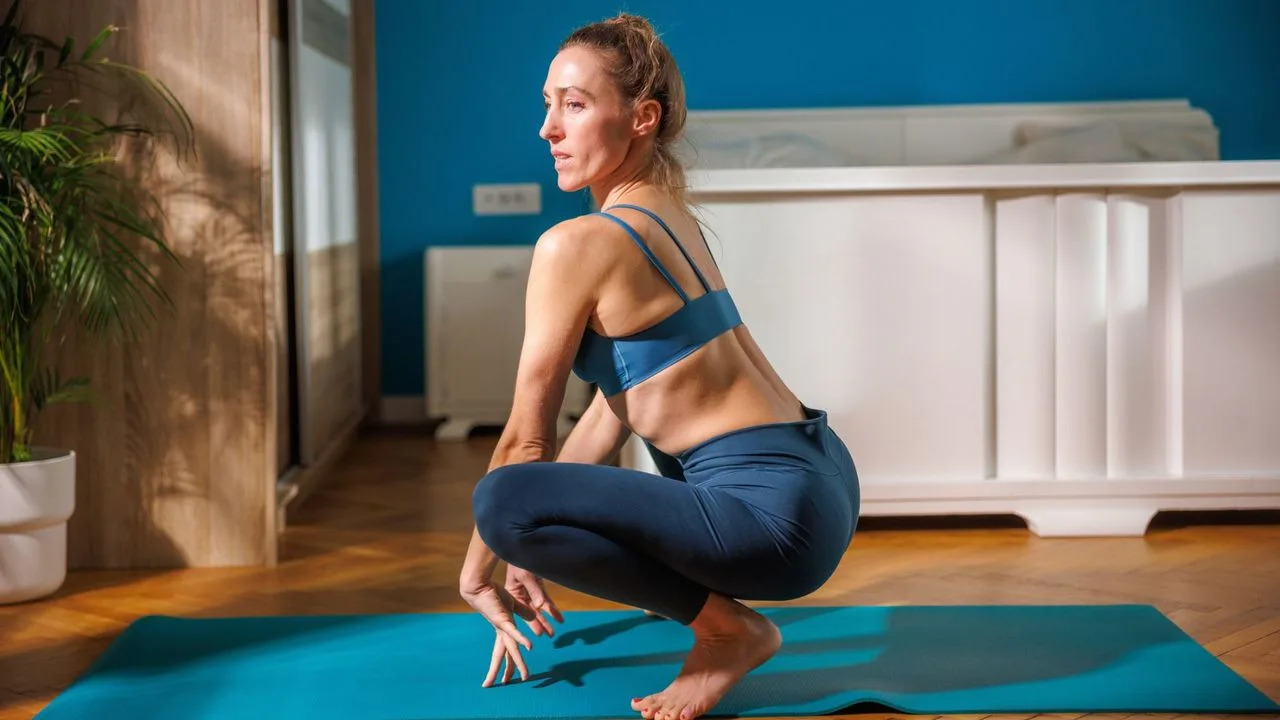
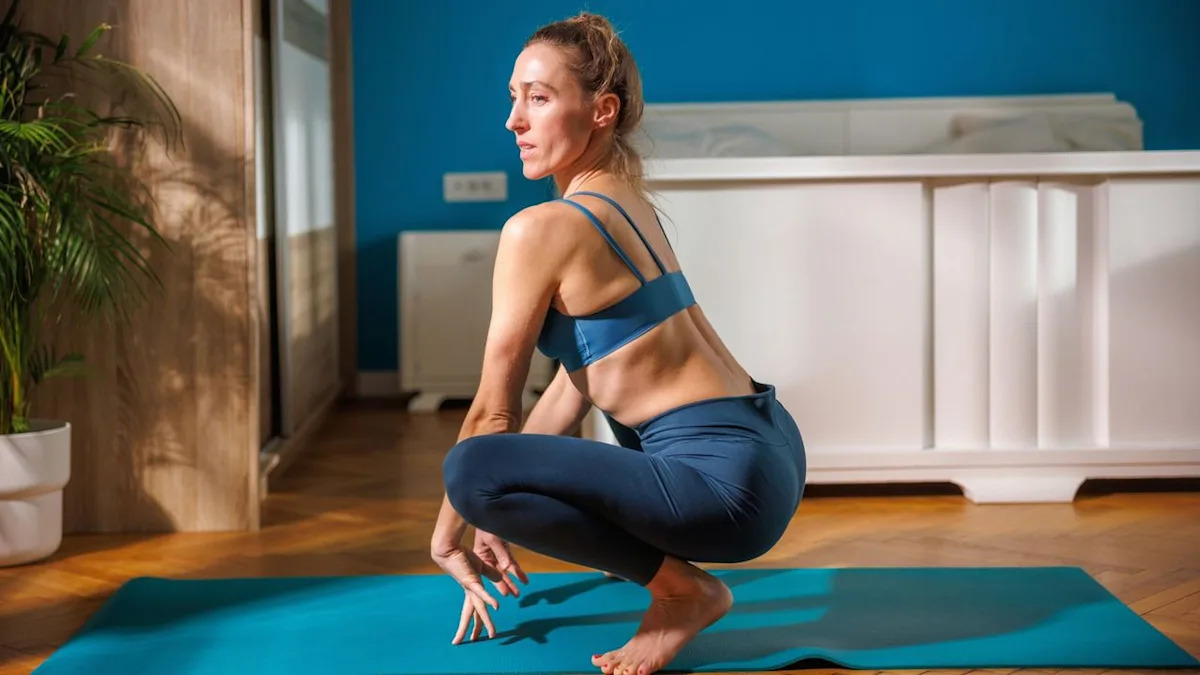
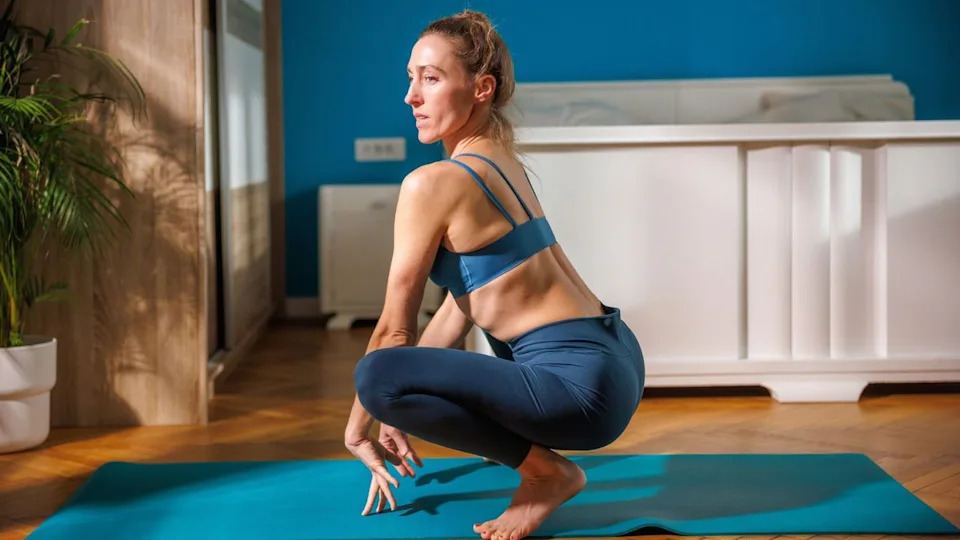
Stage 4: Lower your buttocks until your interlocked hands touch or are close to the floor. Avoid rounding your back or bending forward. Hold for a moment. Then return to standing and release the posture. Repeat 1-5 times.

For all stages: Inhale to start, exhale while lowering your body. Inhale to return to standing.

Make it easier: Beginners should only practice the stages that feel comfortable, performing five repetitions each. If you have knee problems, practice only the initial stages.

Make it harder: If you can perform stage four comfortably, perform each stage, one after the other, for five sets.
Comments
You must be logged in to comment.