huffpost Press
New Polling Finds A Scary Reason Black Voters Aren't Joining The Resistance
Images
1 / 7

2 / 7
3 / 7
4 / 7
5 / 7
6 / 7

7 / 7
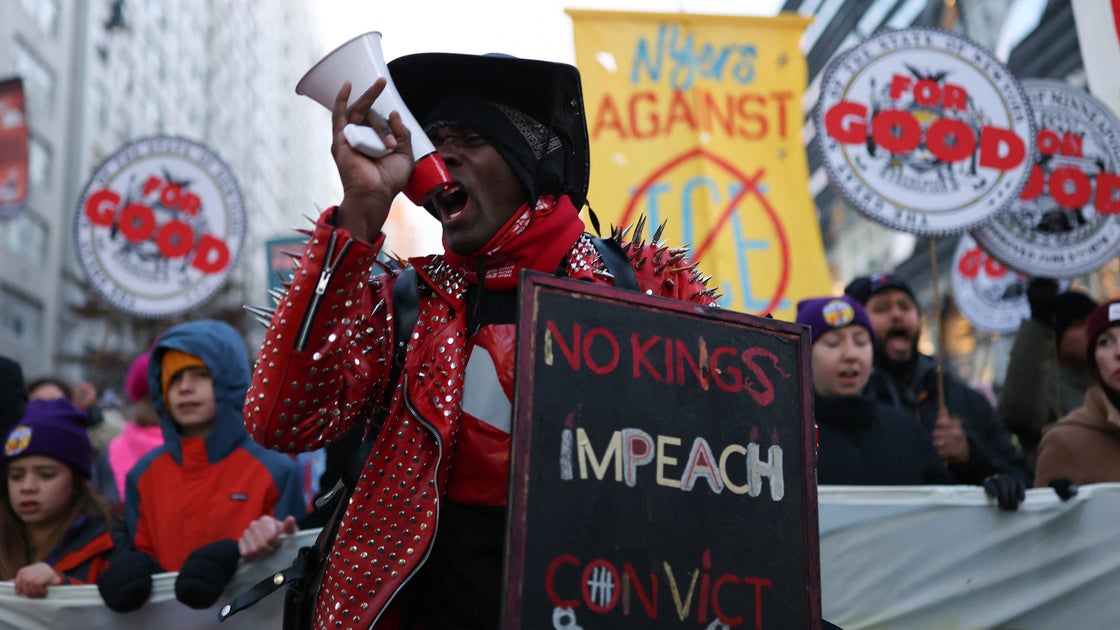
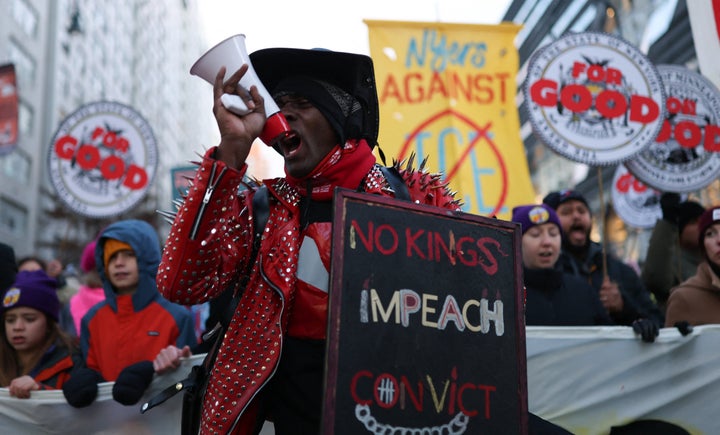
Throughout President Donald Trump’s second term in office, Republicans have frequently pointed out the demographic makeup of anti-administration protests, noting how those showing up to demonstrate were often far whiter and older than the Democratic Party’s self-image would suggest.

A new polling and research project that focused on Black voters found that their relative absence from the protests wasn’t related to a secret vein of support for Trump or a lack of opposition to his anger. It was rooted in fear of political violence or economic backlash.

“It’s a dangerous game to play for Black people to put their face out or say certain things right now,” one male focus group participant told the researchers from the Black Opps Project, specifically saying he worried about losing his job. “They’re looking for any way to destroy us.”

The project, which is sponsored by the Coalition of Black Trade Unionists, the Black Economic Alliance, the Service Employees International Union and the liberal donor group Way To Win, aimed to find ways to mobilize Black voters ahead of the 2026 midterm elections. And while fear of violence and retaliation wasn’t the only factor keeping Black people away from political participation in Trump 2.0 – a lack of leadership and cynicism were also major factors – it was a big one.

These findings could have major implications for liberal and Democratic groups’ strategies ahead of the midterms. While public surveys indicate many of the Black voters who supported Trump in 2024 have since turned against him, the Democratic Party struggled to turn out Black voters – typically the most loyal part of their base – in both the 2022 midterms and the 2024 presidential election.

When asked to name two reasons why they wouldn’t fight back against government actions harming Black communities, 32% of registered Black voters said they could face arrest for doing so, with a matching number saying they feared it would lead to mob violence against Black people.

“It’s scary asserting ourselves as Black folks in this resisting, because we already know about martial law. We already know Trump gives power to the police,” a female focus group participant told the researchers. “We already know that if we go out there with them people, something bad could pop off and then we’re in trouble.”

Roughly 25% of respondents said fighting back wouldn’t lead to change, while 18% said it could harm them professionally.

Terrence Woodbury, a pollster at HIT Strategies who led the project, said there was fear of political retaliation in both real life and online spaces.

“Remember those black squares on Instagram?” Woodbury said. “No one is doing that now because they are afraid expressing these attitudes online makes them a target.”

The result has been a resistance movement less connected to Black people, Woodbury said, which has potentially worrying implications for Democratic efforts to turn out marginal voters.

“In 2020, the resistance was led by people I would consider those closest to the pain: young people, people of color, lower education, lower income,” Woodbury said, referring to the protest movement after the death of George Floyd during Trump’s first term. “This movement is largely a resistance of privilege for older people, more educated, more higher income. That’s concerning because those are also the most likely voters in America.”

The project recommends offering digital safety trainings, pro bono legal assistance and bail funds to help alleviate Black voters’ concerns about protesting the Trump administration.

Polling also showed that Black voters felt abandoned by political and community leaders they believe are not doing enough to fight back against Trump. While 63% of registered Black voters said congressional Democrats have a major role in fighting government actions that hurt Black communities, only 36% felt the party was “very active” in doing so. Similarly, just 41% thought civil rights groups like the NAACP and ACLU were “very active,” while 56% said they had a major role to play. In addition, voters said Black church leaders weren’t doing enough, with just 31% calling them “very active.”

The polling also highlighted some generational divides among Black voters. Older black voters were more likely to have been involved in protests, and younger Black voters were less likely to cite battling racism or protecting democracy as a reason to get involved. While 59% of Black voters overall said Trump’s policies had hurt them personally, those numbers were significantly lower for young men: Just 41% said Trump’s policies had hurt them, compared to 42% who said they had no impact.

Woodbury, however, was optimistic that the right messaging could persuade Black voters to get more involved – or at least to turn out in November. The key, he said, was to point to specific Trump administration actions that harmed Black voters, remind them of their linked fate, and to point them to past successes to combat cynicism.

“I think there’s an opportunity not just to recruit them to do something, but recruit them to join something, to be a part of, to join a movement and be a part of a collective,” Woodbury said.

By entering your email and clicking Sign Up, you're agreeing to let us send you customized marketing messages about us and our advertising partners. You are also agreeing to our Terms of Service and Privacy Policy.
Comments
You must be logged in to comment.