yahoo Press
How to set up direct deposit for your tax refund
Images
1 / 11

2 / 11

3 / 11

4 / 11

5 / 11
6 / 11

7 / 11

8 / 11

9 / 11

10 / 11

11 / 11
As we approach the April 15 tax deadline, many filers are scrambling to complete their returns on time. The good news is that many will receive a tax refund.

As of March 6, 2026, the IRS issued a total of 43,750,000 refunds equaling $160.829 billion. The average refund amount is $3,676, which is up 10% from last year.

If you’re expecting a refund, you probably want to get your hands on the money as soon as possible. And the best way to do that is to receive your funds as a direct deposit. Here’s how to set up direct deposit and ensure your refund is available ASAP.

Read more: Tax refunds are bigger this year. Why that's not better for taxpayers.

If you’re expecting a refund this year, the IRS allows you to choose how you want to receive it:

Direct deposit into a bank account

Online or app-based accounts that accept ACH deposits

Prepaid debit card (many reloadable prepaid cards have account and routing numbers that you can provide to the IRS)

Paper check sent to the address on your tax return (this is phasing out as of Sept. 30, 2025, but paper checks are still issued under certain circumstances)

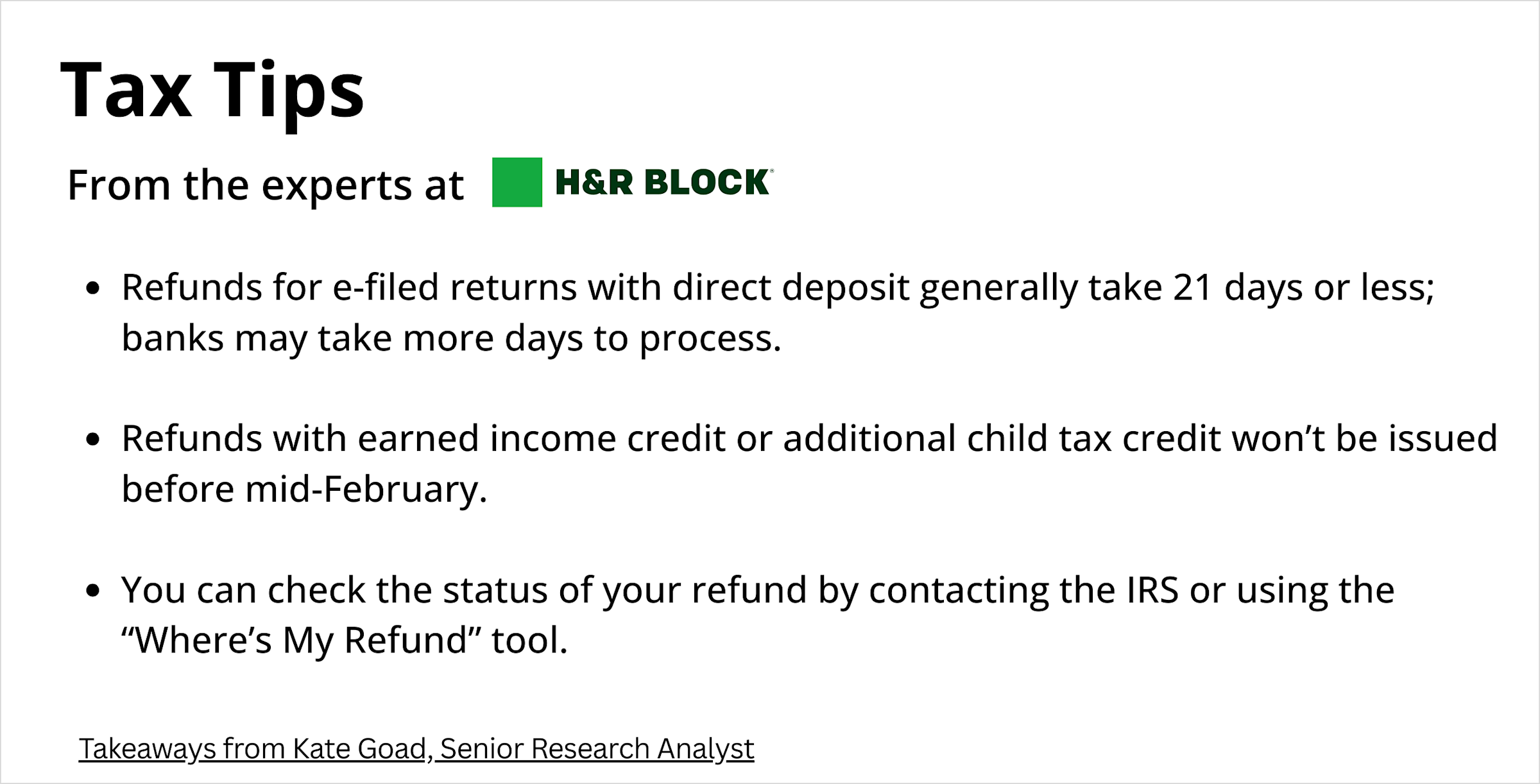
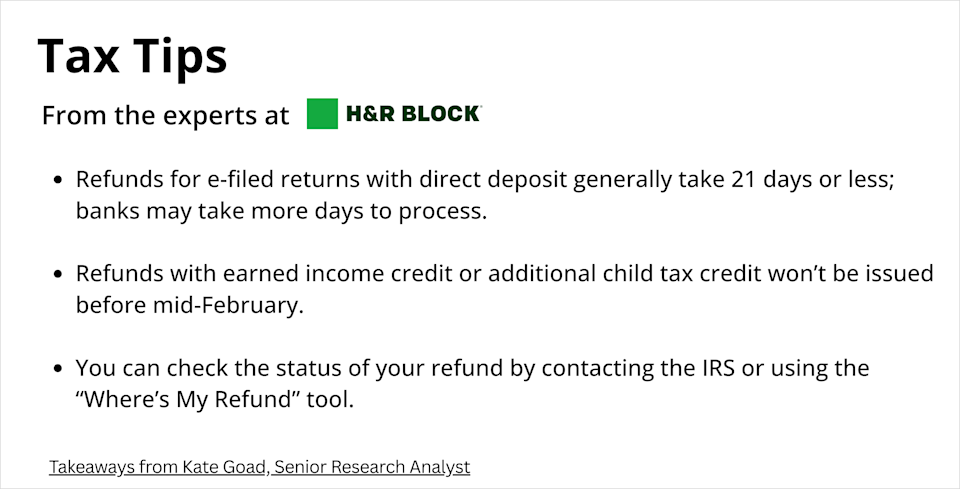
Direct deposit is typically the fastest method — especially if you file your taxes electronically — which is probably why 8 in 10 taxpayers choose this option. Most taxpayers get their refund within 21 days if they e-file. However, it could take longer if there are issues with your tax return or if you entered incorrect banking information.

If you select direct deposit, you can choose to split your refund across up to three bank accounts. When wrapping up your tax return, the online tax preparation software you’re using will ask you for the bank account and routing number for the account you want the money deposited into. You can find this information on your account’s checks or by logging into your online banking account.

If you file a paper tax return, you can still receive your refund via direct deposit. However, it may take six weeks or more to receive it because of slower processing times with paper returns. At the bottom of Form 1040, use lines 35a-d to fill in your direct deposit information for your tax refund.

Keep in mind that a tax refund isn’t “free” money. It’s income you earned throughout the year that was withheld by the IRS. So, when planning how to use your refund money, it’s best to think of it as another paycheck and not just a surprise windfall.

This is why it’s important to make a plan for that money before it hits your account. Here are a few ideas for putting your refund to good use:

Pad your emergency fund: Saving your refund for a rainy day may not sound like the most thrilling way to spend extra cash, but when the unexpected happens, you’ll be glad you did. Bonus points if you deposit your emergency fund into a high-yield savings account, which allows you to earn a higher rate than what the typical savings account offers. Right now, the best high-yield savings accounts still pay over 4% APY.

Pay off high-interest debt: Expensive debt payments make it more difficult to cover your everyday expenses and save for the future. Consider using some or all of your refund to knock out high-interest debt balances (such as credit cards) and free up more income to spend on the things you really care about.

Invest for the future: This may mean making an extra contribution to your retirement account or your child’s college savings account, investing in the stock market, or using the money to pay for a home improvement project that will boost the value of your home. Think carefully about where that money will have the most impact in your life and in the future.

Read more: 5 smart ways to put your tax refund to use

If you e-file your taxes and opt for direct deposit, you can expect your refund within 21 days or less from the date the IRS accepts your return (as long as there are no issues with your return).

The exact timing depends on your bank's processing schedule. However, direct deposits from the IRS often become available early in the morning, between midnight and 6 a.m. local time.

Provide your Social Security number, filing status, and exact refund amount listed on your return at Where’s My Refund or through the IRS2Go mobile app. Status tracking should be available within 24 hours after you e-file or up to four weeks after you send a paper return.

Read more: Where's my tax refund? How to check your refund stats in 3 steps.

According to the latest IRS tax filing data, the average refund totals $2,476, a 14.2% boost over the same week last year. The total amount refunded so far — over $32 billion — is up more than 8%.

Tax refunds are 10% bigger this year. Here are five smart ways to put it to use, including adding to your savings, starting an emergency fund, paying off debt, and more.

The average federal tax refund reached nearly $3,800, an 8.8% jump over the same week last year, according to Internal Revenue Service data.

Learn when you can expect your income tax refund, including how to check your refund status with the IRS.

Learn when you can expect your income tax refund, including how to check your refund status with the IRS.

Visits to the Internal Revenue Service website are surging as tax season winds down, with just a month left to file.
Comments
You must be logged in to comment.