yahoo Press
What is the FDIC, and how does it work?
Images
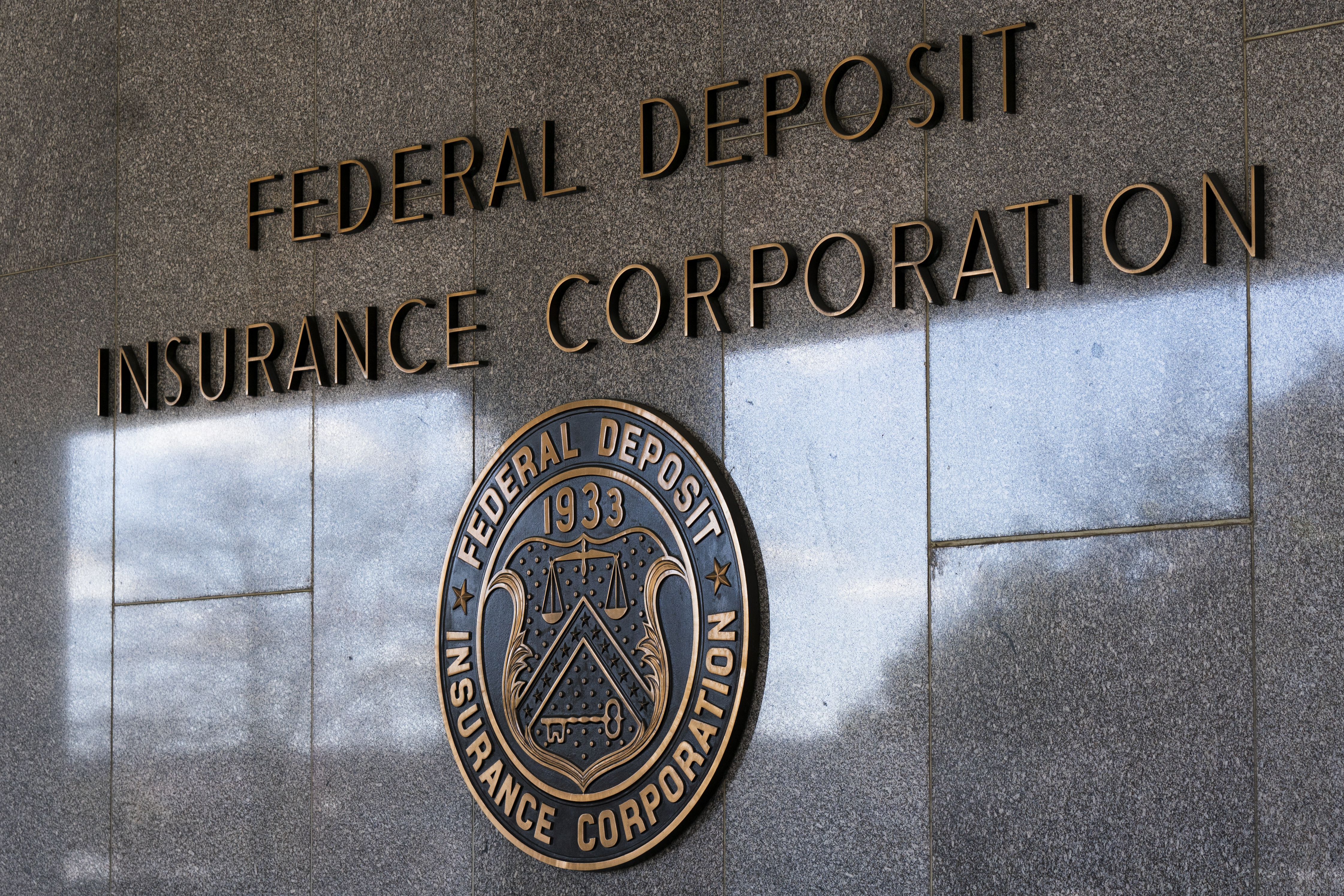
1 / 12
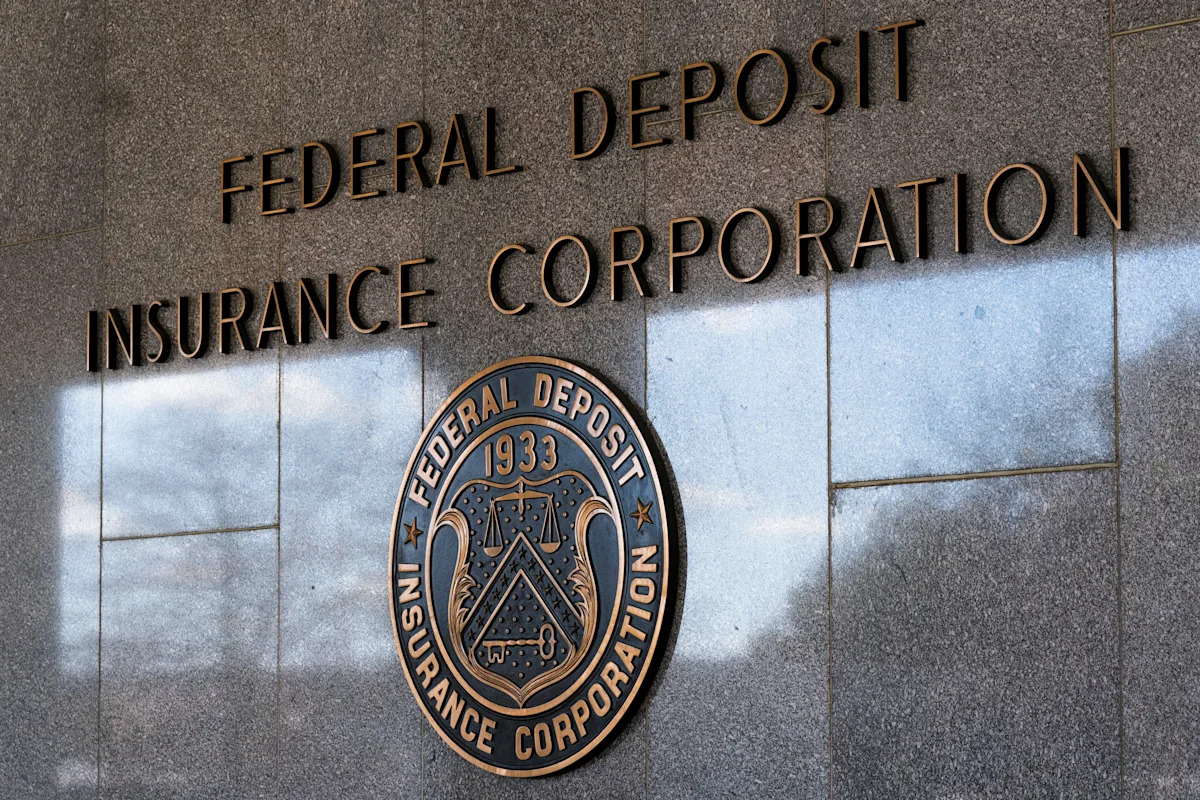
2 / 12

3 / 12
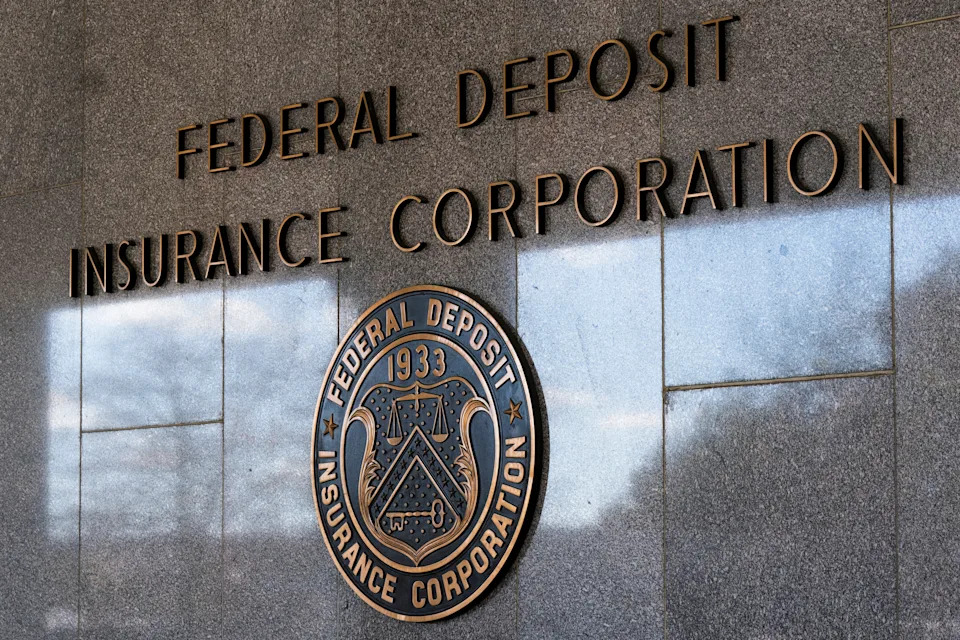
4 / 12

5 / 12

6 / 12

7 / 12

8 / 12

9 / 12

10 / 12

11 / 12

12 / 12
Some offers on this page are from advertisers who pay us, which may affect which products we write about, but not our recommendations. See our Advertiser Disclosure.

No doubt you've seen an "FDIC-insured" or "Member FDIC" sign on the wall of a bank or at the bottom of a bank website homepage. Almost all banks, including online banks, are insured by the Federal Deposit Insurance Corporation (FDIC).

The FDIC is an independent government agency that insures money people deposit at a bank. If the bank fails, the FDIC repays up to $250,000 per person, per ownership category at each FDIC-insured bank.

The FDIC was created in 1933 in response to the turmoil of the 1929 stock market crash. Following the crash, people rushed to withdraw their money from banks. As a result of these bank runs, as many as 9,000 banks failed and $7 billion dollars in deposits were lost, wiping out the life savings of millions of Americans.

President Franklin D. Roosevelt signed the Banking Act of 1933, establishing the FDIC to restore trust in the US banking system. The FDIC reports that since then, no one has lost any FDIC-insured money due to a bank failure.

While the FDIC's primary role is to insure deposits at US banks, the agency has several other duties. Those duties include supervising banks' compliance with consumer protection laws and taking charge of bank assets and debts after a failure.

The FDIC isn't funded by money approved through Congress. Instead, it's funded like most insurance companies — through premiums. Banks and other savings institutions pay premiums to the FDIC in exchange for insuring the money they hold. Those premiums allow the FDIC to repay customers if a bank fails.

Simply opening an eligible account in an FDIC member bank is enough to insure your deposit money. And while nearly all banks are FDIC-insured, you can use the FDIC's BankFind to be certain.

The FDIC, however, does not insure deposits at credit unions. Those accounts are usually insured by the National Credit Union Administration (NCUA), which operates similarly.

The FDIC insures deposits, including interest, that consumers make into certain types of accounts, including:

Checking accounts

Savings accounts

Money market deposit accounts

Certificates of deposit (CDs)

Cashier's checks, money orders, and other official items ordered by a bank

The FDIC does not insure stocks, bonds, mutual funds, life insurance policies, annuities, or the content of safety deposit boxes.

The FDIC insures up to $250,000 per person, per institution, per account ownership category. Ownership categories include:

Single/individual accounts

Joint accounts

Certain retirement accounts, including IRAs and self-directed 401(k)s

Employee benefit plans at insured institutions

Revocable and irrevocable trusts

The $250,000 cap applies to the same type of ownership account at the same bank. So, for example, the money you keep in individual savings, checking, and CD accounts at the same bank all count toward that $250,000 limit. If you have $270,000 between those three accounts, $20,000 of it would not be insured.

There are ways to make sure all your deposit money is insured. You can open up accounts at multiple banks and take advantage of the FDIC's policy of treating each bank separately. Or you can spread your money across different ownership account types. For example, money you keep in a joint account is considered separate from an individual account. Each joint account owner is insured for up to $250,000. So you could have $250,000 in an individual savings account and $500,000 in a joint savings account at the same bank and still have all your money covered by FDIC insurance.

You can use the FDIC's Electronic Deposit Insurance Estimator to see how different banking scenarios impact your insured money.

When a bank fails, the FDIC jumps into action to move the insured deposits from the failed bank to a new account at a healthy FDIC-insured bank. This process happens automatically and doesn't require filling out a claim. Any electronic deposits you had set up should also automatically redirect to this new account, although you're not obligated to keep your money in the account. Access to your insured deposits should happen quickly — the FDIC tries to make deposits available to people within two days. If another bank doesn't take over the failed bank, you will receive a check with your deposit money.

Bank failures are relatively rare, but they do happen. Between 2001 and 2022, 561 banks failed, according to the FDIC. That may sound high, but of those failures, 389 happened between 2009 and 2011 in the wake of the financial crisis. Still, there is no downside to ensuring that the FDIC covers all of your deposit money.

If you have more than $250,000 in deposits, you may want to choose a financial institution that's part of the IntraFi network. Here's how it works to protect your money.

Worried about your bank account in a recession? Learn how your money is protected, what risks exist, and how to keep your savings safe during downturns.

Wondering what banks do, exactly? Here’s a breakdown of what a bank is, what services it provides, and how to choose the right bank for you.

If you have more than $250,000 in bank deposits to insure, you may want to go through CDARS. Learn more about how this service works.

Credit unions failing is a rare occurrence, but it does happen. See our list of credit union failures and learn what risk factors lead credit unions to close down.

These are some of the most common savings account questions. Learn more about how savings accounts work, how much interest you can earn, and more.
Comments
You must be logged in to comment.